

Is there a better way to soften filament in FFF systems?
The problem is getting the heat from outside of the filament all the way through to the center. A hot end might have plenty of heating power, but heat still has to travel from the outside of the filament toward the center. Push material through too fast and some of it will not be softened. That’s often why there are speed limits on FFF systems.
Two European patent applications published on November 4, 2026, from China’s Zhengzhou Suzao Technology attack that problem by changing what happens inside the nozzle.
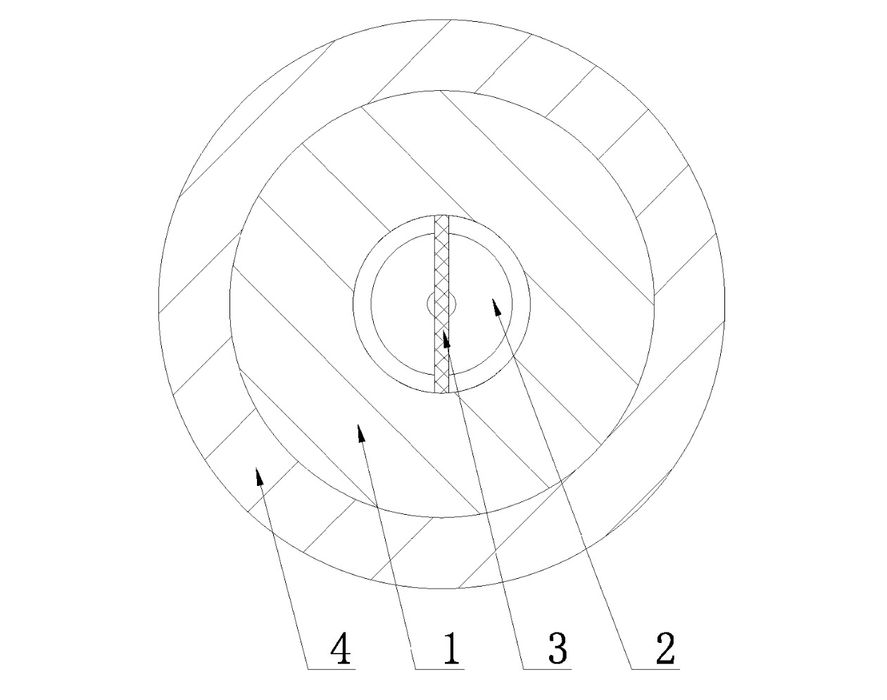
The first, EP4834566A1, proposes placing a heat conducting column in an enlarged section of the nozzle’s internal passage. As softened filament encounters the column, it’s forced outward into a narrow circular gap between the column and the heated nozzle wall.
Instead of continuing as a thick cylinder, the plastic becomes a thin hollow cylinder flowing around the insert. The patent proposes heating that material from both sides, since the central column is thermally connected to the rest of nozzle body.
That reduces the distance heat must travel to reach all of the material.
The second filing, EP4834567A1, explores a much wider collection of internal configurations. Its drawings show plates, crossed dividers, spirals and other structures intended to change the usual straight flow through to the nozzle.
One particularly interesting addition is in front of the final melting section.
The proposed preheating component has a stepped internal opening and separate channels around it. As filament softens, the steps are intended to strip away its melted outer material and divert that material into surrounding passages. The still solid center then encounters more heated metal instead of remaining insulated by its own molten exterior.
Essentially, the nozzle keeps exposing material that hasn’t yet finished melting.
We’d better now compare this concept with Bondtech’s Core Heating Technology (CHT) nozzles, and similar setups. Those split the incoming filament into three smaller streams around heated internal walls. E3D’s high flow nozzle designs use a similar idea with four channels. Both increase the surface area available for heat transfer without lengthening the hot end.
Suzao’s patents want the same heating effects, but differently. One spreads the filament into an annular layer. The other patent proposes successive reshaping, peeling and dividing operations, along with internal mixing structures.
As this is only a patent, we can’t know yet whether their new designs are better than a CHT system. For example, extra internal features can increase flow resistance. Narrow passages inside can make jams a lot more spicy.
I’d be very interested in a direct comparison using the same filament, heater power, nozzle diameter and extrusion conditions. That would tell us whether the extra melting surface outweighs the resistance introduced by the more complicated flow.
These patents suggest that the inside of an FFF hot end is a pretty active area for invention. But which approach will win?
Via Espacenet