
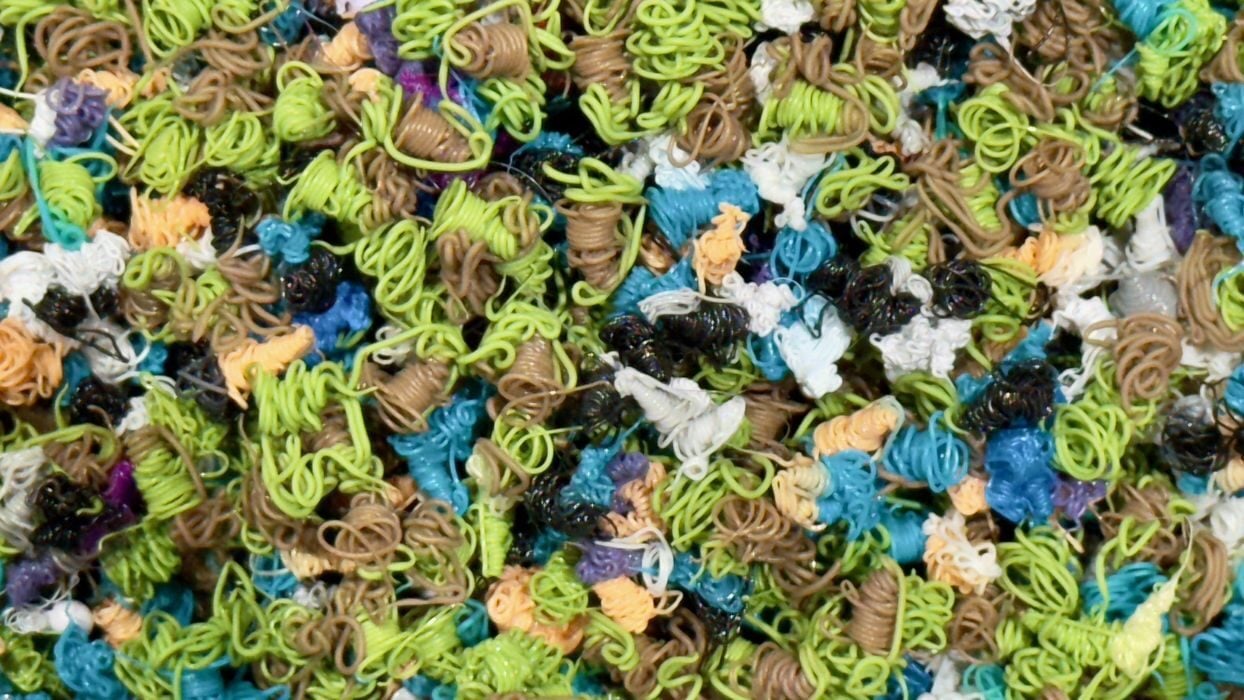
What exactly do you do with all that 3D printer poop that’s accumulating in your workshop?
Today’s high-speed multicolor FFF 3D printers have an issue: they generate “poop” whenever they switch colours. It’s really residue that is produced to flush out the previous colour from the hot end, something that’s required to maintain colour consistency.
However, on print jobs that require many colour swaps, you can generate an enormous amount of poop. Often the amount of poop exceeds the weight of the print itself, and this is quite wasteful. There are some ways to reduce the amount of poop, but there will still be a great deal of it in any case.
Hopefully, the industry will eventually switch over to tool-changing 3D printers that don’t poop, but we have a long way to go for that.
In the meantime, almost every 3D printer operator is collecting bags of poop. What should you do with it?
Poop can’t be processed by municipal recycling services because it does not carry an official recycling mark that shows what kind of plastic is involved. So that’s not an option.
Here are seven ways to deal with your 3D printer poop problem.
Keep It
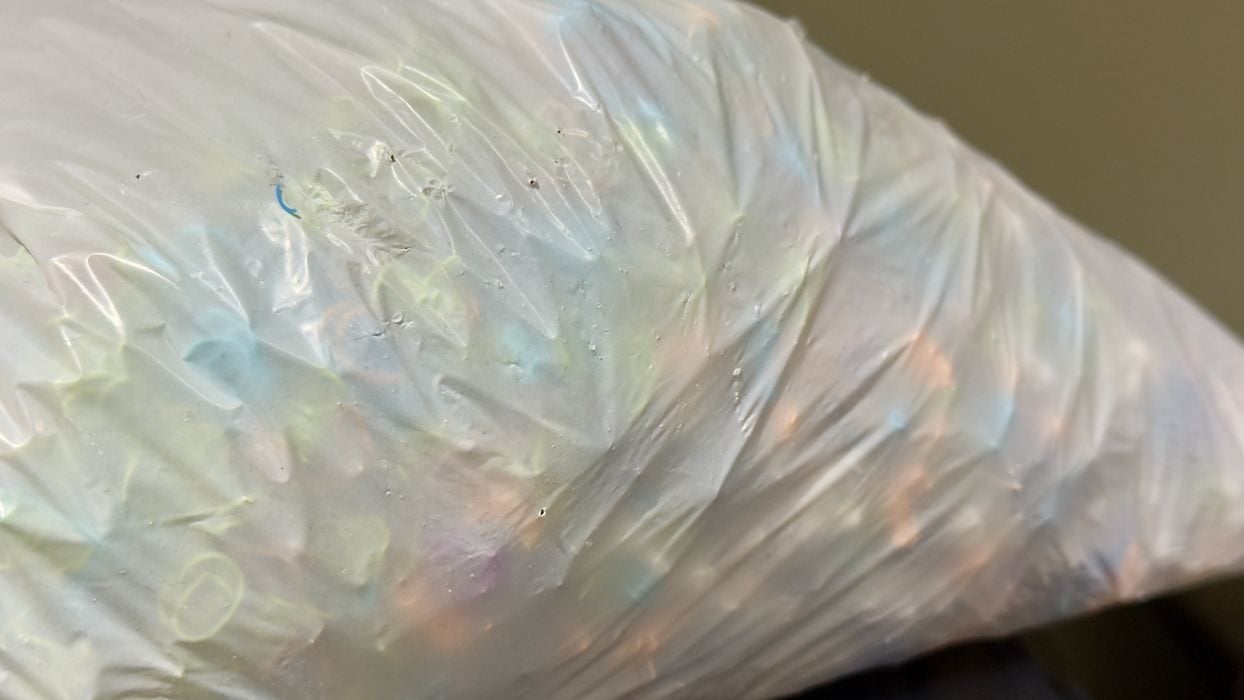
This is a dumb option, but it’s probably the option you’re already doing: just keeping it until you figure out something better to do with it.
Trash
This is likely the second-most popular option. After you accumulate a sufficient quantity of the stuff, you just want to get rid of it. Since recycling isn’t an option, you just put it in the trash, where it will end up in the landfill. Eventually, it will degrade into small air/waterborne particles that will enter the food chain and poison everyone. Shame.
Shadow Box
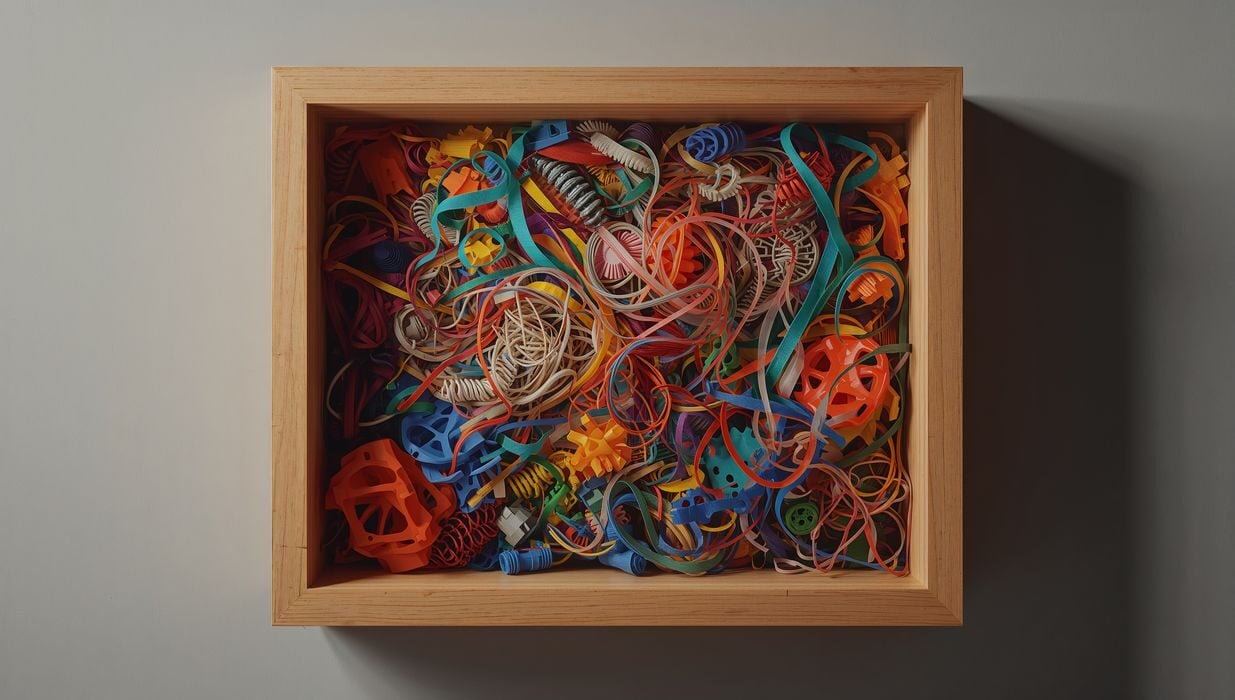
If you have many different colours (likely), you might build or print a “shadow box”. This is a special container that can hold items. You could arrange the poops by colour to create a pattern within the shadow box.
Melt Into Panels
This practical approach requires a heat press. You build a “corral” to hold a quantity of poop, and then hold down the heat press. The poops eventually melt together and create a small panel that can be used for other projects, especially if you don’t mind the mixed-up colours. Teaching Tech has a great video showing how to do this.
Casting Shapes
If you have (or make) moulds, it’s possible to melt the poops to a pourable state. Then you can pour the thermoplastic into moulds to quickly create new objects. This requires moulds and a means to sufficiently heat the plastic.
Filler
If you’re doing resin work making large objects, you might consider using leftover poop as filler in the resin. For applications that require strength or transparency, that might not work, but you could save money on resin by doing this.
Vibratory Media
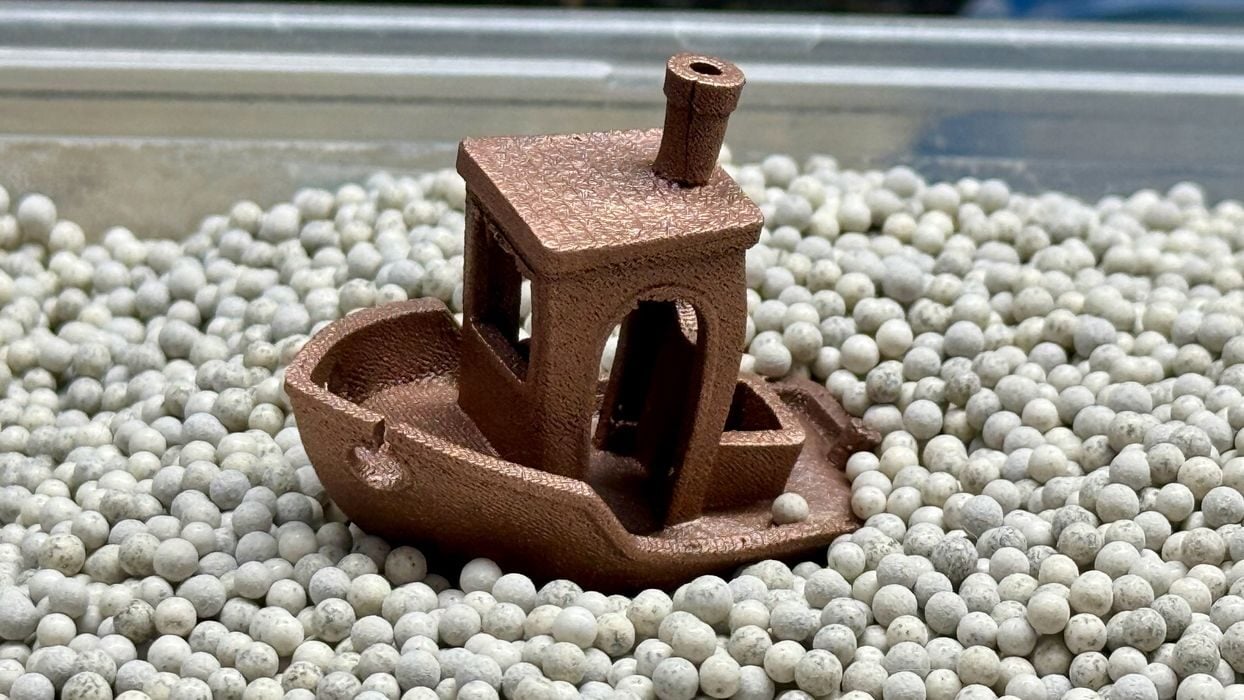
I haven’t heard of anyone trying this, but it’s possible that poop just might be suitable for use as vibratory media. Tumblers are used to smooth the surfaces of metal or plastic objects, and they require some kind of media to bounce around and smooth the surfaces. Media can be unusual materials, like walnut shells, for example. Could 3D printer poop be used for this? I think it might!
Art Donation
Your city might have an organization that collects leftover materials for use in art projects. It is quite possible that artists might find 3D printer poop as a useful material to create new works. You never know what might be made with those poops.
Make New Filament
If you have a desktop filament production system (rare), then it might be possible to hand-pick poops of identical material for use in the filament maker. The poops will be mostly one material, but with a slight amount of other material that was purged. This could still be sufficient to make a slightly bad version of the original filament.
Thrilling Giveaway
This last method might not work too well, but hear me out. Bag up small amounts of 3D printer poop and give them to people that don’t know any better, or as a joke gift. They might be thrilled to receive “3D printer poop”.
Or not.
