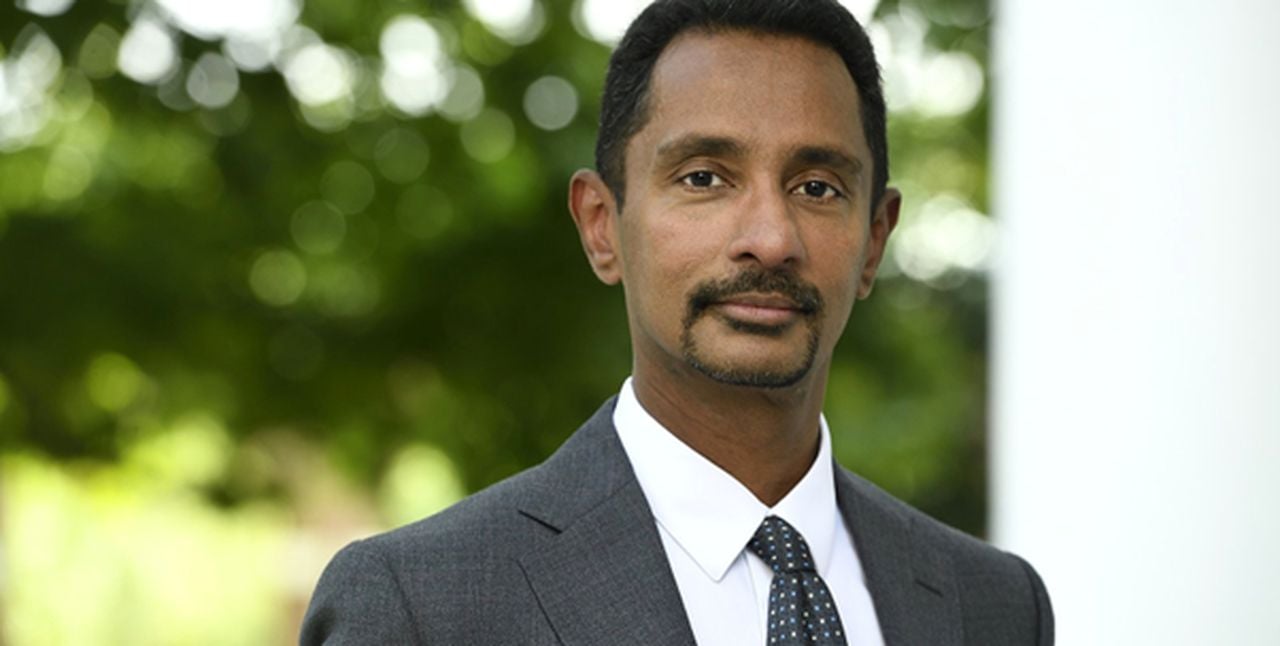
Charles R. Goulding and Andressa Bonafe spotlight Caltech and its visionary approach to leadership with the appointment of Ray Jayawardhana as its next president.
The California Institute of Technology is entering a new phase of leadership with the appointment of Johns Hopkins provost Ray Jayawardhana as its next president, a transition that comes at a time of rapid change in U.S. research funding and accelerating innovation in areas such as 3D printing. Located in the greater Los Angeles area, one of the country’s most dynamic manufacturing ecosystems, Caltech is well positioned to strengthen its role in advanced engineering and scientific discovery. As universities refine how they manage and communicate research investments, these shifts also influence the broader ecosystem of companies developing 3D printing technologies.
A Research Leader with Large-Scale Experience
Ray Jayawardhana, currently provost at Johns Hopkins University, will become Caltech’s tenth president in July 2026. A renowned astrophysicist and experienced academic leader, Jayawardhana has spent his career managing large, multidisciplinary research portfolios and communicating scientific priorities to diverse stakeholders, skills that are increasingly essential as federal agencies tighten budgets and scrutinize how research dollars are used.
At Johns Hopkins, he oversaw one of the nation’s most extensive research enterprises, giving him direct experience with funding strategy, research compliance, and the operational realities of running high-impact scientific programs. This background positions him to navigate a period in which universities face heightened scrutiny of research spending and shifting expectations from federal agencies. His appointment reflects continuity in Caltech’s commitment to scientific excellence while underscoring the growing importance of clear communication and program coordination in today’s evolving research environment.

Caltech’s Research Landscape and 3D Printing Leadership
Caltech’s research enterprise has long been defined by deep collaboration between engineering, physics, and the life sciences, an environment that naturally supports advances in areas like additive manufacturing. The Institute’s engagement with 3D printing extends well beyond a single laboratory or application, spanning biomedical engineering, materials science, optics, and advanced manufacturing. One of the most high-profile recent examples is the work on 3D printing in vivousing focused sound waves, a technique that allows material to be formed inside living tissue without invasive surgery. This research underscores Caltech’s strength in translating fundamental physics and engineering into novel biomedical tools.

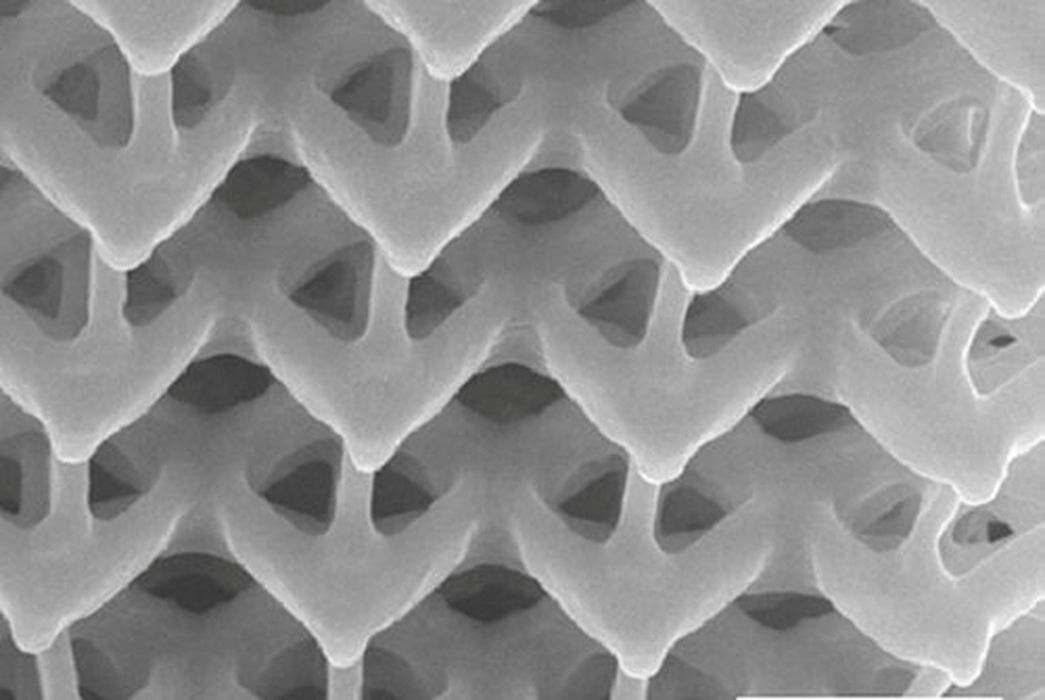
Caltech researchers have also explored 3D printing at the micro- and nanoscale to create architected metallic materials with unusual mechanical properties, such as nano-lattice structures that exhibit high strength-to-weight ratios not achievable through conventional fabrication methods. In optics and photonics, recent work at the Institute has demonstrated the ability to evolve and then 3D print nanoscale optical devices composed of metamaterials with engineered light-manipulating properties that are difficult to realize using conventional fabrication. Meanwhile, in the bioelectronics space, Caltech’s interdisciplinary teams are using direct-ink-writing and related techniques to explore custom 3D printed bioelectronic devices, sensors, and prototypes that integrate soft materials with electronic functionality for health-monitoring and diagnostic applications. Taken together, these efforts position 3D printing as a versatile research tool at Caltech, supporting both frontier scientific inquiry and practical experimentation across multiple domains.
Where Research Meets Advanced Manufacturing
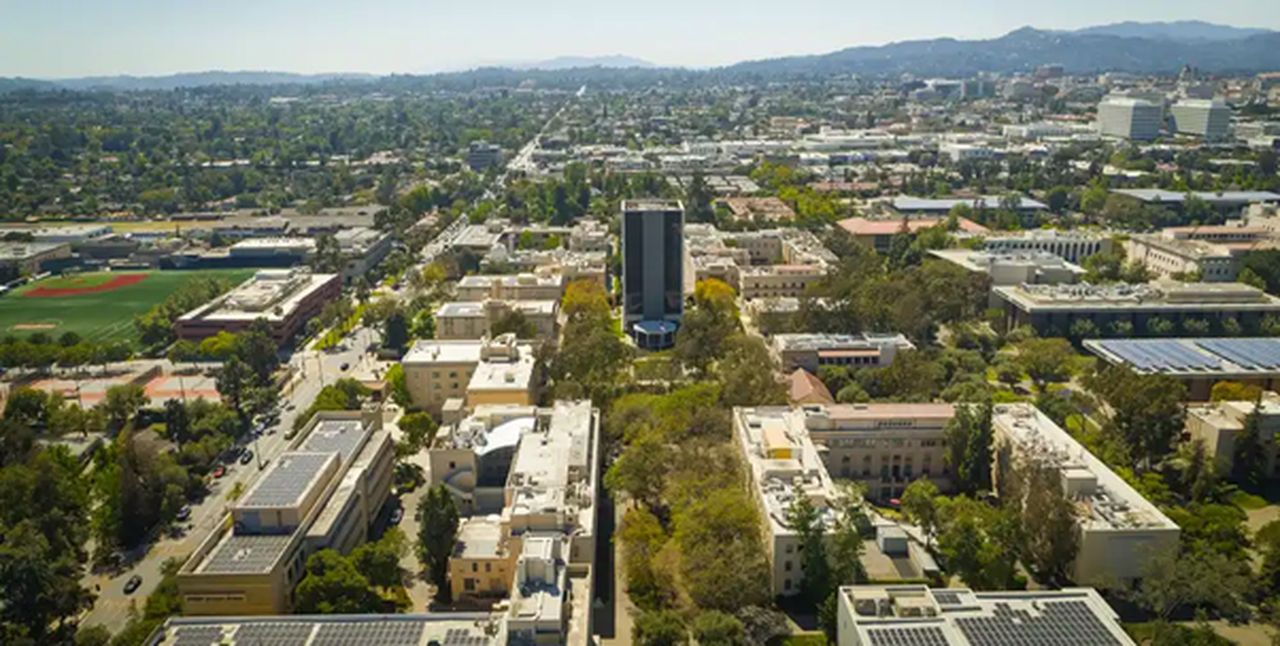
Caltech sits within one of the country’s most dynamic manufacturing ecosystems, which spans both established industrial centers and emerging hubs such as El Segundo (insert article link). Decades of aerospace, defense, and industrial activity have created a deep reservoir of expertise across the greater LA area, one that continues to shape how complex physical systems are designed and built today. Against that backdrop, advanced manufacturing techniques, and 3D printing in particular, have become increasingly integral, enabling design flexibility and lightweighting that traditional manufacturing often struggles to achieve.
For Caltech, proximity to this diverse and active industrial landscape creates natural opportunities for alignment: research insights developed on campus can inform real-world manufacturing challenges, while industry adoption of 3D printing reinforces the relevance of additive manufacturing as a research and experimentation platform within the Institute.
Adapting Research Strategy to Funding Uncertainty
Caltech’s leadership transition comes at a time when universities across the country are rethinking how they manage and communicate their research portfolios in response to federal funding uncertainty. Institutions like UNC Chapel Hill have adopted a practical, scenario-based approach to shifting grant levels, prioritizing areas with clear potential for impact while delaying or restructuring others when necessary (insert article link). Rice University has taken this one step further by openly explaining how federal research dollars are allocated across direct and indirect costs, offering a transparent view of what “reasonable” R&D expenses actually look like in practice.
These examples reflect a broader national trend: research universities are increasingly expected not only to produce groundbreaking science, but also to articulate how resources are used, why certain projects are prioritized, and how research operations remain efficient under tighter fiscal conditions. As Caltech expands work in advanced technologies such as 3D printing and bioengineering, its new president will inherit both the opportunity to strengthen these high-impact areas and the responsibility to ensure that Caltech’s research strategy aligns with evolving expectations for clarity, stewardship, and federal accountability.
While universities themselves are not eligible for R&D tax credits, their efforts to clarify research costs and optimize spending underscore the importance of efficient, well-documented research activity. For companies working with advanced manufacturing and 3D printing, this same discipline in tracking experimentation, iteration, and material use directly supports eligibility for federal R&D incentives.
The Research & Development Tax Credit
The now permanent Research and Development (R&D) Tax Credit is available for companies developing new or improved products, processes and/or software.
3D printing can help boost a company’s R&D Tax Credits. Wages for technical employees creating, testing and revising 3D printed prototypes can be included as a percentage of eligible time spent for the R&D Tax Credit. Similarly, when used as a method of improving a process, time spent integrating 3D printing hardware and software counts as an eligible activity. Lastly, when used for modeling and preproduction, the costs of filaments consumed during the development process may also be recovered.
Whether it is used for creating and testing prototypes or for final production, 3D printing is a great indicator that R&D Credit eligible activities are taking place. Companies implementing this technology at any point should consider taking advantage of R&D Tax Credits.
Conclusion
Caltech’s upcoming leadership transition arrives at a moment when research universities are being asked to balance scientific ambition with greater demands for strategic clarity and financial oversight. With a president experienced in guiding large research enterprises, Caltech is well positioned to advance its strengths in areas such as 3D printing, bioengineering, and applied physics while operating within a federal research environment marked by increased scrutiny and evolving expectations.