
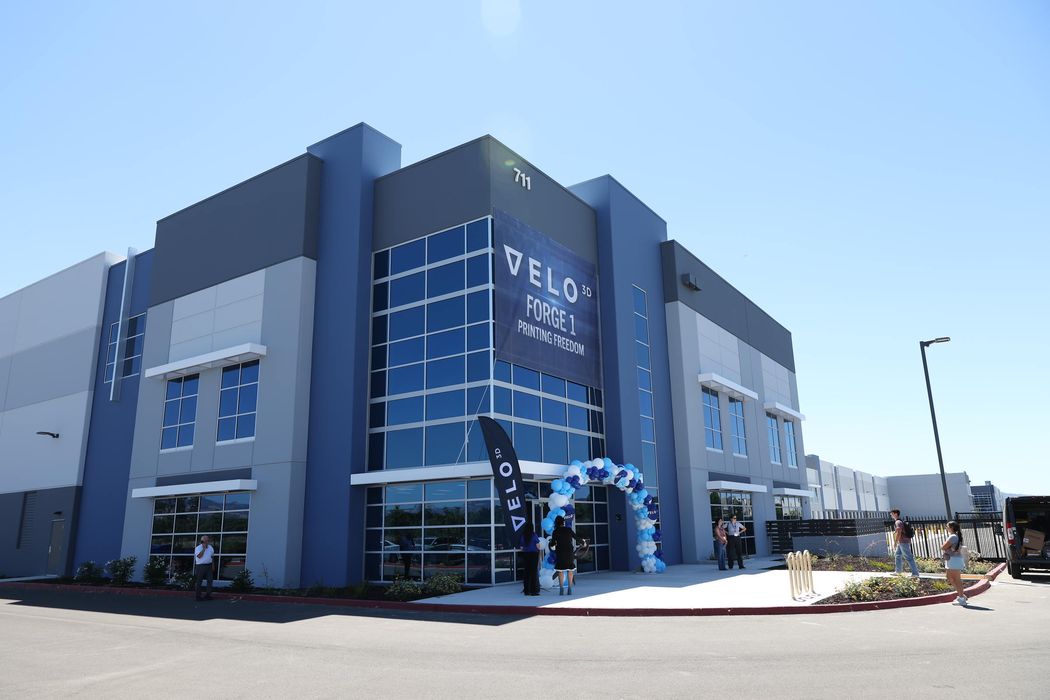
Velo3D opened a massive new Livermore site for repeatable metal 3D print production.
The company calls the facility “Forge 1”, and it is said to be one of North America’s largest metal additive manufacturing operations. Located in Livermore, California, the campus totals nearly 289,000 square feet, with about 270,000 square feet (2700sm) dedicated to production space. Velo3D says their infrastructure is designed to support more than 40 large-format metal additive systems at first, with room to expand beyond 100 systems over time. That’s big!
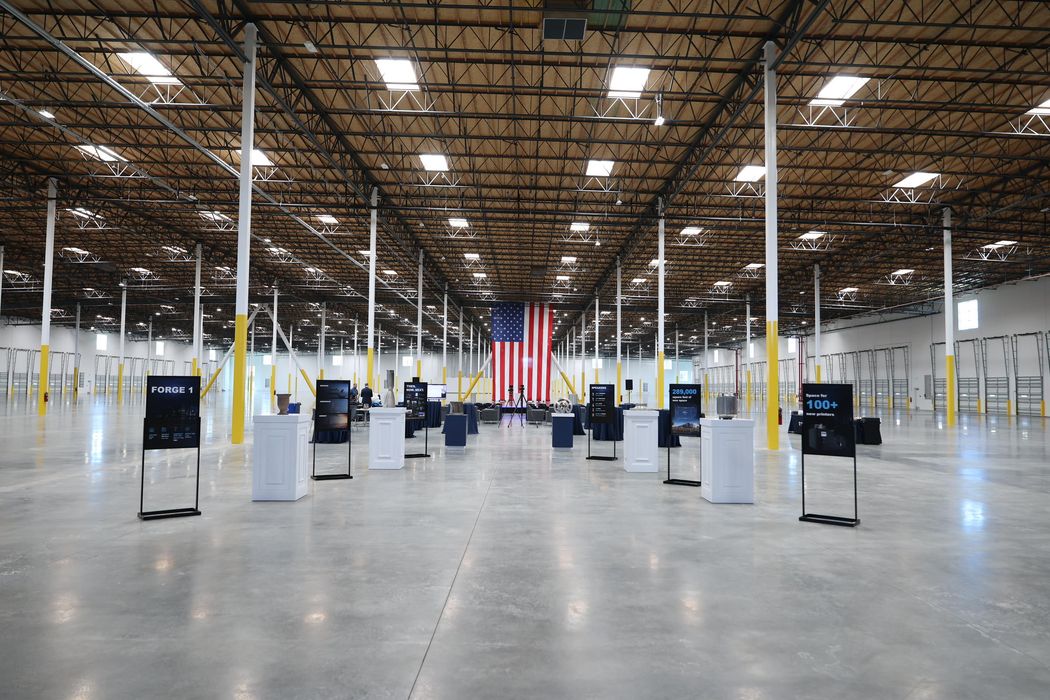
The opening was celebrated at a July 15 ribbon-cutting attended by local and state officials, plus a message from retired Lt. Gen. H.R. McMaster highlighting industrial base and national security themes. That was surely done on purpose: Velo3D repeatedly connected the facility to “mission-critical” demand in aerospace, defense, energy, and other strategic industries, which are all booming these days.
The company also says Forge 1 will ramp upwards in phases as systems are installed and qualified, which implies the full capacity will not show up all at once.
From Qualification To Full-Rate Production
In metal additive manufacturing, the difficult part of operation is usually not printing a good prototype, but changing that into a fully qualified process that is also auditable. Laser Powder Bed Fusion (LPBF) can absolutely deliver complex parts, but production programs typically need controlled post-processing, inspection, documentation, and repeatability across many, many builds.
Velo3D is betting that their customers increasingly want a “production campus” partner that can help make that happen, especially for programs where supply chain and country-of-origin matter. It takes particular skils to do so, and Velo3D is concentrating them in this facility so that customers don’t have to find those skills themselves.
Forge 1 is also notable because it is not only a print farm. Velo3D says the site will support machine assembly, production-scale printing, post-processing, inspection, quality assurance, and customer acceptance. In other words, the facility is meant to produce both Velo3D’s Sapphire-family systems and also end-use parts under one roof, a vertically integrated model that can reduce handoffs and scheduling friction. It also will allow for easy introduction of new Velo3D models into production service when they are introduced.
The new site complements Velo3D’s Fremont headquarters, which the company says remains their main center for research and development, applications engineering, process development, customer collaboration, and qualification. Adding them together, the two-campus concept looks like an attempt to formalize a process: develop and qualify in Fremont, then scale and industrialize in Livermore. Velo3D expects to operate up to 125 systems across both campuses, which would make the combined footprint a very large integrated metal AM environment by North American standards.
LPBF Economics
The company positions itself as the only US-founded and US-based OEM in large-format LPBF with hardware manufactured in the United States and software developed in the United States, with deployments across the US and allied nations. For some buyers, that combination can be as important as print quality, because supplier trust and export or procurement constraints can quickly determine which machines even make it onto an approved list. Forge 1 is therefore also industrial policy play.
Operationally, building out a production campus can change LPBF economics in a practical way: it concentrates machines, people, metrology, and post-processing so they are not constantly reinvented at each site. If Velo3D truly delivers “qualified production parts” as stated, then customers could reduce the time and risk of scaling after they have already proven a design in the Sapphire ecosystem.
This move also echoes recent business models by some new 3D print startups: don’t sell the printers; sell parts instead. While Velo3D does still sell 3D printers, one wonders what the future might hold if the new center succeeds.
There is also an interesting dual-customer story embedded here. Forge 1 could serve buyers who want to purchase machines and ramp their own in-house production, but it could also act as a production backstop when internal capacity is constrained or when a program needs immediate volume while a customer builds out its own factory.
This is quite an interesting development for Velo3D, and their customers.
