
A new paper investigates whether vibration assisted filament extrusion can make PLA prints stronger where it matters most: between layers.
The study, titled Enhancing PLA Strength and Layer Adhesion: Physical and Microstructural Insights from Vibration-Assisted FFF/FDM, focuses on PLA, the most familiar material in desktop FFF. PLA is easy to print, inexpensive, and widely available, but its anisotropic behavior remains a problem when parts must support mechanical loads.
Anyone who has broken a poorly oriented FFF part knows the issue. The extrusion paths themselves may be reasonably strong, while interfaces between successive layers can separate under tension, bending, or impact. Print orientation, nozzle temperature, chamber conditions, cooling, and speed all influence this outcome.
Vibration is an intriguing additional variable because it could alter how freshly deposited polymer settles and merges with the preceding layer. In principle, mechanical excitation might improve contact at the interface, encourage polymer chain diffusion while the material remains hot, or reduce voids between adjacent roads.
A Different Route To Better Interlayer Bonding
Most attempts to improve FFF layer adhesion rely on thermal management. Users raise nozzle temperatures, reduce cooling, slow down, install enclosures, or move to higher performance polymers. Industrial systems may also use heated build chambers to keep the deposited material above a useful bonding temperature for longer.
Those approaches work, but they have tradeoffs. Higher temperatures can increase stringing, sagging, surface defects, and thermal distortion. Heated chambers add cost and complexity, while many common desktop machines cannot safely run the temperatures required by engineering polymers.
Vibration assistance could therefore be interesting if it provides a measurable benefit without requiring a wholesale printer redesign. A mechanism mounted near the nozzle, print bed, or extrusion path may be easier to retrofit than a controlled heated chamber. That does not automatically make it practical, however.
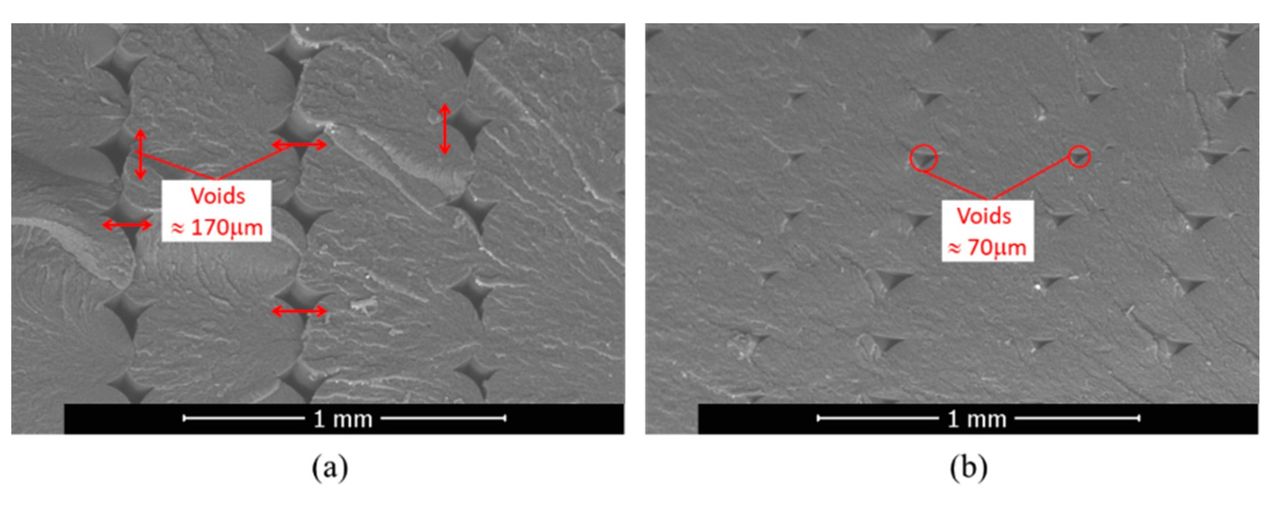
The paper’s emphasis on physical and microstructural insights is important. Tensile results alone can show that a part became stronger, but microscopy and material analysis can help explain why. For an AM process change to be credible, users need to know whether vibration reduces porosity, improves road contact, changes crystallinity, or merely produces a result under one narrow set of settings.
The Variables Will Matter
But there is one major issue: vibration is not a single process setting. Frequency, amplitude, direction, timing, print speed, layer height, nozzle temperature, cooling, infill geometry, and the position of the vibration source could all affect the result. A setting that helps a simple PLA flat test coupon might not work for a tall, detailed part.
There is also a potential conflict with print quality. Motion systems already fight ringing and resonance, particularly on lightweight desktop gantry machines. Deliberately introducing vibration must be carefully controlled so that any improvement in interlayer bonding does not appear alongside worse dimensional accuracy, rougher surfaces, or reduced repeatability.
PLA is a sensible first material because it gives researchers a widely understood baseline. Yet the more commercially interesting question is whether the approach can transfer to materials where layer adhesion is a larger obstacle, including ABS, ASA, PETG, nylon, and fiber filled composites. Those materials bring their own thermal and moisture challenges, so a PLA result should not be assumed to generalize.
If controlled vibration can consistently improve bonding without slowing throughput or compromising accuracy, it could become a useful feature for future functional material extrusion.
Via Polymers
