
New research describes multimodal sensor fusion for AI-based fault detection in 3D printing.
In additive manufacturing, many monitoring systems still rely on a single data source — a camera for layer imaging, maybe a photodiode for melt pool intensity, or a microphone to catch noises. Each stream is informative but only partial information, and blind spots exist, especially when faults show up differently across processes and materials. The paper suggests that fusing complementary signals can raise detection sensitivity while at the same time reducing false alarms, the big challenge that keeps many pilot projects in this space from scaling to production.
Industrial LPBF vendors such as EOS and Renishaw ship melt pool and optical monitoring options, while polymer platforms — even consumer systems like Bambu’s vision-based spaghetti detection — have normalized at least basic sensor type. Yet cross-process, cross-material reliability remains elusive. A thermal camera may flag recoater streaks, but not a slipping feeder; acoustics can hear skips yet miss subtle temperature drift. The proposition in the research paper is to blend vision, thermal, vibration, acoustic, and electrical telemetry to see more, sooner, and with higher confidence.
Inside The Sensor Fusion Approach
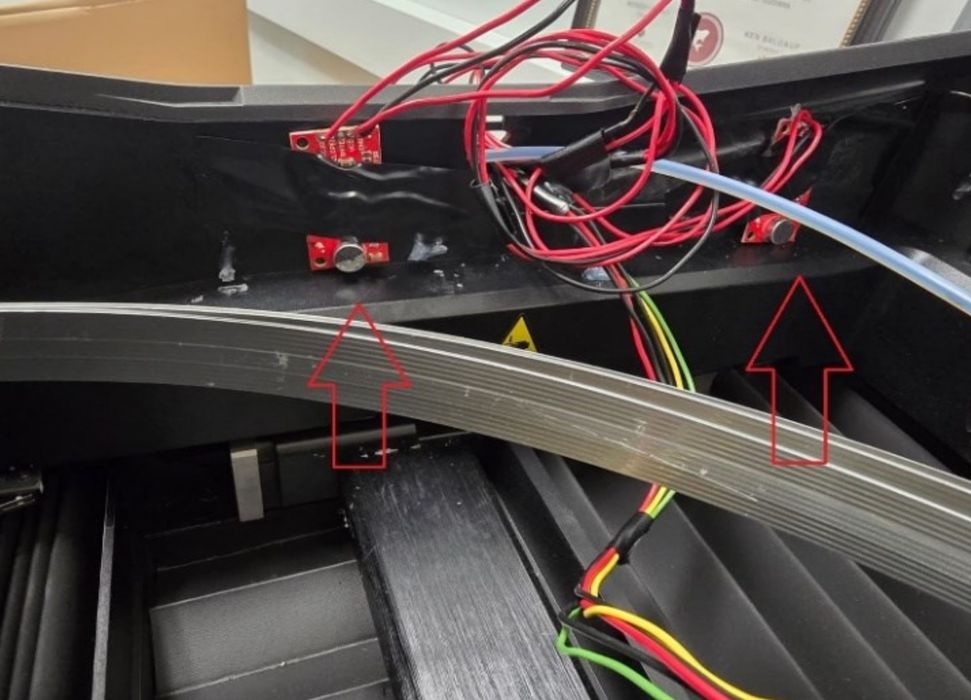
The researchers describe a pipeline that ingests heterogeneous data — for example, RGB or near infrared imagery, thermography, accelerometer and microphone traces, and motor current — aligns them in time, and learns fault signatures using AI. While implementation specifics vary, practical fusion usually lives at one of three levels: early fusion (stack raw or low level features), intermediate fusion (learn per-modality embeddings, then merge), or late fusion (combine per-model decisions). Their central claim is that fused models outperform any single modality across a range of failure modes.
But there are engineering practicalities to consider. Synchronizing streams sampled at wildly different rates is pretty difficult; clock drift, buffering, and dropped frames can erode accuracy. Compute budgets on the relatively low-powered embedded controllers are quite tight, so inference latency must fit within layer times if the goal is to pause or correct before failures show up. Labeled data is another choke point: creating ground truth for rare faults is hard, and synthetic augmentation only goes so far. The paper does not indicate throughput or latency figures, nor whether models generalize across printers, materials, or toolpaths without costly re-training — these are critical gaps for an eventual deployment of this tech.
Implications For Production AM
Done well, sensor fusion could shift economics for service bureaus and OEM production cells by cutting the number of print job failures and human effort. Shops printing aerospace brackets or medical devices would welcome higher assurance without waiting for post-process inspections. Even in polymer FFF and material extrusion, catching clog onset, feeder slip, or thermal drift before an hour of air printing saves time and possibly filament. Yet the cost and complexity of multi-sensor rigs, calibration drift over months, and the risk of alert fatigue from false positives must be all accounted for in any production implementation.
Two adoption paths seem possible:
- First, OEM-integrated packages where sensors are mechanically and electrically designed in, clocks are shared, and inference runs on verified edge hardware — the cleanest route for metal AM platforms.
- Second, retrofit kits for legacy machines, attractive to bureaus with mixed fleets but harder to standardize.
As this technology evolves, we should watch for cross-printer benchmarks, confusion matrices for common faults, domain adaptation results, and clear statements of inference latency per layer. The paper does not indicate whether datasets or code will be released; without open benchmarks, there’s not much more to do yet.
Standards and certification also are important here. To tweak regulated workflows, models will need formally documented performance, drift monitoring, and change control. Groups such as ASTM F42 and ISO TC 261 have begun discussing in-situ monitoring, but multimodal AI could be another level of complexity for those frameworks. If sensor fusion can consistently catch faults early enough to stop the build, it changes not just quality, but scheduling and throughput planning as well.
Via arXiv
