
Charles R. Goulding shares firsthand insights from a snow-disrupted yet high-energy gathering where additive manufacturing leaders tackled geopolitics, cybersecurity, capital markets, and industry consolidation head-on.
The Additive Manufacturing Strategies Conference opened in New York City under unusual circumstances. A major snowstorm had just swept through the region, disrupting flights up and down the East Coast. Travel plans were rerouted, flights were cancelled, and more than a few speakers arrived with stories about creative last-minute detours. Still, the turnout steadily increased. If anything, the effort it took to get there gave the event a certain energy. People showed up because they wanted to be there.
The setting helped. This year’s conference was held at the striking harborside Museum of Jewish Heritage in Battery Park. Overlooking New York Harbor and the Statue of Liberty, the venue felt both reflective and forward-looking. The main theater, equipped with high-end audio and visual systems, offered a fitting stage for a sector that sits at the intersection of software, materials science, and advanced manufacturing. Between sessions, attendees gathered in common areas framed by sweeping waterfront views. It was hard not to pause and take it in.
The conference opened with something unexpected. Joris Peels, long known in the industry for his sharp analysis and candid perspective, delivered a thoughtful one-act 3D printing play to set the tone. It was creative, slightly provocative, and grounded in the realities facing additive manufacturing today. Joris thanked the artists for their perseverance in taking their art to the conference. Rather than starting with slides and charts, Peels used storytelling to explore the industry’s growing pains, ambitions, and contradictions. It worked. The room was attentive.
From there, the content moved quickly into the broader context shaping additive manufacturing. Geopolitical tensions, supply chain fragmentation, and national security concerns were recurring themes. The message was clear: additive is no longer a niche prototyping tool. It is increasingly viewed as critical infrastructure.
Peels emphasized the importance of customer trust during fractious times. As governments scrutinize supply chains and companies rethink sourcing strategies, 3D printing firms must demonstrate reliability and transparency. It is not enough to have innovative technology. Customers need confidence that digital files are secure, production partners are stable, and parts will perform as specified.
One particularly thought-provoking example touched on the rapid pace of drone innovation in Ukraine. The war has accelerated the use of distributed manufacturing and digital design in real-world defense applications. Designs are modified quickly, shared securely, and produced close to the point of need. The lesson for the broader additive sector is that agility matters. But so does trust in the digital thread.
That theme carried into the first post-lunch panel on cybersecurity for remote 3D printing. The discussion underscored a simple reality: without digital security, scalability is impossible. Additive manufacturing depends on data. Design files move across borders. Production may occur in one country, engineering in another, and end use in a third.
One example described a part engineered in Norway, produced through distributed manufacturing channels, and ultimately destined for Petrobras in Brazil. That type of global workflow introduces obvious vulnerabilities. Panelists stressed that encryption, secure file transfer, and strict access controls are not optional. As additive becomes embedded in aerospace, energy, and defense supply chains, it must meet the same security standards expected of other critical systems.
The conversation also reframed additive as infrastructure. If a company relies on remote production for mission-critical components, the integrity of its digital systems becomes a matter of operational resilience. The industry’s ability to scale will depend on how well it protects intellectual property while maintaining flexibility.
Financial markets were another focal point. A presentation on the Australian Securities Exchange highlighted the country’s distinctive position in the additive manufacturing ecosystem. The exchange has cultivated a reputation for supporting growth companies, particularly in advanced technologies. Australia’s superannuation system, which requires a 12 percent employer contribution to retirement funds, has created one of the largest pools of pension capital in the world. In fact, it ranks among the top five globally.
That capital base has helped fuel a sizable universe of 3D printing companies. Several firms have chosen to list first on the Australian exchange to access growth-oriented investors before eventually transitioning to larger markets such as Nasdaq once they achieve scale. The top six additive-focused companies on the exchange command significant market capitalizations, reflecting sustained investor interest in the sector.
The discussion offered a reminder that additive manufacturing is not just a technical field. It is shaped by capital markets, regulatory frameworks, and investor expectations. Public listings can provide visibility and funding, but they also introduce pressure to deliver consistent performance in an industry still maturing.
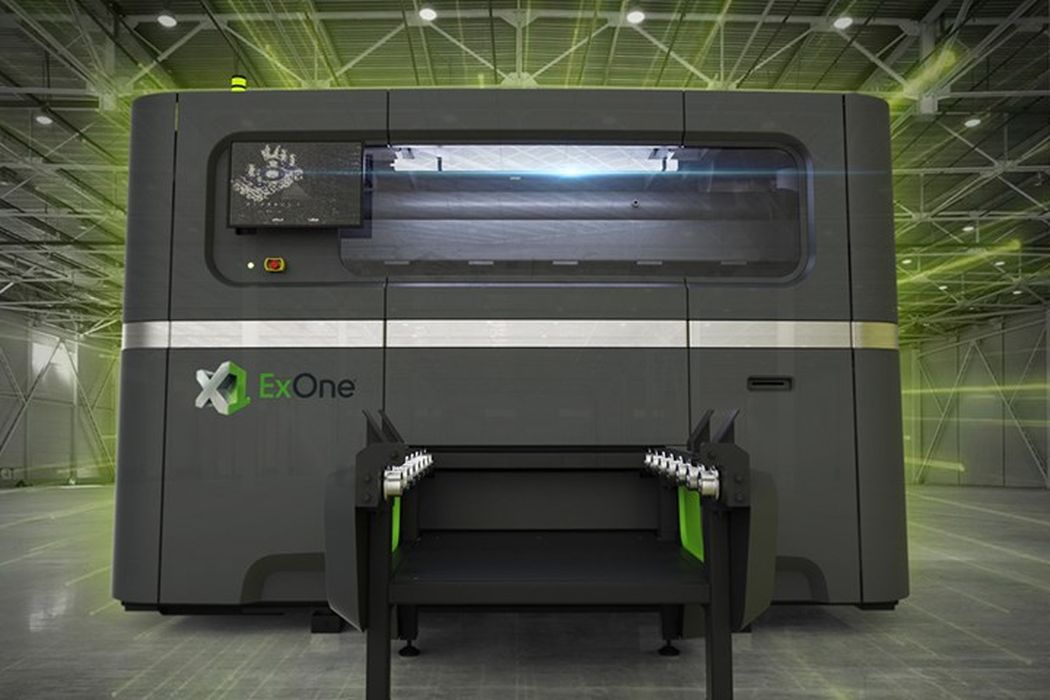
One of the most closely watched panels centered on ExOne and the broader consolidation taking place in binder jetting and industrial printing. Eric Bader, CEO of ExOne Global Holdings, joined Whitney Haring-Smith, co-founder and managing partner of Anzu Partners, for a conversation that blended operational insight with investment perspective.
The backdrop to this discussion included the bankruptcy of Desktop Metal and its subsequent acquisition by an investment group that also held Voxeljet. The combination was logical in some respects. Both companies focus on binder jetting technologies, particularly for foundry and casting applications. Both were founded by technologists who had worked together earlier in their careers before pursuing different paths.
At one point, each company reached valuations approaching US$1 billion, despite generating less than $25 million in annual sales. That imbalance between valuation and revenue reflected the exuberance that once surrounded additive manufacturing. It also revealed how difficult it has been to translate technical promise into sustained profitability.
Both firms maintained headquarters in Germany, with manufacturing operations spread across multiple countries. The new ownership structure aims to rationalize operations and create a stronger, more focused entity. ExOne continues to lead in foundry and casting applications across the Western world, while China has established itself as the dominant force in Asia for these technologies. The competitive landscape is global, and scale matters.

Beyond the formal sessions, the pre-conference exhibition hall provided its own set of insights. I spent time at the Carbon exhibit, which stood out for its practical emphasis. Rather than relying solely on slides or videos, the team brought physical samples that attendees could pick up and examine.
On display were components from Adidas footwear lines that use Carbon’s lattice structures for cushioning, high-performance bike saddles, dental applications produced with precise polymer resins, and football helmets developed with Riddell. Seeing and handling the parts reinforced the tangible progress additive has made in consumer and medical markets. These were not prototypes. They were finished products in active use.
Later in the program, Riddell’s Chief Product Officer, Thad Ide, joined Carbon CEO Phil DeSimone for a panel discussion. The conversation focused on how additive enables mass customization at scale, particularly in protective sports equipment. By tailoring internal lattice geometries to individual athletes, manufacturers can improve fit and impact performance without retooling entire production lines. It was a practical example of how digital design and advanced materials translate into measurable benefits.
The exhibition hall itself benefited from its location. Large windows framed sweeping views of New York Harbor, providing a dramatic backdrop to discussions about supply chains, security, and global competition. It was a reminder that additive manufacturing operates in a connected world. Designs move instantly across oceans, even if people sometimes struggle to do so during snowstorms.
By the end of the first day, a few themes had clearly emerged. Trust is central. Whether in cybersecurity, investor relations, or customer partnerships, additive companies must prove they can deliver consistently and securely. Capital discipline is becoming more important as the sector moves beyond its early hype cycle. And geopolitical realities are reshaping how and where manufacturing happens.
The Additive Manufacturing Strategies Conference did not shy away from hard questions. It acknowledged setbacks, including bankruptcies and missed projections. But it also highlighted real progress, from distributed drone innovation to customized consumer products.
Perhaps the most striking takeaway was the industry’s resilience. Despite travel disruptions and a challenging economic climate, by the second day, the rooms were full, and the discussions were substantive. People are still investing time and energy in making additive manufacturing work at scale.
The Research & Development Tax Credit
The now permanent Research & Development Tax Credit (R&D) is available for companies developing new or improved products, processes, and/or software.
3D printing can help boost a company’s R&D Tax Credits. Wages for technical employees who create, test, and revise 3D printed prototypes can be included as a percentage of eligible time spent for the R&D Tax Credit. Similarly, when used as a method of improving a process, time spent integrating 3D printing hardware and software counts as an eligible activity. Lastly, when used for modeling and preproduction, the costs of filaments consumed during the development process may also be recovered.
Whether it is used for creating and testing prototypes or for final production, 3D printing is a strong indicator that R&D-eligible activities are taking place. Companies implementing this technology at any point should consider claiming R&D tax Credits.
Conclusion
As attendees filtered out of the Museum of Jewish Heritage at the end of the day, the harbor lights flickered against the cold winter air. The setting felt symbolic. Additive manufacturing sits at a crossroads, influenced by global currents and shifting conditions. But like the conference itself, it continues to move forward, even when the path requires a few unexpected detours.