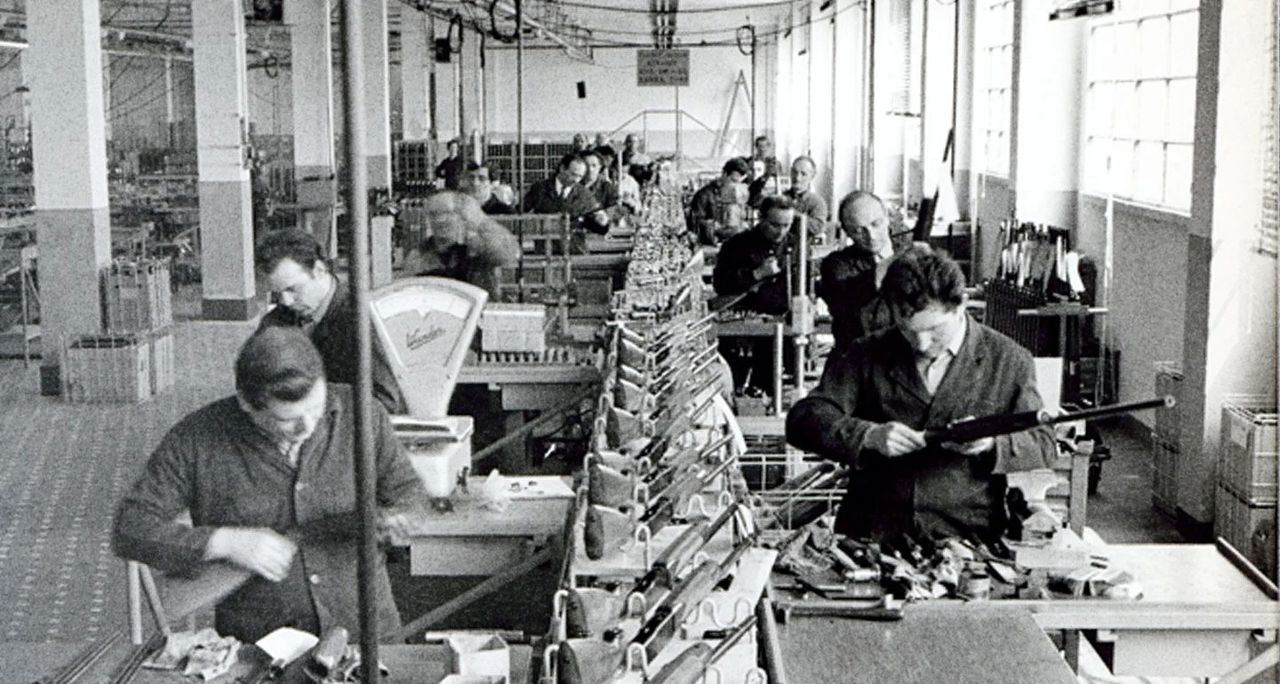
Charles R. Goulding and Preeti Sulibhavi take a closer look at the alliance of a Renaissance-era gunmaker and a modern US firearm manufacturer, and how 3D printing innovation has helped Beretta set its sights on America’s Sturm, Ruger & Co., Inc.
Beretta’s Strategic Move: A Stake in Sturm, Ruger & Co.
In a bold development in 2025, Beretta Holding S.A. disclosed it had acquired nearly a 10% stake in U.S. publicly traded firearms maker Sturm, Ruger & Co., Inc., officially filing that it held around 7.7 %, later updated to 9 % of Ruger’s outstanding shares.
This move generated ripple effects in corporate governance circles. Ruger’s board adopted a limited-duration stockholder rights plan (a “poison pill”) designed to deter any single entity from gaining control without appropriate compensation to shareholders.
Beretta’s SEC filing makes clear that it does not currently intend to take control of Ruger but plans to engage in discussions with Ruger’s management and board about “potential areas of operational and strategic collaborations.”
Financial news outlets and analysts have reported that Beretta’s increased involvement extends into a possible proxy contest or board engagement, with intentions to discuss governance reform or operational strategy ahead of Ruger’s annual shareholders meeting.
From a strategic perspective, this is not a simple investor position — it reflects a potential partnership or restructuring dialogue between two major players in the firearms industry, spotlighting shifting dynamics in a market where Ruger has faced sales challenges and competitive pressures.
Beretta in the United States: A Major Market
The United States represents one of the most lucrative firearms markets in the world. With strong civilian firearm ownership, sporting shooting culture and law-enforcement procurement, the U.S. is central to Beretta’s global strategy. Various analyses place a substantial portion of Beretta’s sales in North America, with the U.S. alone accounting for a significant share of exports and direct revenue.
Beretta USA — founded in 1972 — operates manufacturing facilities in states like Tennessee and historically in Maryland, producing pistols, accessories and supporting the North American market directly.
Beretta’s historical resonance in the U.S. stretches back decades. In 1985, its Beretta 92FS was adopted as the M9 service pistol by U.S. military branches, replacing the classic .45 ACP sidearm — a landmark contract that elevated the brand’s recognition stateside (though that contract later shifted to another manufacturer).
While exact market share figures for Beretta in the U.S. civilian market vary by year and product category, general industry production reports show Beretta USA among the top tens of producers, especially in pistols and shotguns, indicating a strong footprint in U.S. firearm imports and domestic manufacture.
What Beretta Gains from the U.S. Market
For Beretta, a deeper foothold in America offers several benefits:
1. Market scale and stability: The U.S. remains the world’s largest civilian firearms market, with consistent demand for sporting arms, defense-oriented products and aftermarket accessories. This creates a reliable revenue base that can offset fluctuations in European and global markets.
2. Manufacturing and R&D synergies: Beretta’s existing U.S. factories and distribution network give it a local presence that mitigates tariffs and trade barriers while facilitating tailored product development for American consumers.
3. Shared expertise: Collaboration with an established U.S. manufacturer like Ruger could create opportunities for cross-licensing technologies, joint ventures, or combined procurement for law enforcement or military contracts. This is especially relevant in an era of rapid innovation in firearms.
Conversely, Ruger could benefit from Beretta’s global scale, brand strength and diversified product lineup, including optics, ammunition, and premium hunting arms — all areas where Beretta Holding has expanded significantly via acquisitions.
Additive Manufacturing: Beretta’s 3D Printing Initiatives
Long-established manufacturing firms are not immune to technological transformation — and Beretta is pushing into additive manufacturing. While the company doesn’t publish detailed proprietary R&D accounts, industry reports, corporate press and tech press coverage indicate that Beretta employs advanced 3D printing technologies (including metal powder-bed fusion and polymer SLS/SLA) for rapid prototyping and small-series functional parts. This speeds design iterations and reduces tooling costs in early development.
The company also participated in humanitarian 3D printing efforts, such as producing emergency respirator valve components during the COVID-19 pandemic, showing how additive manufacturing can provide agility beyond arms production.
In the enthusiast community, hobbyists frequently 3D print high-strength components — such as reinforced frames and custom accessories for models like the Beretta 92 — illustrating widespread grassroots engagement with additive tech in firearms contexts. (Note: such community activity intersects complex legal and safety landscapes.)
This approach aligns with Beretta’s longstanding philosophy of balancing craftsmanship and innovation — marrying centuries of learned mechanical skill with cutting-edge manufacturing technology.
Why the 500-Year-Old Beretta Dynasty Is Making History Again
For nearly half a millennium, one family has quietly shaped the world’s small arms industry. Beretta Holding S.A. traces its roots back to a 1526 receipt for 185 arquebus barrels sold to the Republic of Venice — a document considered the official foundation of the company and the oldest firearms contract in existence.
That transaction, made by Bartolomeo Beretta, a master gun barrel maker in the village of Gardone Val Trompia in northern Italy, marked the first recorded step in what would become the world’s longest-continuously operating firearms company.
Over the centuries, the business passed from father to son (from Bartolomeo to Jacopo, then to Giovannino and subsequent generations) under a guild system that preserved artisanal knowledge and maintained family ownership through political upheavals, wars and industrial revolutions. Today, Beretta is still run by descendants of the original family — now in its 15th generation — and celebrates its quincentennial anniversary in 2026 with both reverence for its history and an eye toward the future.
The Beretta Legacy: Family, Ownership and Famous Arms
Beretta’s story is not simply about longevity but about global influence. Its operations evolved from muskets and barrels for Renaissance armies to modern shotguns, pistols and rifles used by civilian shooters, law enforcement, and militaries across the world. Many of its iconic products include:
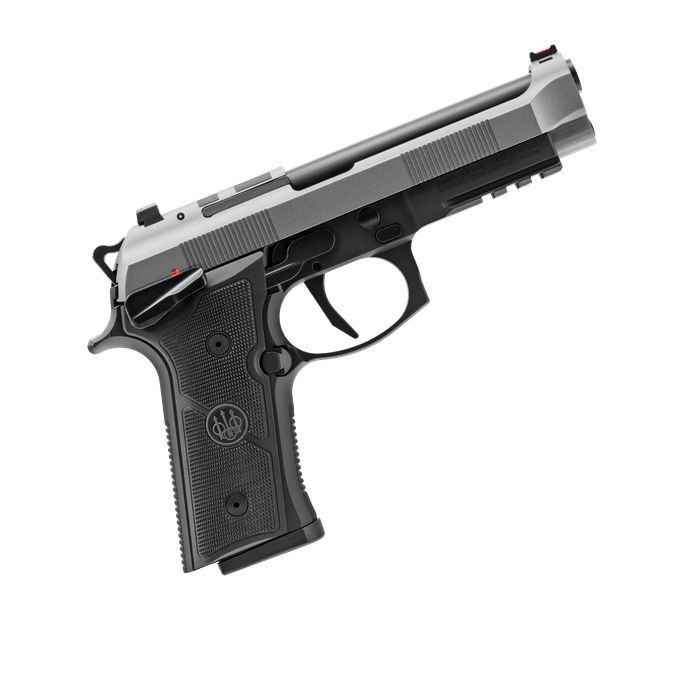
- The Beretta 92 series — a highly popular 9 mm semi-automatic pistol popularized in American culture and extensively used by military and law-enforcement agencies.
- The Beretta Model 1918 submachine gun, one of the early automatic weapons fielded in World War I.
- A series of world-class sporting shotguns and hunting rifles that have dominated competitive shooting fields for decades.
The company’s precise current ownership structure is private and family-controlled, but it sits within the umbrella of Beretta Holding S.A., headquartered in Luxembourg with subsidiaries and brands spanning firearms, optics and ammunition.
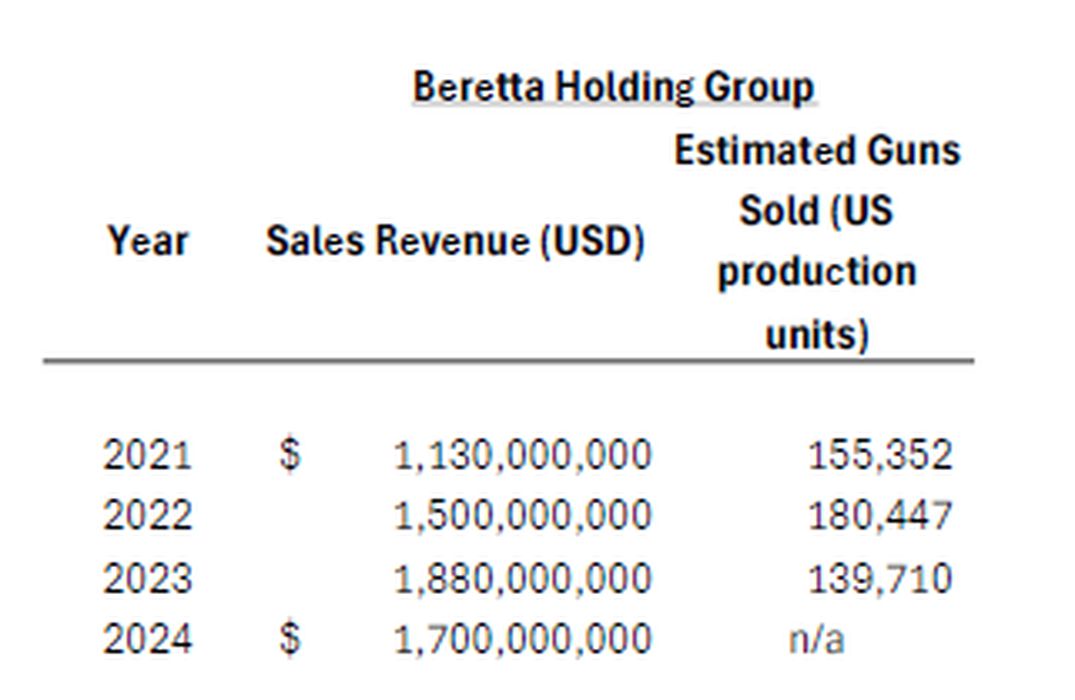
Thanks to diversification and acquisitions like that of Swiss ammunition maker RUAG Ammotec, Beretta Holding generated approximately US$1.7 billion in revenue in 2024 — a testament to its continued relevance and scale. The success was driven by high demand for firearms, ammunition, and defense contracts. Beretta’s North American sales increased by 62% between 2019 and 2021, with its strongest market share in the US and Europe.
What About Sturm Ruger and 3D Printing?
Sturm, Ruger & Company, Inc. is headquartered in Southport, Connecticut, with additional facilities in Newport, New Hampshire; Mayodan, North Carolina; and Prescott, Arizona.
Financially, Ruger reported approximately US$535.6 million in net sales for 2024, with roughly 1,780 employees across its operations — figures indicative of a mid-size but deeply rooted American manufacturer.
While Sturm, Ruger & Co., Inc. has not prominently advertised in-house 3D printing or additive manufacturing initiatives in public filings or news sources, industry observers note that many modern firearm companies explore rapid prototyping techniques as part of R&D workflows. Some third-party projects have showcased 3D printed Ruger components, but these are largely community efforts and not official corporate releases.
Whatever Ruger’s internal use of additive tech, increased collaboration or knowledge sharing with Beretta’s advanced AM capabilities could create efficiency gains or novel product development paths.
Since the inception of our company, R&D Tax Savers, we have worked consistently with the firearm and ammunition industry to document their research and development. I have been familiar with Sturm Ruger since analyzing the company in business school in the late 1970’s. In 2014, Sturm Ruger was the subject of a Harvard Business School case study.
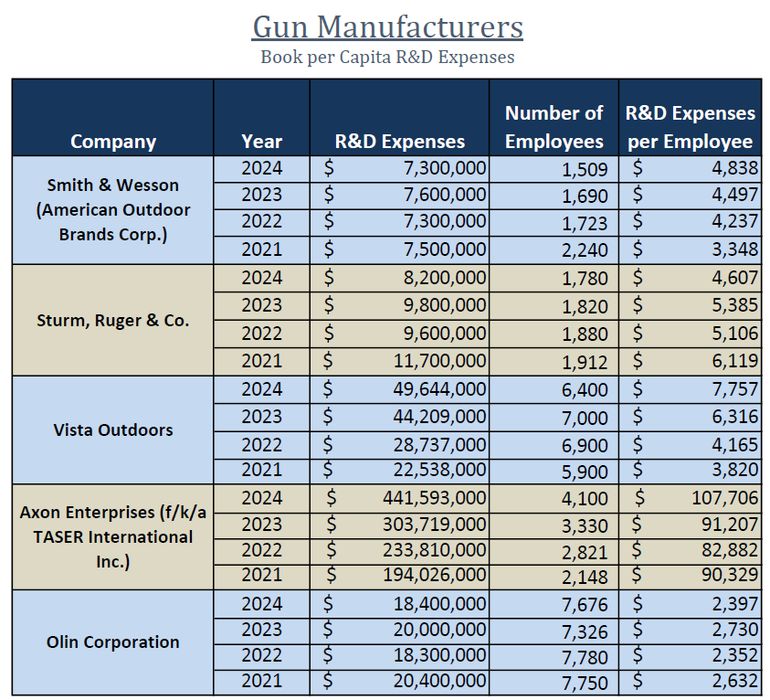
Below is a table that summarizes the amount that the top US gun manufacturers spend on research and development per employee in recent years. Working with Beretta could move Sturm Ruger’s position on this list of R&D spend.
The Research & Development Tax Credit
The now permanent Research & Development Tax Credit (R&D) Tax Credit is available for companies developing new or improved products, processes and/or software.
3D printing can help boost a company’s R&D Tax Credits. Wages for technical employees creating, testing and revising 3D printed prototypes can be included as a percentage of eligible time spent for the R&D Tax Credit. Similarly, when used as a method of improving a process, time spent integrating 3D printing hardware and software counts as an eligible activity. Lastly, when used for modeling and preproduction, the costs of filaments consumed during the development process may also be recovered.
Whether it is used for creating and testing prototypes or for final production, 3D printing is a strong indicator that R&D-eligible activities are taking place. Companies implementing this technology at any point should consider taking advantage of R&D Tax Credits.
Conclusion: History Meets Modern Tech
The story of Beretta is a remarkable arc from Renaissance barrel maker to global firearms heavyweight. As it approaches its 500th anniversary, its calculated entry into the ownership structure of Sturm Ruger signals more than just a financial investment — it suggests evolving industrial collaboration at the intersection of tradition, global markets and modern manufacturing technologies like 3D printing.
For the additive manufacturing community, these developments are a shot across the bow — centuries of expertise blending with cutting-edge innovation. When centuries of experience meet modern day, history is made. Beretta’s aim at Sturm Ruger is just that — and the 3D printing industry should heed this warning shot and benefit from this alliance.