Charles R. Goulding and Andressa Bonafe examine how GE Aerospace’s new US$30 million training initiative and the rise of additive manufacturing are reshaping America’s industrial workforce and redefining how the nation builds skills.
In October 2025, GE Aerospace announced a US$30 million, five-year workforce-training initiative aimed at expanding the U.S. pipeline of skilled manufacturing talent. The program, funded through the GE Aerospace Foundation, will provide equipment, teacher training, and scholarships in partnership with technical schools and universities nationwide. The company described the initiative as a response to a growing shortage of qualified industrial workers.
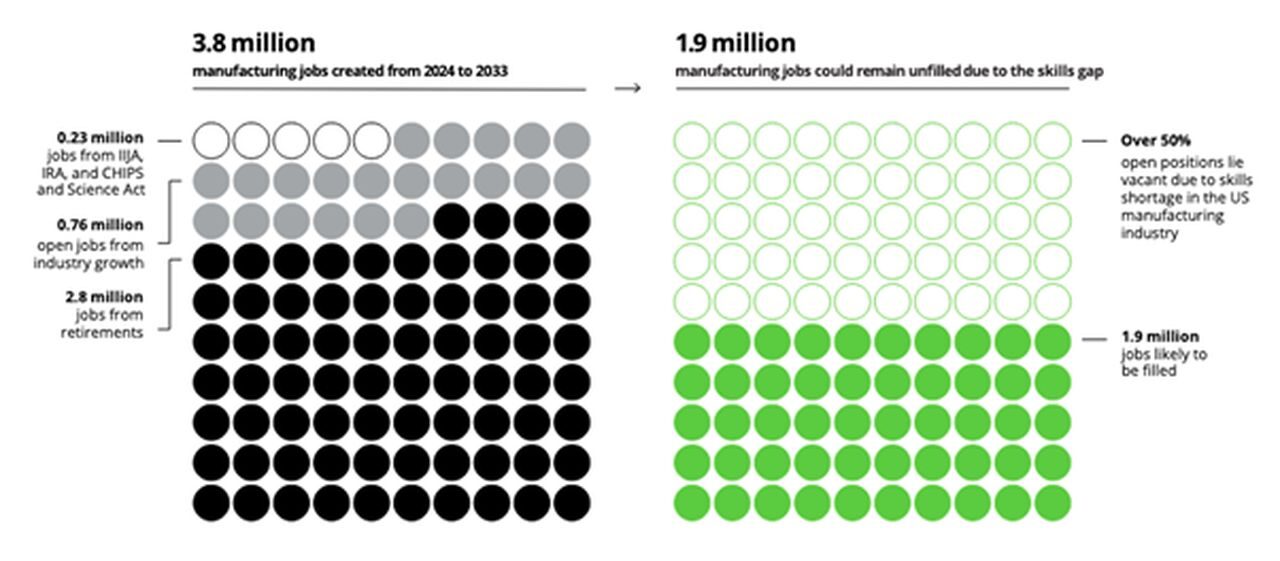
The numbers back this up. According to a 2024 Manufacturing Institute / Deloitte study, the U.S. will need to fill nearly 3.8 million manufacturing jobs between 2024 and 2033, yet roughly half may remain unfilled if current training and recruitment trends persist. That gap isn’t limited to entry-level production roles; it extends across advanced manufacturing, robotics, and aerospace maintenance, where shops are expanding capacity faster than they can onboard skilled technicians..
The shipbuilding market is a particularly good illustration. General Dynamics Electric Boat recently announced plans to hire about 3,000 people to meet submarine demand, while Virginia’s Hampton Roads region is short roughly 10,000 workers in shipbuilding and repair. At HII, management reports 4,600 shipbuilders hired year-to-date alongside improving retention. Meanwhile, foreign investors are pouring capital into U.S. yards – Hanwha announced a US$5B program at Philly Shipyard and Davie acquired Texas facilities – all moves that still hinge on training new workforces at scale.
Though most commonly associated with innovation in products rather than people, additive manufacturing may be part of the solution. 3D printing is both a subject of study, with a growing curriculum of materials, design, and process qualification, and a learning tool. It is a hands-on environment in which iteration, experimentation, and collaboration mirror the very skills that today’s production requires. Seen through the lens of behavioral science, particularly how people learn, adapt, and communicate, additive manufacturing emerges as a powerful platform for developing the mindset and reasoning skills that current manufacturing demands.
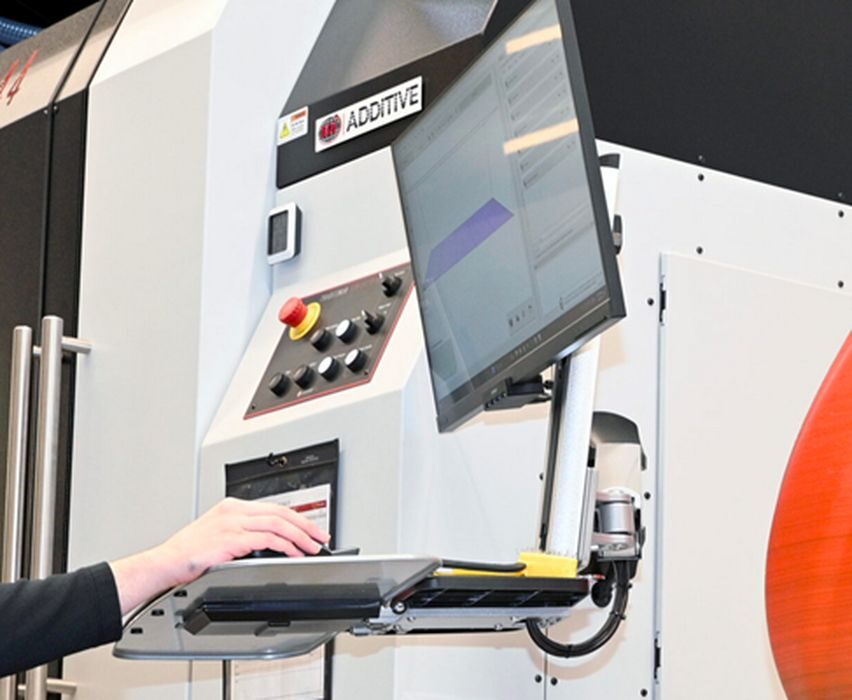
Investing in Skills: Additive at the Center of Workforce Development
Across the U.S., workforce training has become a national priority and additive manufacturing is increasingly central to that effort. From aerospace to shipbuilding, companies, government programs, and universities are investing in hands-on education that treats 3D printing as both a technical skill and a method of learning by doing. The message is consistent: developing future industrial talent means teaching not only how to operate machines, but how to experiment, analyze, and adapt, the very skills that additive manufacturing is uniquely positioned to build. The following paragraphs present examples of large-scale, nationwide initiatives.
National Backbone – America Makes (Playbook + EWD)
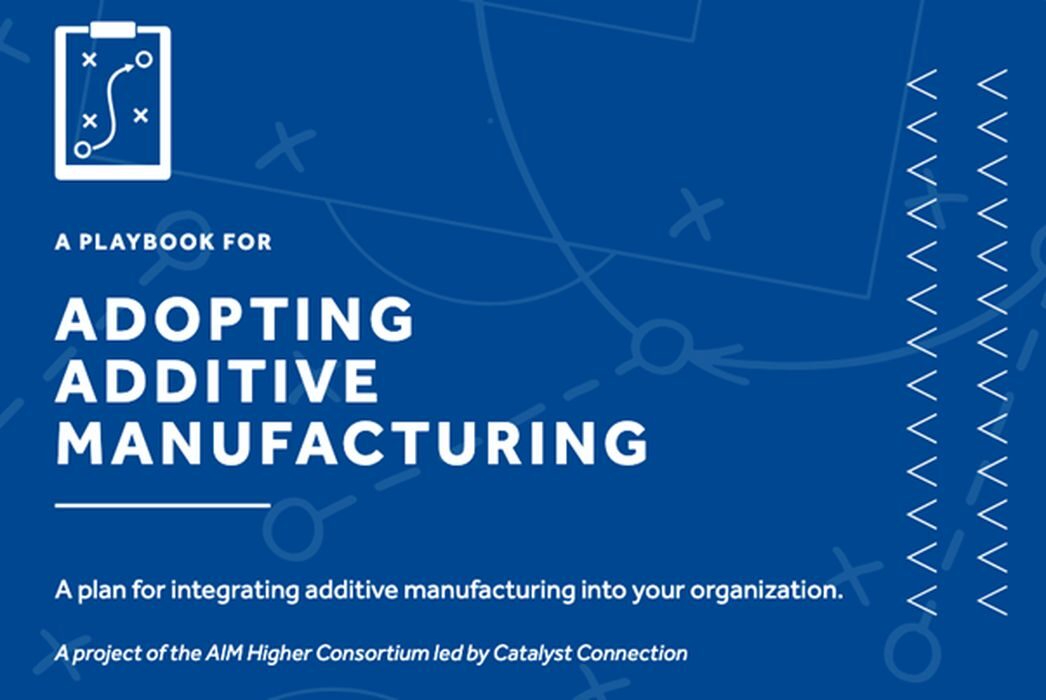
America Makes, the National Additive Manufacturing Innovation Institute and part of the Manufacturing USA network, accelerates U.S. adoption of additive manufacturing through R&D, standards work, and workforce initiatives. America Makes anchors a national framework for additive-manufacturing training. Its AM Adoption Playbook consolidates education and training resources, while its Education & Workforce Development hub curates digital assets and competency roadmaps that educators and employers can align with local programs. Together, these resources provide a common scaffolding for AM education and workforce development. Other Manufacturing USA also incorporate additive elements into their training ecosystems – MxD integrates 3D printing within digital manufacturing curricula, while NextFlex advances additive electronics, and LIFT works with community and technical colleges to embed AM content in technician pathways.
Defense Workforce Pipelines – ATDM and NASAM
The Department of Defense–supported Accelerated Training in Defense Manufacturing program delivers a 16-week pathway across five trades, including additive manufacturing. This track prepares graduates for operator roles with intermediate skill sets, emphasizing work in 3D space, blueprint interpretation, precision measurement, creation of 3D models and toolpaths for 3-axis metal and composite-extrusion printers, and exposure to 3D scanning, reverse engineering, multi-axis machining, and wire-arc additive deposition, with projects aligned to DoD additive strategy and part-qualification documentation. Complementing ATDM, the Naval Aviation School for Additive Manufacturing (NASAM) is a six-week course for active-duty Navy and Marine Corps maintainers that teaches foundational AM skills on polymer systems deployed in the fleet. The curriculum covers CAD, reverse engineering, metrology, material evaluation, and Navy AM policies and procedures; piloted in 2024 and hosted by the Institute for Advanced Learning and Research, NASAM adapts ATDM’s accelerated format to sustainment and repair needs.
Industry Certifications — Tooling U-SME / SME AM Credentials
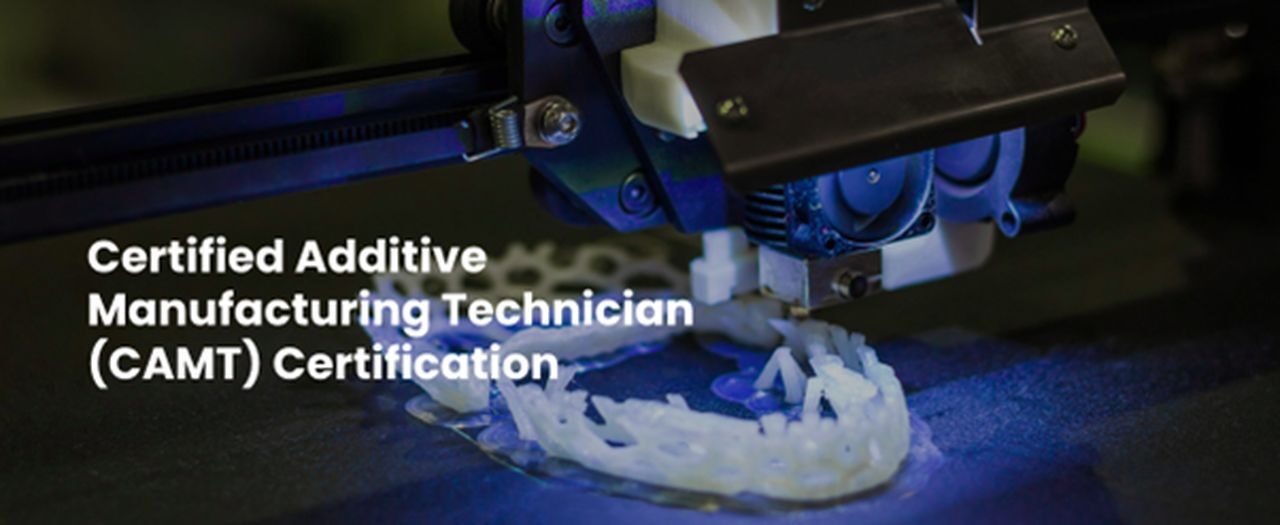
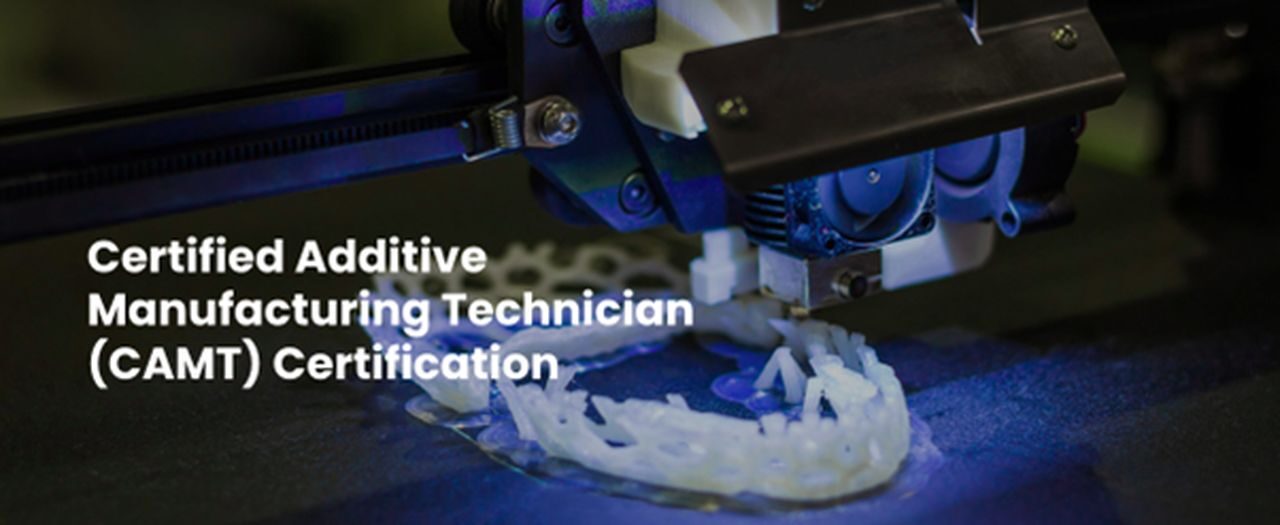
The Society of Manufacturing Engineers is a nonprofit founded in 1932 that advances North American manufacturing through technology adoption and workforce development; Tooling U-SME is its workforce-development division, working with thousands of companies (including over half of Fortune 500 manufacturers) and 1,000+ educational institutions. SME’s Additive Manufacturing Certification program offers two stackable credentials: Certified Additive Manufacturing Fundamentals (CAM-F) and Certified Additive Manufacturing Technician (CAM-T). The certifications align to an Additive Manufacturing Body of Knowledge developed with Tooling U-SME, America Makes, MSOE, NCATC, and TEAMM (with input from 500+ AM professionals), and cover AM process categories, materials, safety, post-processing, and methodology.
Developing the Additive Mindset
Additive manufacturing trains the very skills that a digital industrial workforce needs. Every build begins as a hypothesis, tested through parameters, materials, and geometry. Each failure produces data, not waste. Through this rhythm of print, evaluate, adjust production mirrors the scientific process and fosters the type of reasoning that cognitive scientists frequently associate with better decision-making, problem-solving, and innovation across fields.
While traditional manufacturing rewards precision and compliance, additive builds on exploration. It teaches that improvement comes from feedback, not from avoiding mistakes. In well-run additive environments, a misprint is analyzed, discussed, and logged. The lesson becomes part of a shared knowledge base that raises everyone’s performance. In this way, the culture of additive is inherently a culture of learning.
The ability to improve through iteration naturally pairs with a broader requirement in advanced manufacturing: open-minded thinking. Additive manufacturing is a field in constant motion, with new materials, software, and process parameters appearing every month. To stay effective, professionals must remain flexible and receptive, ready to integrate new information and unlearn outdated assumptions. Open-minded thinking allows them to navigate uncertainty, evaluate unfamiliar tools without bias, and recognize innovation early.
Finally, additive manufacturing shortens psychological distance, the felt gap between an abstract idea and a real object. When students, designers, engineers, and technicians can see and touch the results of their own reasoning within hours, understanding accelerates, engagement rises, and skills transfer faster. That immediacy, turning a concept into something tangible, builds motivation and confidence more effectively than most abstract training modules.
By turning trial and iteration into everyday practice, additive manufacturing blurs the line between training and research. The same activities that build skills can also advance innovation and qualify for the R&D Tax Credit.
The Research & Development Tax Credit
The now permanent Research and Development (R&D) Tax Credit is available for companies developing new or improved products, processes and/or software.
3D printing can help boost a company’s R&D Tax Credits. Wages for technical employees creating, testing and revising 3D printed prototypes can be included as a percentage of eligible time spent for the R&D Tax Credit. Similarly, when used as a method of improving a process, time spent integrating 3D printing hardware and software counts as an eligible activity. Lastly, when used for modeling and preproduction, the costs of filaments consumed during the development process may also be recovered.
Whether it is used for creating and testing prototypes or for final production, 3D printing is a great indicator that R&D Credit eligible activities are taking place. Companies implementing this technology at any point should consider taking advantage of R&D Tax Credits.
Conclusion
Closing the skills gap will take more than new equipment; it requires a new way of learning. The spread of additive manufacturing shows that skill development and innovation are not separate goals but parts of the same cycle. The processes that yield better parts also produce better thinkers – people who test, measure, and refine with intention. As this approach scales across sectors, it points toward a future in which manufacturing progress is measured as much by human capability as by throughput.