
California’s AB2047 is one of the most troubling pieces of 3D printing legislation ever proposed.
The bill is intended to address the problem of 3D printed “ghost guns”. But the mechanism it proposes to do so is way too broad: requiring all 3D printer manufacturers selling into California to equip machines with state-certified firearm blueprint detection and blocking technology. By March 2029, non-compliant printers could be barred from sale or transfer in the state.
To those not involved in 3D printing, that sounds might sound reasonable — until you understand how 3D printers actually work.
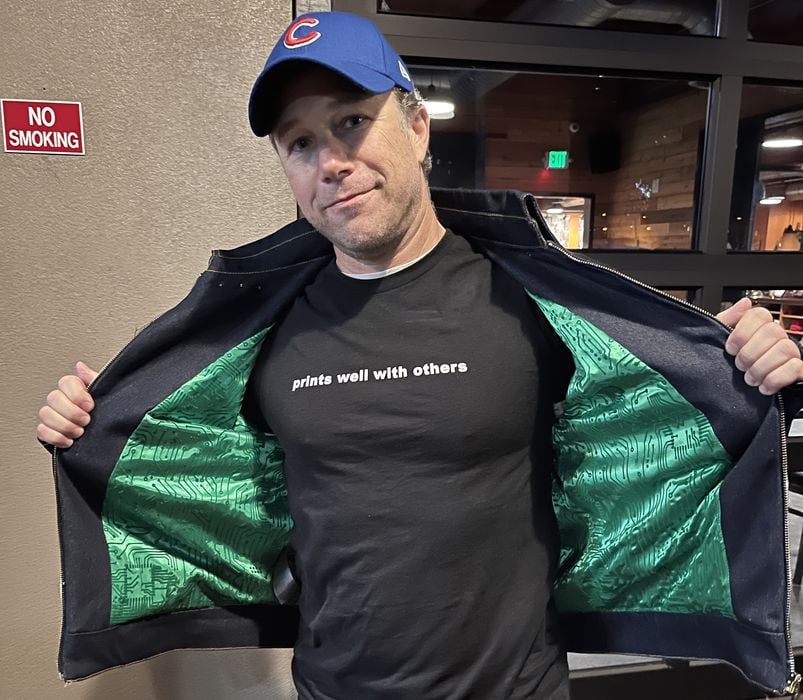
David Tobin does. He is executive director of the Community Manufacturing Initiative and is also known through his work with 3D Printing Nerd. Tobin has become one of the more visible technical voices opposing AB2047, not because he is defending firearms, but because he believes the bill misunderstands additive manufacturing at a fundamental level. Tobin told us:
“This is not a gun issue. This is a math and science issue. This is a technology issue.”
The Bill’s Technical Problem
AB2047 requires California agencies to investigate firearm blueprint files and existing detection algorithms, publish performance standards, certify acceptable detection technologies, and then require manufacturers to attest that each printer model sold in California includes the approved blocking system.
Tobin’s objection is that the bill assumes a level of object recognition and enforcement that does not reliably exist in real-world 3D printing workflows:
“You don’t know the intent of a shape.”
He gave us a simple visual example: an object that looks like a heart from one angle and a star from another. The same kind of ambiguity applies to mechanical geometry. A part could be redesigned, embedded in a larger object, split into multiple sections, modified for use as a prop, used in education, or resemble a restricted shape by coincidence.
“How do you know the intent of this shape, of this object, what this thing’s going to do? You can’t regulate what a shape is going to do.”
That is the core technical issue. A 3D printer is a general-purpose manufacturing tool. It does not itself know whether a geometry is dangerous, decorative, educational, experimental, or merely similar to something else.
A State-Approved Printer List?

The bill does more than ask manufacturers to “try their best”. It would instead create a compliance system in which printer models must be approved for sale in California. The state would maintain a list of compliant makes and models, updated quarterly. Printers not equipped with certified firearm blocking technology and not on the list would be prohibited from sale or transfer beginning March 1, 2029.
That could create an enormous burden for manufacturers, resellers, schools, libraries, makerspaces, small businesses, open-source projects, and hobbyists.
Tobin’s concern is that companies may simply decide California is not worth the trouble.
“Do you think a company is going to say, ‘I need to make a special version of my 3D printer that’s going to handle technology that we don’t even know exists?’”
This is where the bill could cause actual market disruption. If a manufacturer cannot or will not comply, or if compliance creates liability, the most rational response may be to stop selling into California.
That would not just affect hobbyists. Tobin believes it would hit education, public libraries, maker labs, engineering programs, dental labs, product developers, small manufacturers, and R&D operations.
His AB2047 information page says that the bill could affect more than 1.5 million California students using 3D printing through schools, CTE programs, community colleges, and universities, along with thousands of businesses that rely on additive manufacturing.
“It’s Already Illegal”
A point that Tobin keeps bringing up is that the unlawful manufacture of firearms is already illegal.
The bill summary itself notes that existing California law already criminalizes knowingly or willfully aiding unlawful firearm manufacture, including manufacturing firearms using a 3D printer.
If the real problem is illegal firearm manufacturing, Tobin argues, then the law should focus on that activity. Instead, AB2047 attempts to regulate the machines themselves.
“It is illegal to make a gun with no serial number on it. That’s what a ghost gun is.”
His concern is that legislators and advocates are conflating several different things: unserialized firearms, 3D printed firearm components, downloadable files, and general-purpose fabrication tools.
Once those ideas are merged in public debate, the proposed solution can become dangerously wide.
Fearmongering
Tobin believes much of the political momentum comes from a misleading perception: a child simply presses a button on a desktop 3D printer, and a complete, undetectable, fully functional gun appears.
“That is a horrible image. That is scary to me. But it’s fake.”
This is the part of the debate that the 3D printing industry has long struggled to explain. A 3D printer does not magically produce a complete working firearm, and can never do so. Parts require design knowledge, material selection, post-processing, assembly, non-printed components, and functional testing. Even then, many 3D printed firearm concepts are crude, dangerous, unreliable, or illegal depending on jurisdiction.
But fear travels faster than technical truths, it seems.
Tobin described speaking with a state political staffer who believed there was an “epidemic” of 3D printed guns on airplanes, including “plastic bullets”, which do not actually exist. He used the story to illustrate a significant challenge: many people making or supporting these policies simply do not understand the underlying technology, and are fueled by what is effectively nonsense.
“They read headlines. They want to feel empowered, like they know something.”
The Compliance Trap
One of Tobin’s biggest objections is that the bill’s penalties and compliance obligations would not necessarily land only on large manufacturers.
He said lawyers involved in the discussion suggested that some penalties were intended for corporations, not individuals. Tobin rejected that interpretation.
“It’s a law. That means it applies to everyone.”
His example was simple, but disturbing: if someone sells their old Ender-3 to a neighbor, would that transfer require compliance with the new blocking technology? Would the seller be breaking the law? Would a district attorney ignore it? Maybe. But Tobin’s point is that laws are not enforced only according to the intentions stated in lobbying meetings.
Once the legal language is on the books, future officials may interpret it differently.
That is a real concern in technology regulation. A vague or technically confused law can become a tool for unpredictable enforcement.
Open Source In The Crosshairs
AB2047 also creates obvious problems for open-source printers, modified firmware, custom electronics, experimental machines, and research hardware. Anyone building a 3D printer would be subject to the same rules, and they may not have the resources to implement complex — and almost certainly impossible — firearm detection systems.
The bill includes requirements around software controls, firmware design, integrated preprint software, and preventing technically skilled users from evading the detection algorithm.
That immediately raises questions for the RepRap ecosystem, Voron builders, Klipper users, research labs, printer farms, schools, and anyone operating machines outside a locked-down vendor workflow.
Tobin sees this as especially damaging.
Teachers and researchers routinely modify printers. Hobbyists upgrade motion systems. Labs test new toolheads. Small manufacturers tune machines for production. Open-source developers build, fork, repair, and improve the tools themselves.
Under a strict compliance regime, those normal activities could become legally risky.
Not A Defense Of Bad Actors
Tobin is careful to separate the technical objection from the political debate over guns.
“If we need to address guns and gun issues in America, that’s a really good conversation to have.”
But he argues AB2047 is not that conversation. Instead of targeting criminal misuse, it attempts to make every 3D printer into an enforcement device.
That is the wrong layer.
He suggested a more realistic approach would be to address actual distribution of illegal files, misuse, criminal manufacture, or other specific behaviors rather than imposing impossible obligations on printer hardware.
“If we want to really take this seriously, let’s address people like MakerWorld and say, why are you promoting this?”
MakerWorld is Bambu Lab’s community website providing millions of ready-to-print 3D models, and occasionally there are visible firearm-related models appearing on the site.
That is a very different policy path. It would focus on distribution, conduct, and enforcement rather than trying to make general-purpose fabrication machines police geometry.
What Happens Next?
At the time of this interview, AB2047 had moved through California’s Assembly Judiciary Committee and had been re-referred to Appropriations.
Tobin said the appropriations process may be important because the bill requires the state to define, certify, administer, update, and enforce an entirely new technical regime.
In other words, even before asking whether the technology works, the state would have to determine how much it would cost to regulate it.
Tobin has been pushing lawmakers, advocates, educators, and the 3D printing community to respond directly and respectfully. His goal is to build a repeatable model for opposing similar legislation elsewhere.
“I want this to be RepRap legislation, essentially. Win in California, show how we address it elsewhere.”
That may be necessary. Similar concepts have appeared in other states, and the political appeal is obvious. “Ghost guns” are an easy headline that might generate votes mainly because 3D printing is still poorly understood. A bill claiming to block illegal weapons can sound reasonable to people who have never used a slicer, repaired firmware, or watched a print fail because of ordinary mechanical issues.
It is not just about California. It is a preview of what could happen when lawmakers try to regulate additive manufacturing without understanding it.
Tobin’s message to the industry is direct: stop assuming someone else will explain it.
“You have to do things in person. People have to understand that politicians are your employees.”
That may be uncomfortable for an industry that often prefers to stay out of politics. But if AB2047 advances, the consequences could extend far beyond one state.
The risk is not that 3D printers will suddenly become gun factories.
The risk is that fear-driven legislation could turn general-purpose manufacturing tools into locked-down, state-approved appliances — and in the process damage education, research, open-source development, innovation and small-scale manufacturing.
That would be a very high price to pay for a technical solution that will probably not solve the problem it claims to address, even if you built it.
I encourage you to read David’s extensive website on AB2047 at 3D Printing Nerd, which has far more details and lists the actions you can take to do your part to stop this legislation.
Via Instagram, 3D Printing Nerd and Community Manufacturing Initiative
