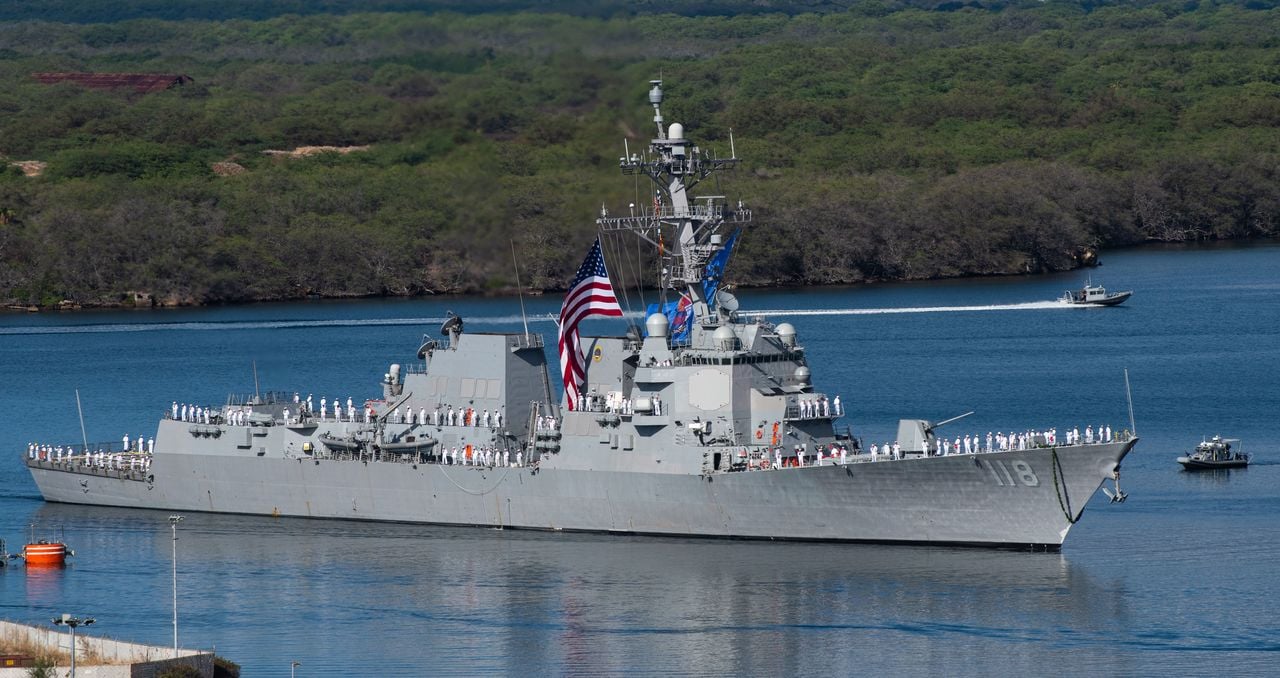
Charles R. Goulding and Preeti Sulibhavi take a closer look at how additive manufacturing is helping the Navy manage record-breaking deployments and unexpected repairs at sea.
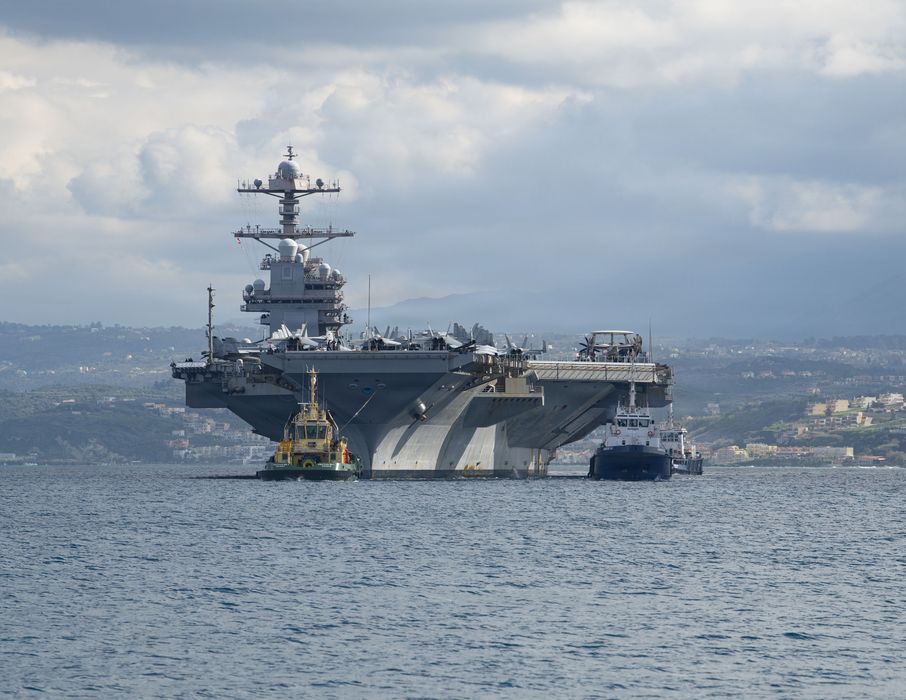
As a result of ongoing conflicts and the limited size of the U.S. fleet, naval vessels are staying at sea longer than at any point in recent decades. Aircraft carriers in particular are experiencing deployments that stretch well beyond traditional timelines. The USS Gerald R. Ford began its 2025 deployment and has now exceeded 300 days at sea, approaching the record-setting durations seen during the Vietnam era. These extended missions place enormous strain on both personnel and equipment, forcing the Navy to rethink how it maintains and sustains its fleet.
A modern aircraft carrier is essentially a floating city, with thousands of sailors and highly complex systems operating continuously. Keeping such a vessel functional requires constant maintenance. Historically, this meant relying on large civilian technical teams and shipyard visits to address repairs, particularly for advanced systems. However, in practice, it is often the more routine mechanical and electrical components that create operational risks. Failures in plumbing, valves, brackets, or electrical housings can disrupt daily operations just as effectively as more sophisticated system breakdowns.
This is where 3D printing is beginning to play a critical role. Over the past decade, the United States Navy has made substantial investments in additive manufacturing as a way to reduce downtime and improve resilience at sea. Instead of waiting weeks or months for a replacement part to be shipped from a supplier, sailors can now produce certain components onboard or at nearby facilities.
One widely cited example comes from the Navy’s work with the Naval Sea Systems Command, which has qualified hundreds of 3D printed parts for use across the fleet. According to NAVSEA and reporting from U.S. Department of Defense releases, these include critical components such as pump housings, valve bodies, and protective covers. In one case, a 3D printed drain strainer assembly was produced and installed on a ship within days, replacing a component that would have otherwise required a long supply chain delay.
Similarly, the Navy has deployed additive manufacturing capabilities aboard ships through initiatives like the “Print the Fleet” program. Early trials demonstrated that even relatively simple parts could significantly reduce maintenance delays. A report from the Office of Naval Research highlighted how onboard 3D printing reduced wait times for certain components from weeks to hours, directly improving operational readiness.
Beyond shipboard systems, aviation units have also benefited. The Navy has used 3D printed tooling and non-critical aircraft components to support platforms like the F/A-18 Super Hornet. According to Navy aviation maintenance reports, additive manufacturing has been used to produce custom brackets, covers, and support equipment, reducing dependence on legacy suppliers and improving turnaround times for repairs.
The growing adoption of 3D printing aligns with a broader shift toward digital engineering. Many of the new naval vessels currently under construction are being designed with digital twins, enabling precise virtual models of ships and their components. These digital frameworks allow engineers and sailors to identify parts, simulate failures, and produce replacements more efficiently.
Recent submarine programs provide a clear example. New builds associated with the Columbia-class submarine and Virginia-class submarine incorporate advanced digital design and manufacturing approaches. Reporting across defense industry analysis, including coverage of large-scale naval construction pipelines, has emphasized how these programs are integrating additive manufacturing from the outset. By embedding 3D printing into the design phase, the Navy ensures that replacement parts can be produced quickly and accurately throughout a vessel’s service life.
This shift is particularly important given the sheer scale of current shipbuilding efforts. The Navy is simultaneously expanding its fleet while maintaining aging vessels that remain in service longer than originally planned. Without new approaches to maintenance, lifecycle costs would continue to climb sharply.
3D printing offers a practical solution. Parts can be produced either onboard, at forward-deployed bases, or through shore-based service bureaus. In each case, the ability to generate components on demand reduces inventory requirements and shortens repair cycles. A ship operating far from its home port can remain mission-capable without waiting for traditional supply chains to catch up.
However, despite its promise, there are still constraints limiting wider adoption. One of the most significant is the issue of Right to Repair. Many naval systems are governed by contracts with original equipment manufacturers (OEMs) that restrict who can produce replacement parts. These agreements often require that repairs and replacements be sourced directly from the original contractor, even when the Navy has the technical capability to produce the part independently.
This creates a bottleneck for additive manufacturing. Even when a digital model exists and a 3D printer is available, legal and contractual limitations can prevent the Navy from fabricating the part. These restrictions apply not only to ship systems but also to aircraft and other military platforms. As a result, the full potential of 3D printing remains unrealized.
There is growing recognition within the defense community that these constraints need to be addressed. Lifecycle cost management is becoming a central focus as defense budgets increase. It is no longer enough to consider the upfront cost of building a ship or aircraft. Long-term maintenance, repair, and replacement costs must also be factored into procurement decisions.
3D printing plays a key role in this broader lifecycle strategy. By enabling on-demand production, the Navy can reduce warehousing costs, minimize downtime, and extend the operational life of its assets. A study by the Government Accountability Office has highlighted how sustainment costs often account for the majority of a system’s total lifecycle expense. Additive manufacturing directly addresses this challenge by streamlining the sustainment phase.

The Navy’s motivations for expanding its use of 3D printing are therefore clear and multifaceted. First, there is the opportunity to integrate additive manufacturing into original design processes. By designing parts specifically for 3D printing, engineers can improve performance, reduce weight, and simplify assemblies. Second, there is the need to support ongoing operations, particularly during extended deployments where traditional logistics are strained. Third, there is the long-term goal of reducing lifecycle costs across the fleet.
The current wave of shipbuilding presents a rare opportunity to fully embed these capabilities from the start. Instead of retrofitting older vessels, new ships can be designed with additive manufacturing in mind. This includes not only the parts themselves but also the digital infrastructure required to support them. Secure data management, standardized part libraries, and certification processes all play a role in making 3D printing viable at scale.
Looking ahead, the success of 3D printing in the Navy will depend on continued investment, policy reform, and cultural adoption. Sailors and maintenance crews must be trained to use these technologies effectively. Engineers must continue to qualify and certify new materials and processes. And policymakers must address contractual barriers that limit the Navy’s ability to fully leverage its capabilities.
Extended deployments are unlikely to disappear in the near future. If anything, global demands on naval forces are increasing. In this environment, the ability to repair and sustain ships independently becomes a strategic advantage. 3D printing is not a complete solution, but it is a powerful tool that helps close the gap between operational demands and logistical realities.
The Research & Development Tax Credit
The now permanent Research & Development Tax Credit (R&D) is available for companies developing new or improved products, processes, and/or software.
3D printing can help boost a company’s R&D Tax Credits. Wages for technical employees who create, test, and revise 3D printed prototypes can be included as a percentage of eligible time spent for the R&D Tax Credit. Similarly, when used as a method of improving a process, time spent integrating 3D printing hardware and software counts as an eligible activity. Lastly, when used for modeling and preproduction, the costs of filaments consumed during the development process may also be recovered.
Whether it is used for creating and testing prototypes or for final production, 3D printing is a strong indicator that R&D-eligible activities are taking place. Companies implementing this technology at any point should consider claiming R&D tax Credits.
Conclusion
As the Navy continues to evolve, additive manufacturing will move from a niche capability to a core element of fleet readiness. The combination of digital design, onboard production, and streamlined supply chains has the potential to fundamentally change how naval vessels are maintained. In a world where time at sea is measured in months rather than weeks, that shift is not just beneficial. It is essential.