
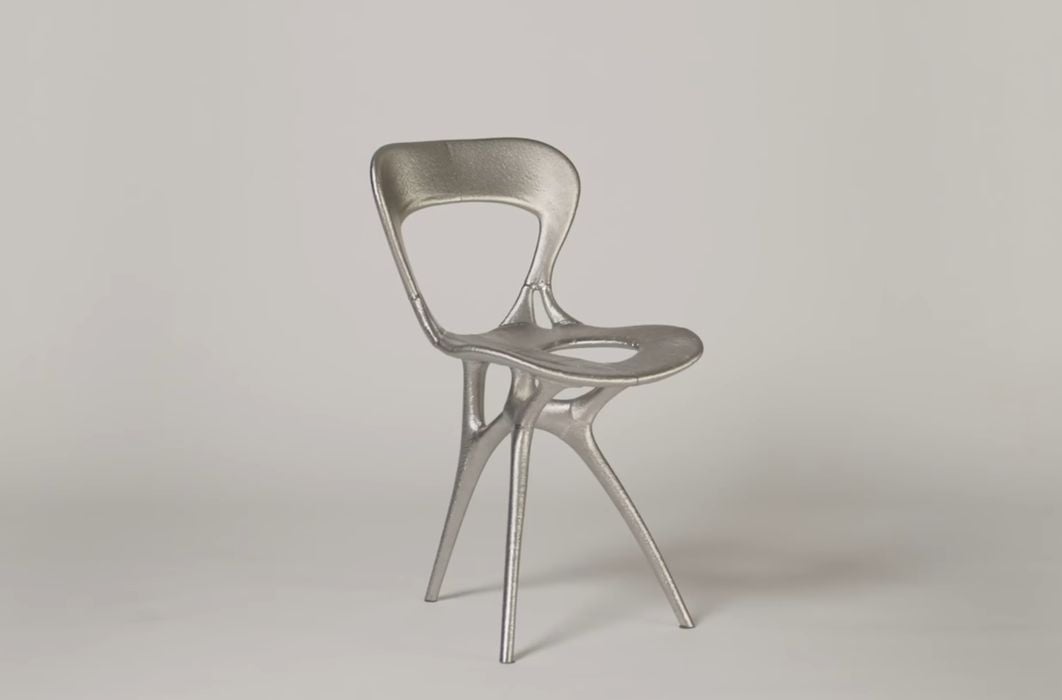
This week’s selection is the AI Chair by Ross Lovegrove and Google Deepmind.
This is a project that took place late last year, but it’s still worth discussion today. That’s because it is a glimpse into the possible future of furniture design.
What you see above is a pretty cool 3D printed metal chair, but the real story is how it came to be.
Ross Lovegrove is a long-time designer that leans into new approaches and technologies. For this project, he used not only 3D print technology, but also AI tech from Google Deepmind.
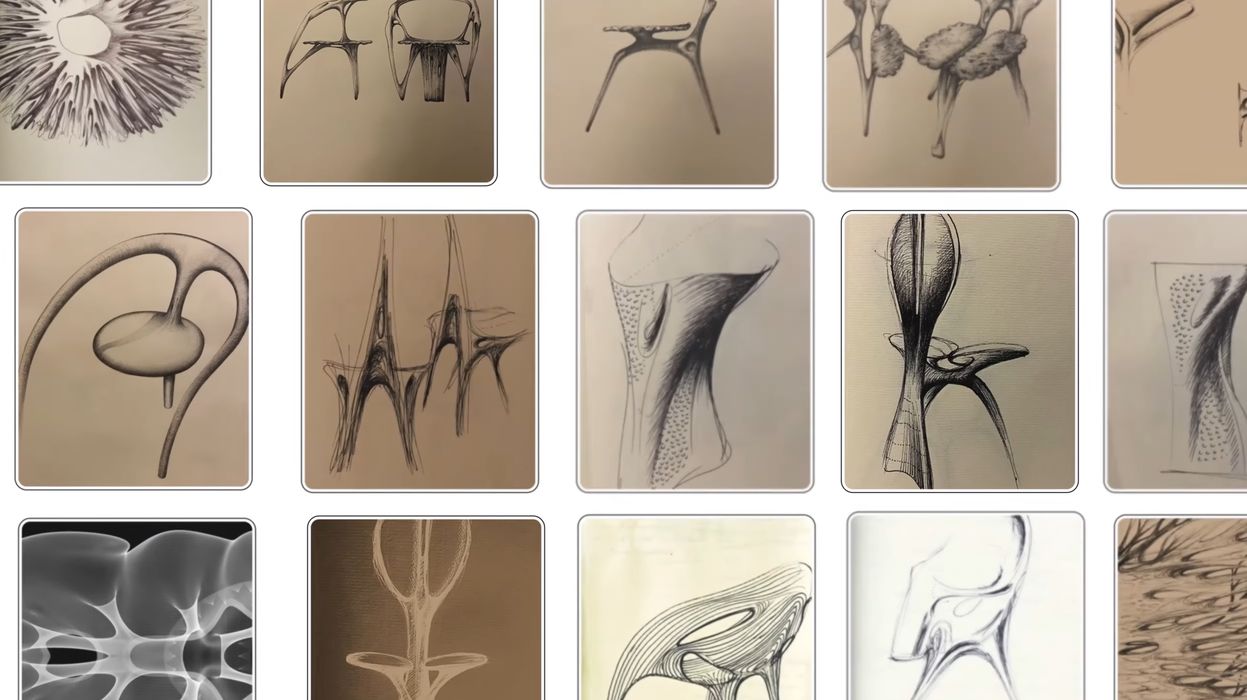
The design process was the difference here. Here’s how it worked:
- Lovegrove provided Google Deepmind with a large set of design sketches of chair possibilities.
- Google Deepmind used the numerous sketches to fine-tune their existing text-to-image AI model.
- The AI model learned Lovegrove’s design language and aesthetics from the images.
- Lovegrove used a text prompt against the newly trained AI model to generate entirely new chair models.
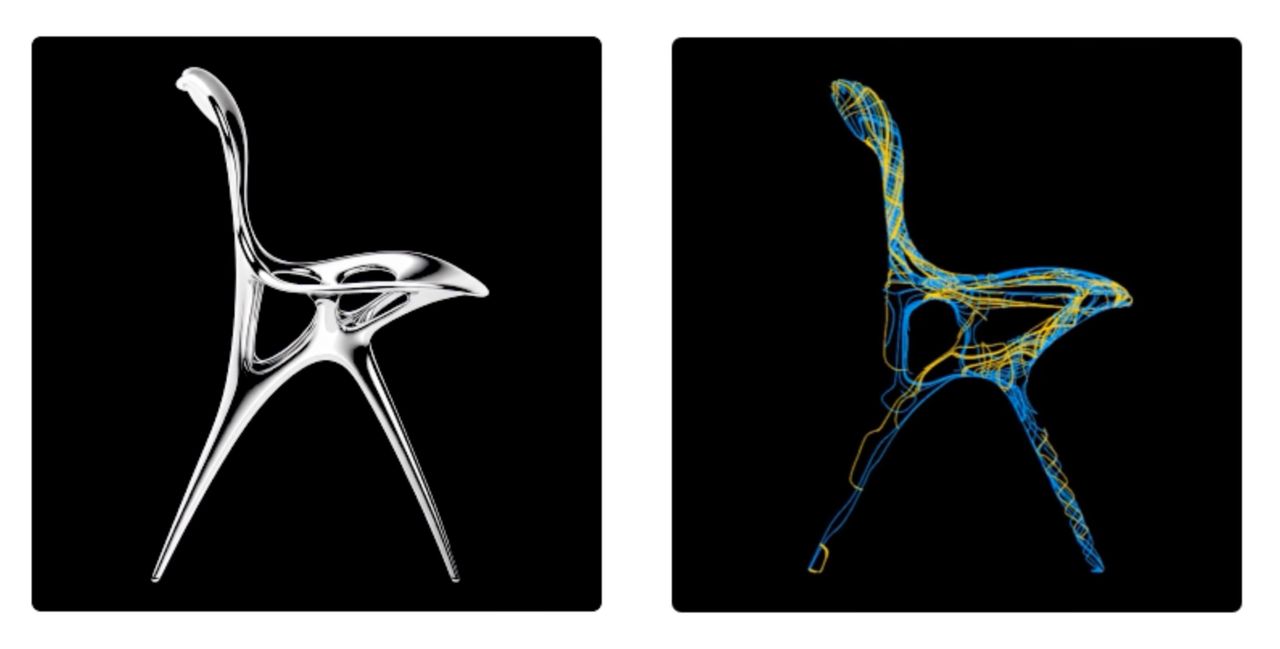
But it wasn’t quite as easy as just asking for “a chair”. Google Deepmind explains:
“Throughout the process, Lovegrove Studio observed how the model responded to specific terms and used these insights to align the outputs toward the intended design outcomes. This dialogue between designer and AI was a crucial part of the process. We paid close attention to how the model interpreted certain words, using that feedback to refine prompts and steer the output closer to the studio’s vision. We challenged the model to generate a chair without ever using the word “chair,” instead using creative synonyms to produce more diverse outputs and a richer exploration of form and function.”
Eventually, they landed on a representation — in 2D form at that point — of a chair they all felt truly reflected the design principles used by Lovegrove Studio.
This image was then transformed into a 3D model using an image-to-3D tool, which subsequently was 3D printed in metal using a DED system.
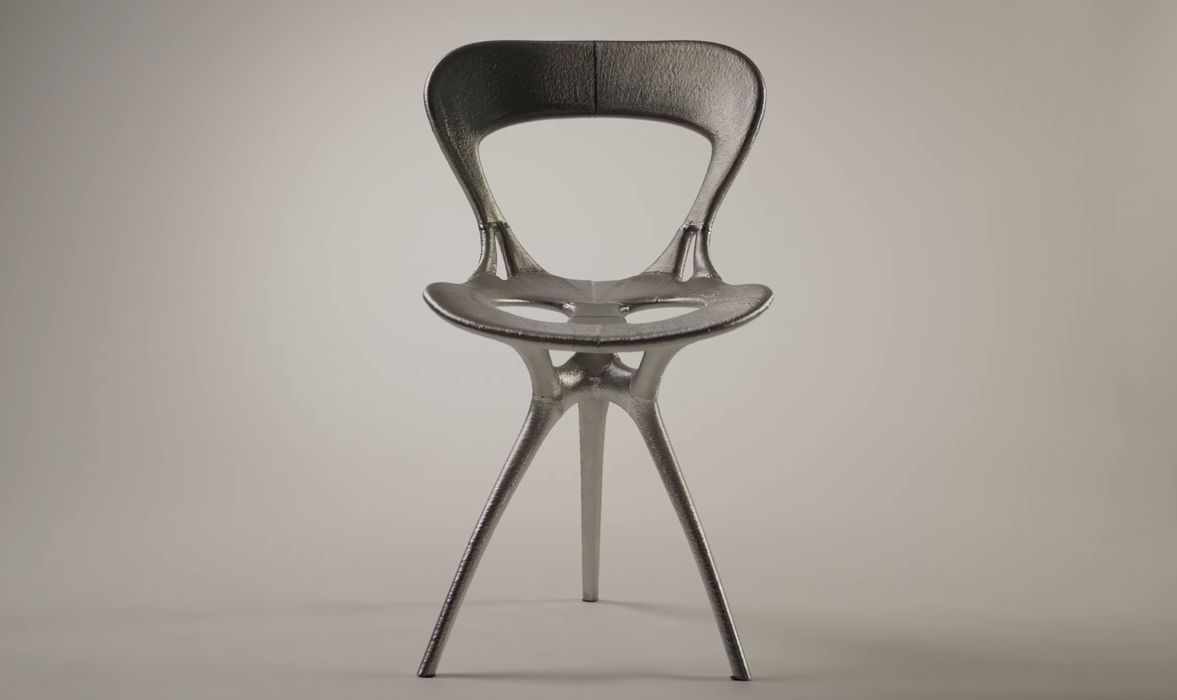
The result is a brilliantly designed metal chair. The question now is whether this was designed by Lovegrove, or the AI.
Maybe it was both.
Via Google
