Charles R Goulding and Preeti Sulibhavi explain how Madison Air’s blockbuster IPO highlights the growing role of 3D printing and energy efficiency in transforming the HVAC industry.
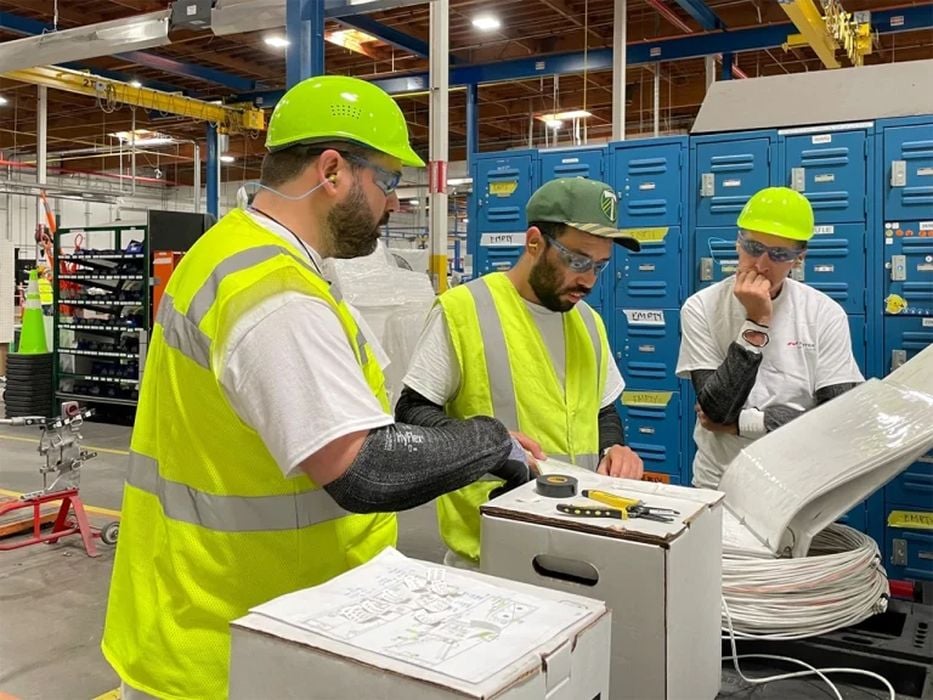
On April 16, 2026, a relatively quiet corner of industrial manufacturing suddenly took center stage. Madison Air Solutions completed a US$2.23 billion IPO, instantly becoming the largest U.S. industrial offering in decades and the biggest IPO of the year to date.
That alone would make it noteworthy. But what matters more for the additive manufacturing community is what this IPO signals: a shift in how investors value advanced manufacturing, energy efficiency, and increasingly, digital production technologies like 3D printing.
A rare industrial IPO with real momentum
Industrial IPOs of this scale are uncommon. The last comparable event dates back to the 1999 listing of UPS. That context matters. For decades, capital markets have favored software and asset-light business models. Manufacturing, especially HVAC, rarely generated this level of excitement.
Madison Air changed that narrative. The company priced shares at US$27 and saw them jump sharply on debut, pushing its valuation to roughly US$15.5 billion. Investors responded not just to current revenue, but to positioning. The company sits at the intersection of several powerful trends: data center growth, indoor air quality awareness, and energy efficiency mandates.
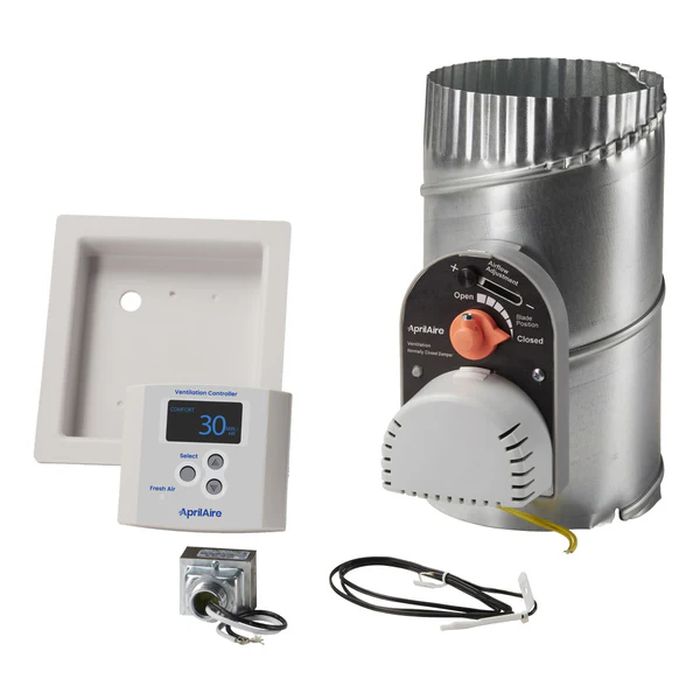
Its portfolio includes brands such as Nortek Air Solutions, AprilAire, and Big Ass Fans, serving both commercial and residential markets. These are not fringe applications. They are core infrastructure for buildings, factories, and data centers.
The R&D Investment
The company has invested over US$200 million in capital since 2021 to support growth and innovation initiatives. Their SEC filings go back only about 12 months with no publicly disclosed annual reports to refer to yet.
In other words, while there is no verifiable evidence of how much Madison Air currently spends annually on R&D, we can assume that figure would be amongst the larger in the industry. The amount would also reflect the investments its brands are also making in R&D.
In HVAC, innovation often appears in system integration, efficiency gains, and manufacturing methods rather than pure research budgets.
HVAC: the largest energy cost hiding in plain sight
To understand why investors care, you have to look at buildings. HVAC systems represent the single largest energy cost in most human-occupied environments. That includes homes, hospitals, factories, and especially data centers.
Madison Air’s strategy leans directly into this reality. The company promotes a “Return on Air” concept, reframing HVAC not as a cost center but as an economic driver. The idea is simple: better air systems reduce energy consumption, improve productivity, and extend equipment life.
This framing is more than marketing. It aligns with a broader shift in how capital is allocated. Energy efficiency is now measurable, financeable, and increasingly regulated. That makes HVAC innovation investable in a way it wasn’t a decade ago.
Where 3D printing fits into HVAC
At first glance, HVAC may not seem like a natural fit for additive manufacturing. Much of the industry still relies on sheet metal fabrication, casting, and traditional assembly. But that is changing.
There are three areas where 3D printing is already making inroads:
1. Complex airflow components
Airflow optimization often requires intricate geometries that are difficult or expensive to produce conventionally. Additive manufacturing enables lattice structures, organic duct shapes, and optimized fan blades that improve efficiency and reduce noise.
2. Rapid prototyping and iteration
HVAC systems are increasingly customized for specific buildings or applications, especially in data centers. 3D printing allows engineers to quickly test and refine components like diffusers, vents, and housings without tooling delays.
3. Replacement parts and distributed manufacturing
Large installed HVAC bases create long-term demand for spare parts. Additive manufacturing offers a way to produce low-volume or legacy components on demand, reducing inventory and downtime.
While Madison Air itself has not publicly detailed specific 3D printing deployments, its brand portfolio operates in segments where these applications are becoming standard practice. For example, data center cooling systems and advanced ventilation products are prime candidates for additive-enabled design optimization.
Data centers: a key driver
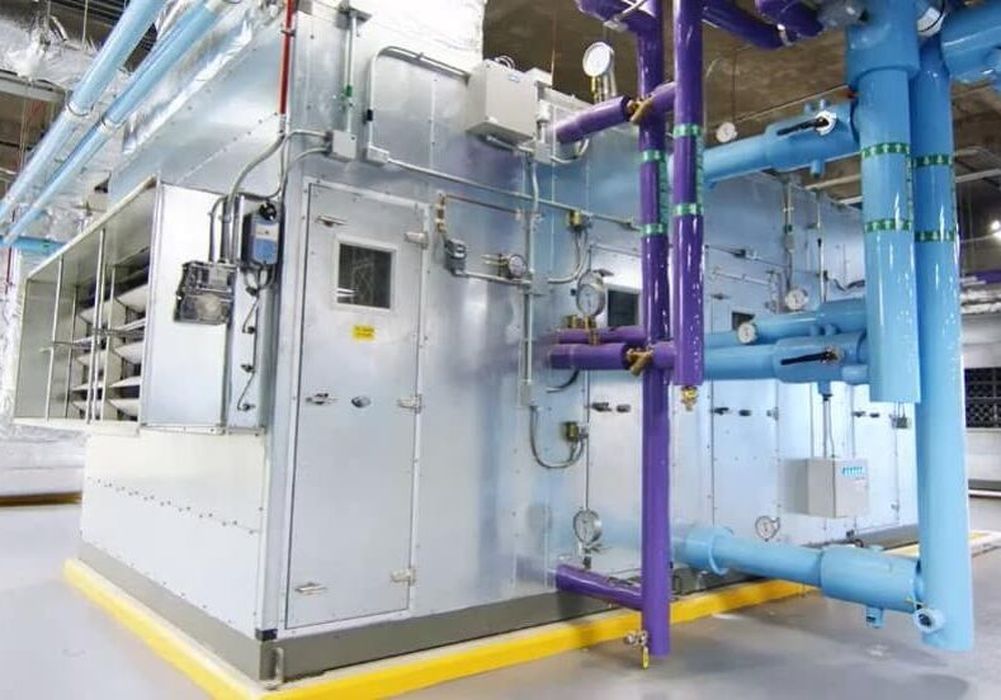
One reason this matters now is the rise of AI infrastructure. Data centers generate enormous heat loads and require highly engineered cooling solutions. Madison Air derives a meaningful portion of its growth from this segment, which investors see as a long-term tailwind.
Data center cooling is exactly the kind of application where additive manufacturing excels. It rewards designs that maximize thermal performance while minimizing energy use. Traditional manufacturing methods often limit these designs. Additive removes those constraints.
Connecting to the broader additive manufacturing narrative
This is where the story ties back to recent commentary by us on Fabbaloo, particularly our Maryland-focused analysis of HVAC and energy efficiency. We have consistently emphasized that tax incentives and policy frameworks are beginning to reward innovation in building systems.
The takeaway is straightforward. HVAC is no longer just mechanical infrastructure. It is becoming a technology platform. And as that happens, it naturally absorbs digital manufacturing tools, including 3D printing.
Additive manufacturing does not need to dominate the entire HVAC production chain to be impactful. Even targeted use in high-value components can shift performance and economics in meaningful ways.
Why investors are paying attention
Madison Air’s IPO success reflects a broader revaluation of industrial companies that sit at the intersection of energy, infrastructure, and technology.
Several factors stand out:
- Exposure to long-term growth markets, especially data centers and advanced manufacturing
- A clear efficiency-driven value proposition, aligned with sustainability goals
- A fragmented industry, where innovation can quickly create competitive advantage
Additive manufacturing strengthens all three. It enables faster innovation cycles, supports customization, and improves system performance.
The Research & Development Tax Credit
The now permanent Research & Development Tax Credit (R&D) is available for companies developing new or improved products, processes, and/or software.
3D printing can help boost a company’s R&D Tax Credits. Wages for technical employees who create, test, and revise 3D printed prototypes can be included as a percentage of eligible time spent for the R&D Tax Credit. Similarly, when used as a method of improving a process, time spent integrating 3D printing hardware and software counts as an eligible activity. Lastly, when used for modeling and preproduction, the costs of filaments consumed during the development process may also be recovered.
Whether it is used for creating and testing prototypes or for final production, 3D printing is a strong indicator that R&D-eligible activities are taking place. Companies implementing this technology at any point should consider claiming R&D tax Credits.
The bigger picture
It would be easy to view this IPO as a one-off success. That would miss the point.
What happened on April 16 is part of a larger shift. Industrial companies that once operated in the background are now central to some of the most important economic trends: AI infrastructure, energy efficiency, and sustainable building design.
HVAC sits right in the middle of that shift. And as it evolves, it is increasingly adopting tools that were once considered niche, including 3D printing.
Madison Air may not yet be a headline additive manufacturing story. But it does not need to be. Its engineering and financial success shows where capital is flowing, and where innovation is expected.
For the additive manufacturing industry, that is a message worth listening to.