
That new 3D printing law in Washington state is about to go live — but will it affect 3D printing?
You’re probably seeing (or going to see) headlines announcing that the state of Washington is to enact new laws to control 3D printing. In the past, reports suggested that the law could force grave changes on the sales of 3D printers in that state.
As background, this is all about getting a handle on 3D-printed weapons, which are often used by criminals to avoid traceability. Parts can be produced without serial numbers or registration by printing them.
Law enforcement and the public have put pressure on local governments to do something about the problem, and multiple jurisdictions are contemplating new laws to do so.
The contemplated laws fall into two categories:
- Intent: laws that make it a crime to produce or assist in the production of such parts with 3D printers or similar manufacturing technology
- Control: prevent the 3D printer itself from producing these parts by controls in the firmware and/or checking all models against a database of prohibited designs
It’s that last type that will cause major issues for 3D printing. While it may sound easy to “just check the model” before printing, there are many negative implications:
- All 3D printers would have to be constantly online to check a changing database of designs
- 3D printers would likely have to use specific slicing software that performs checks
- Sales of non-compliant devices (currently all of them) would be immediately prohibited
- Open-source 3D printers would no longer be possible
- Open-source / third-party slicers would no longer be usable
- The database would always be out of date due to new designs, so the approach would not work anyway
Even worse, most legislation of this type does not distinguish between casual consumer use of 3D printers and industrial additive manufacturing equipment, which could also be subject to the same regulations. This is quite significant, as some manufacturers legally must operate offline due to the criticality of their designs.
You can see that the second type of legislation, if enacted, would be near catastrophic for 3D printer sales, use, and potential. I have been keeping an eye on these legislative proposals, and the Washington law seems to be close.
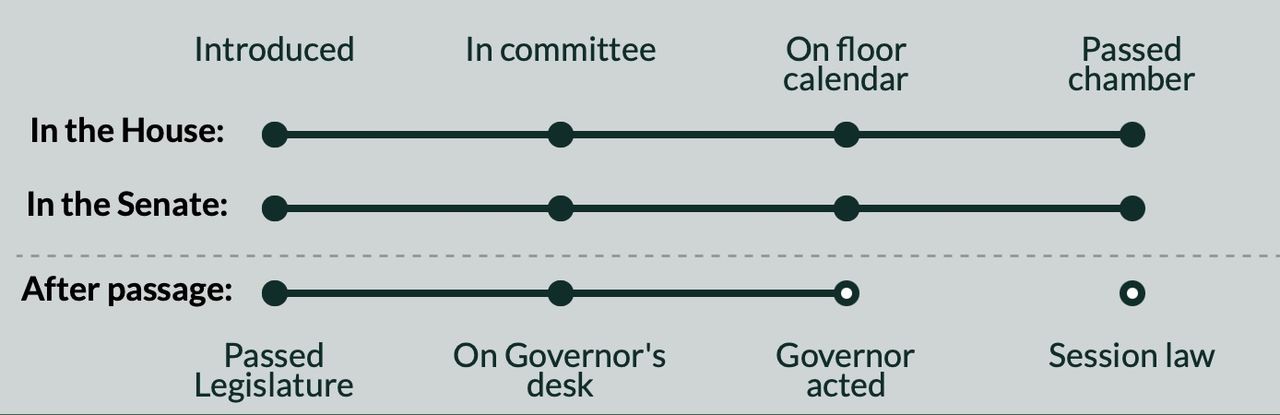
But it really isn’t. It turns out there are actually TWO separate bills in Washington state. The first bill, HB 2320, centers around “intent”, as described above. This bill has actually passed the legislature and is now awaiting signature from the state’s governor. If signed, the bill becomes law immediately.
The good news is that HB 2320 does not notably affect normal use of 3D printers.
The second Washington bill, HB 2321, describes the database/connected requirement. This bill went to committee but did not proceed further. This means that it is effectively dead for this session of the Washington state legislature.
It seems that cooler heads prevailed in Washington state, so we likely won’t see that type of law appear there.
Meanwhile, similar laws are still in process in other areas. My hope is that the Washington state outcome serves as a precedent for others who propose severe operational control over 3D printers.
Via Washington State (HB 2320) and Washington State (HB 2321)
