
I’ve noticed something interesting appearing in some stories and promotions for 3DCP applications.
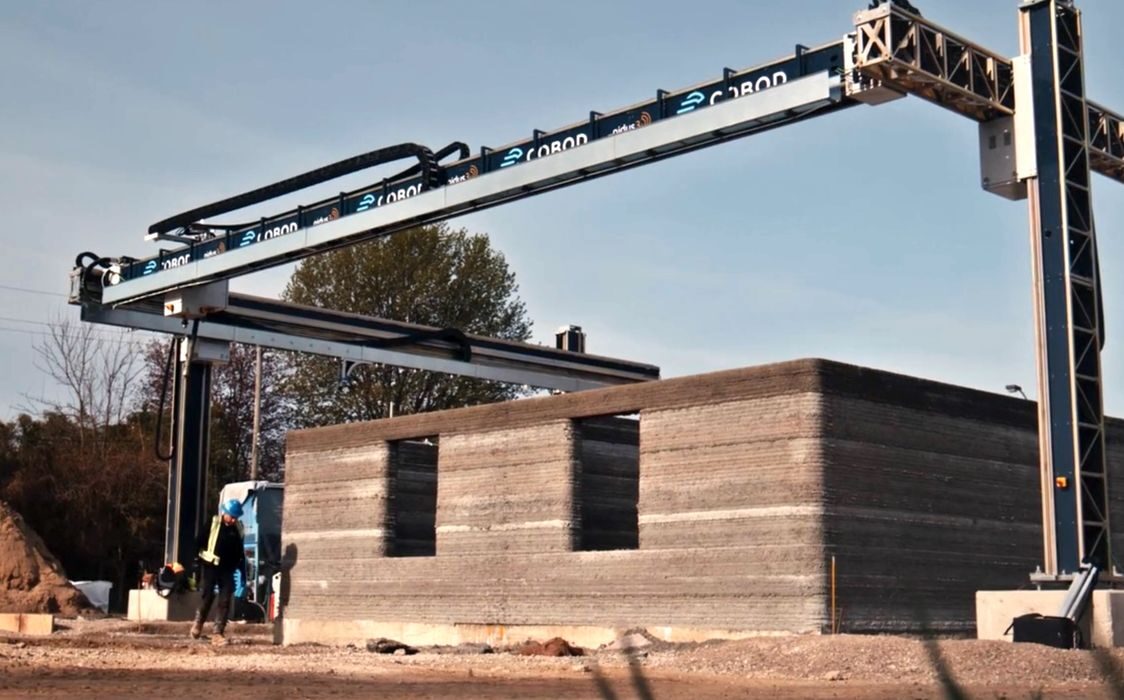
3DCP, or concrete 3D printing, is a growing technology. It’s used to quickly 3D print the concrete portions of build projects. No, it doesn’t “print a home in 24 hours”, as most of the work is still done by traditional trades. However, the concrete steps in the construction process can be done rapidly.
What’s seemed to have changed is that I’m seeing references to “fire rated” when referring to 3DCP buildings. That is clearly a subjective term, but the idea is that a 3DCP building would be less susceptible to fire than a traditional wood-frame structure.
That’s clearly true: concrete doesn’t usually burn. It’s also a lot stronger than wood frame structures can be.
I saw these references and nodded, thinking that “yes, this is true”. But then there’s the question of “did something change?” and “why is this happening now?” The fire rating messaging could have been done years ago. Concrete doesn’t burn now, and it didn’t burn ten years ago, either.
I suspect it’s a marketing approach for 3DCP companies that’s driven by the record-breaking number of wildfires this summer in North America.
Climate change has dried out major portions of the continent’s wilderness, leaving it ready to burn. In some areas, towns have been burned to the ground when fires came too close, and many more areas have been temporarily evacuated.
Those evacuated would, of course, be very concerned about whether their home might burn.
But they’d have less concern if their home was made from concrete, a material that won’t burn. Fire rated.
In truth, there is a very low risk of anyone’s home burning in a fire. But the media coverage of those areas that are affected has been huge, putting fires at the top of mind in many people.
That’s a marketing opportunity. 3DCP does produce homes that are more resistant to fires, whether they actually occur or not. This marketing approach might sway the thinking of some.
Will this approach work? I’m not sure; it seems like a bit of a stretch. I believe a better approach would be to continue improving the technology to incorporate more of the work done by traditional trades.
For example, perhaps plumbing and electrical wiring could be laid down during a 3DCP print job, saving considerable manual effort later. This is literally done with continuous carbon fibre 3D printers on a smaller scale, so analogous technology already exists.
That would all be towards the goal of lowering the cost and time to construct a home — and making it fire-resistant, too.
