
In this article, Charles Goulding and Anthony Palumbo examine the evolving U.S.–Philippines partnership, focusing on the 2025 trade-tariff agreement, expanding nuclear energy collaboration, and the growing role of additive manufacturing in supporting next-genertion reactor deployment.
Strategic Rebalancing in the Indo-Pacific
In 2025, the United States adopted a more transactional, bilateral trade strategy aimed at reinforcing economic ties with strategic Indo-Pacific partners. This approach was driven by the implementation of the “Liberation Day” tariff policy, which included a looming August 1 deadline that threatened to impose up to 32% tariffs on nations that had not secured updated trade agreements with the U.S.
Facing this pressure, countries such as Japan, Indonesia, and the Philippines moved swiftly to finalize individual deals. Among these, the Philippine agreement stood out not only for its economic provisions but also for how it catalyzed a broader technological and energy-focused partnership. As trade negotiations evolved, they opened the door to deeper collaboration in civil nuclear energy and additive manufacturing, reshaping the U.S.–Philippines relationship into a multidimensional alliance grounded in energy resilience and innovation.
The July 2025 Tariff Agreement: A Tactical Trade Pact
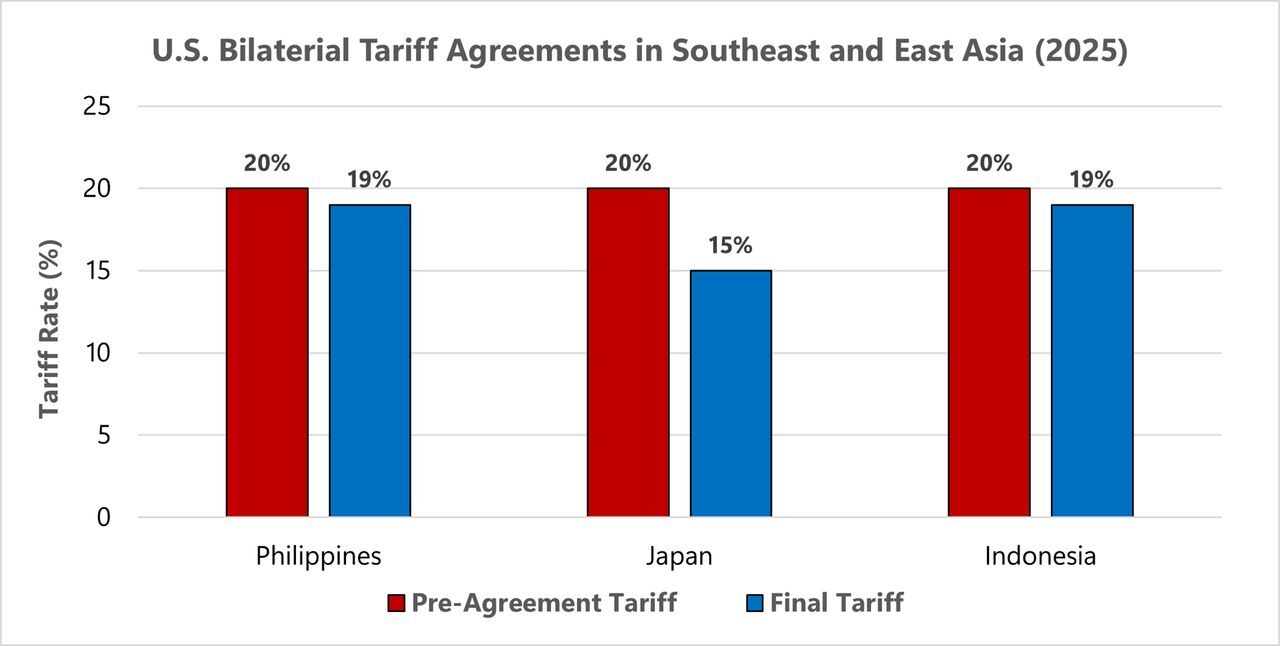
On July 22, 2025, U.S. President Donald Trump and Philippine President Ferdinand Marcos Jr. announced a bilateral trade deal that imposed a 19% U.S. tariff on Filipino exports, narrowly avoiding the previously threatened 20% baseline. In return, the Philippines agreed to eliminate tariffs on a broad array of U.S. imports, including semiconductors, agricultural goods, automobiles, and pharmaceuticals.
The agreement followed similar pacts with Japan (15%) and Indonesia (19%), reflecting a pattern of tariff stabilization deals designed to avert the harsher default rates tied to the “Liberation Day” policy. For the Philippines, the 1% reduction was small in appearance but critical in substance. President Marcos emphasized that maintaining price competitiveness in high-value export sectors like electronics and food processing was essential to the country’s economic stability.
In 2024, the U.S. recorded a US$5 billion trade deficit with the Philippines on US$23.5 billion in total trade volume. The July agreement helped avoid a sharp contraction in that flow, preserving market access while signaling continued U.S. commitment to the region.
More importantly, it unlocked a pathway for deeper cooperation in infrastructure and energy development, particularly through the implementation of a landmark civil nuclear agreement signed just two years prior.
Building a U.S.–Philippine Nuclear Future
The July trade pact was preceded by the signing of a U.S.–Philippine civil nuclear cooperation agreement, commonly referred to as a “123 Agreement,” on November 16, 2023, during the APEC Summit in San Francisco. Ratified by the U.S. Congress in mid-2024, the deal established a 30-year framework allowing the transfer of nuclear materials, reactor technologies, and related services to the Philippines under the oversight of the International Atomic Energy Agency (IAEA).
The agreement paved the way for U.S. companies to engage directly in the Philippines’ emerging nuclear sector, provided that all cooperation adhered to peaceful-use clauses, nonproliferation standards, and export control compliance.
For the Philippines, the 123 Agreement aligned with an urgent national need to decarbonize and stabilize its power grid. President Marcos has repeatedly framed nuclear power as a solution to the country’s energy vulnerability, citing decades of dependence on imported fossil fuels and frequent outages during peak summer demand.
U.S. Secretary of State Antony Blinken reinforced this vision by sharing that the Philippines’ energy demand is expected to quadruple by 2040, where nuclear power can and should be part of the answer.
Infrastructure in Motion: BNPP Revival and SMR Deployment
With the legal framework in place, attention turned to infrastructure. The Philippines is now pursuing a dual-track strategy: reviving a dormant legacy plant and deploying next-generation small modular reactors (SMRs) across its island grid.
The Bataan Nuclear Power Plant (BNPP), a 621 MW Westinghouse-built facility from the 1980s that was never commissioned, lies at the center of this legacy revival. In October 2024, the Philippine Department of Energy and Korea Hydro & Nuclear Power (KHNP) announced a no-cost feasibility study to assess BNPP’s seismic, structural, and operational viability. In early 2025, Meralco, the nation’s largest utility, launched its own integration studies to evaluate how BNPP could be folded into its generation portfolio by 2030 to 2032.
At the same time, the Department of Energy is prioritizing modular deployment. NuScale Power is conducting siting studies for SMR arrays producing up to 472 MW at a projected cost of US$6.5–7.5 billion. NANO Nuclear Energy, the successor to Ultra Safe Nuclear Corporation (USNC), which declared bankruptcy in 2025, has introduced its helium-cooled KRONOS MMR platform as a solution for off-grid industrial applications. Westinghouse is also promoting its eVinci reactor, which is well suited for disaster-prone or remote areas.

The country’s revised Nuclear Energy Roadmap calls for 1,200 MW of nuclear capacity online by 2032 and 4,800 MW by 2050. These targets reflect IAEA recommendations and are reinforced by growing international vendor interest.
To support this expansion, institutional infrastructure is also evolving. In June 2025, the Philippine Senate passed legislation creating the Philippine Atomic Energy Regulatory Authority (PhilATOM), modeled on U.S. Nuclear Regulatory Commission standards. The PRR-1 training reactor has also been refurbished by the Philippine Nuclear Research Institute (PNRI) to serve as a testbed for engineers, inspectors, and safety personnel.
Barriers to Deployment: Seismic, Financial, and Social Hurdles
Despite progress, challenges remain. BNPP’s location near the Mount Natib caldera and multiple fault lines has drawn criticism from geologists and environmental advocates. A 1979 post–Three Mile Island review identified thousands of construction defects, many of which have yet to be resolved.
Rehabilitating the plant is projected to cost between US$800 million and US$2 billion. Complicating matters is the Electric Power Industry Reform Act (EPIRA) of 2001, which restricts direct government participation in generation projects and poses legal and financial hurdles to large-scale nuclear investment.
Meanwhile, PhilATOM is still in its formative stages. While an IAEA mission in late 2024 found that 9 of 14 infrastructure milestones had been met, regulatory maturity remains a work in progress.
Public perception also poses a barrier. In Bataan province, residents remain skeptical, citing historical corruption and safety concerns dating back to the Marcos Sr. era. Activists warn of socioeconomic impacts on farming and fishing communities if nuclear deployment moves forward without inclusive stakeholder consultation.
Addressing these risks will require sustained community outreach, transparent communication, and long-term institutional support.
Additive Manufacturing: Accelerating Deployment and Localization
One often-overlooked component in this nuclear expansion is the role of additive manufacturing (AM), or industrial 3D printing. From accelerating design cycles to localizing critical part fabrication, AM offers a suite of advantages that could help the Philippines overcome many of its deployment bottlenecks.
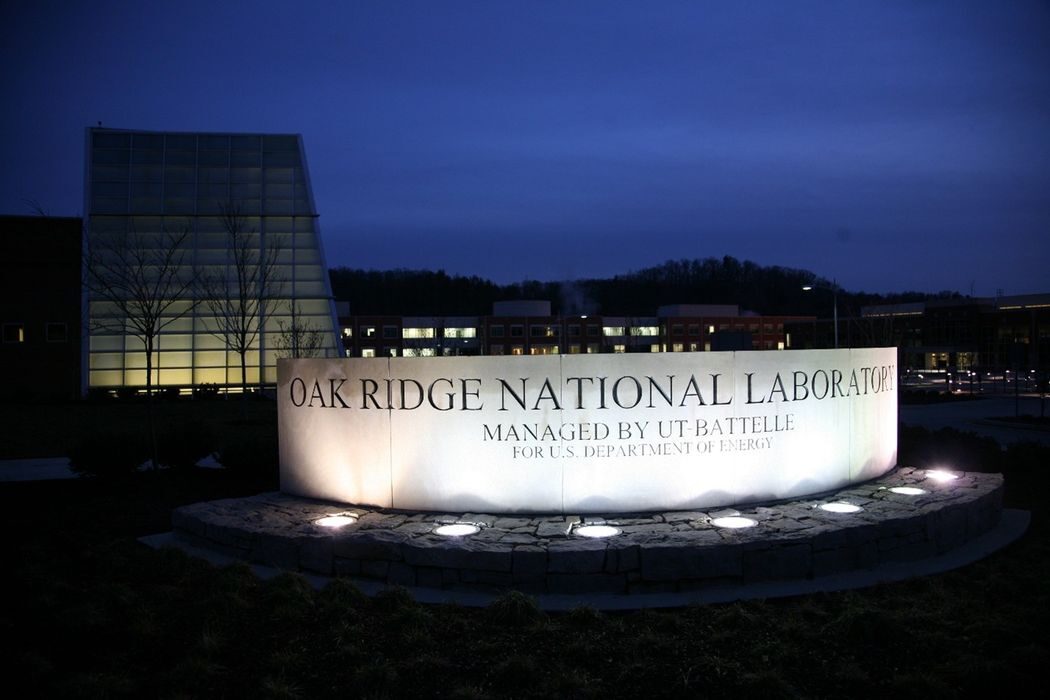
At Oak Ridge National Laboratory (ORNL), researchers have used laser powder bed fusion to fabricate reactor components from 316H stainless steel, which were subsequently tested in the High Flux Isotope Reactor (HFIR). These breakthroughs allow rapid prototyping of parts that traditionally require months of machining.
NuScale Power uses AM to iterate pump and heat exchanger designs, while Westinghouse has successfully installed 3D printed bottom nozzles in operational pressurized water reactors, demonstrating long-term durability in safety-critical environments.
For the Philippines, AM is particularly valuable in two areas:
- BNPP Rehabilitation: Many original parts are obsolete or unsupported. AM enables reverse engineering and fabrication of certified replacements (e.g., pump impellers, valve housings) using nuclear-grade alloys like Inconel 718.
- SMR Deployment: Island sites prone to natural disasters require decentralized production and rapid replacement capability. Establishing regional AM hubs with metal printers can dramatically reduce logistics downtime.
The integration of AM also supports workforce development. PNRI, in collaboration with academic institutions, is exploring AM curricula and pilot labs, modeled after Canada’s SMART (Small Modular Advanced Reactor Training) initiative.
The Research & Development Tax Credit
The now permanent Research and Development (R&D) Tax Credit is available for companies developing new or improved products, processes, and/or software. 3D printing can help boost a company’s R&D Tax Credits. Wages for technical employees creating, evaluating, and revising 3D printed prototypes are typically eligible expenses toward the R&D Tax Credit. Similarly, when used as a method of improving a process, time spent integrating 3D printing hardware and software can also be an eligible R&D expense. Lastly, when used for modeling and preproduction, the costs of filaments consumed during the development process may also be recovered.
Whether it is used for creating and testing prototypes or for final production, 3D printing is a great indicator that R&D Credit-eligible activities are taking place. Companies implementing this technology at any point should consider taking advantage of R&D Tax Credits.
Conclusion: A Blueprint for Tech‑Enabled Alliance Building
The U.S.–Philippine partnership has matured from tariff negotiations into a multifaceted alliance encompassing energy sovereignty, regulatory modernization, and advanced manufacturing. Through tariff realignment, the civil nuclear “123 Agreement,” and strategic public‑private R&D initiatives, both nations are pioneering a model for future U.S. alliances in Southeast Asia.
If successful, the Philippines could become ASEAN’s first commercial nuclear power adopter and a regional hub for SMR deployment and additive manufacturing. Its island geography makes it an ideal proving ground for modular reactors and localized production.
This integrated approach, linking trade, nuclear regulation, and AM-based supply chains, may serve as a template for future bilateral alliances in the Indo-Pacific.