
A new research paper maps how laser additive manufacturing is bringing shape memory alloys closer to practical 4D printing.
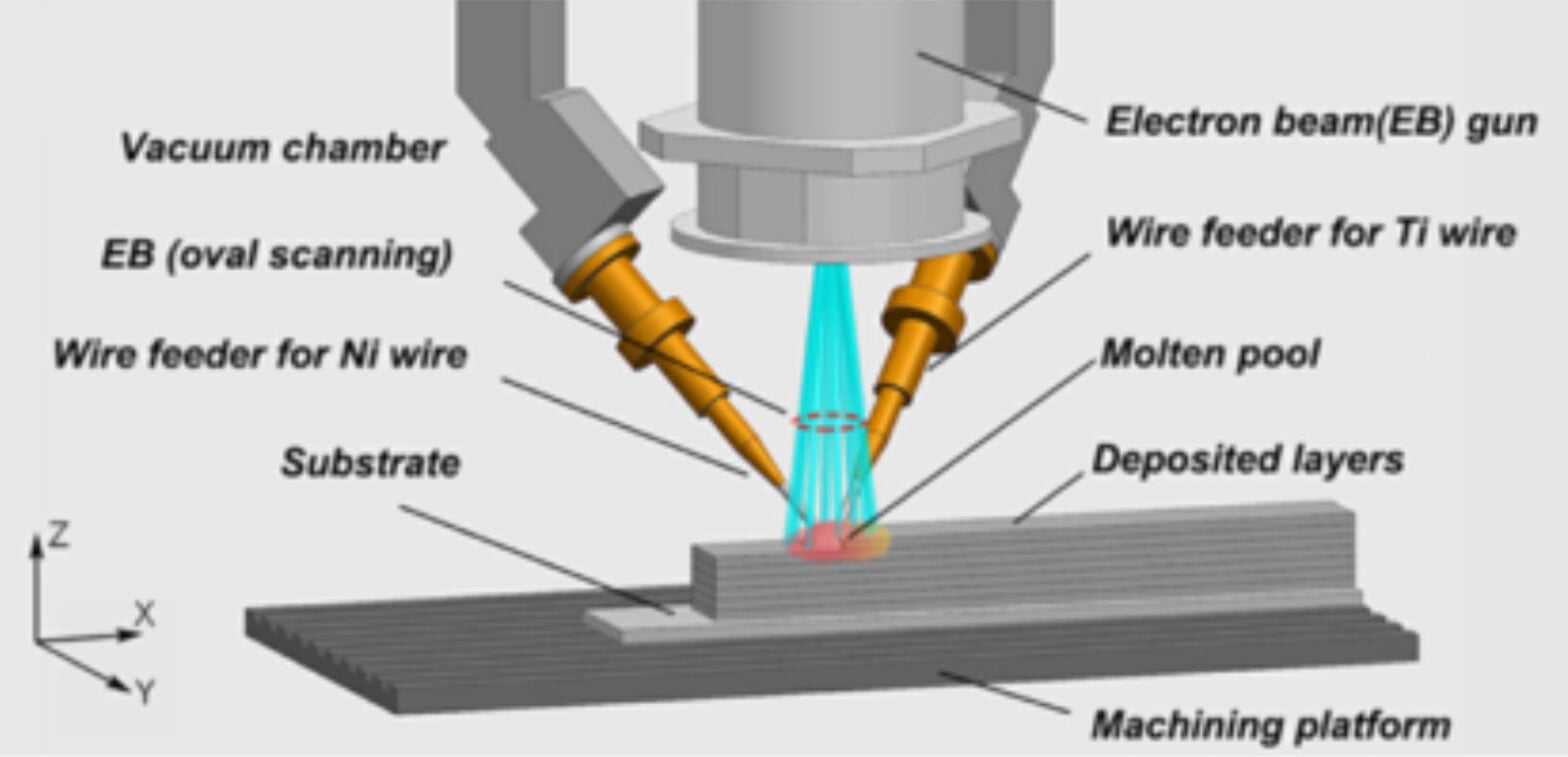
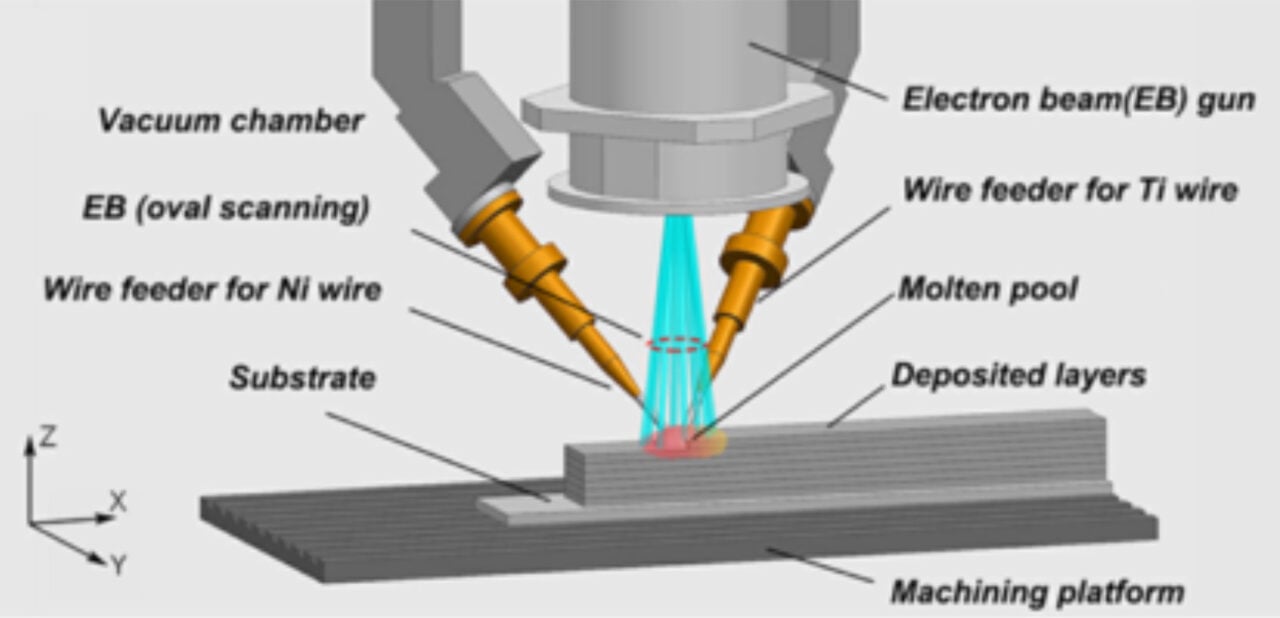
The paper, published in Innovation Discovery by researchers in Iran and Austria, synthesizes the last several years of work on shape memory alloys (SMAs) made by metal additive processes. It focuses on Laser Powder Bed Fusion (LPBF) for nickel titanium (NiTi) and increasingly for copper and iron systems, while also weighing Electron Beam Melting (EBM) and Wire Arc Additive Manufacturing (WAAM).
If you are new to the term in this context, 4D printing is simply AM plus time — parts that change shape on cue via the shape memory effect or superelasticity. Typically this is done with polymers, but far less often with metals. That means metal microstructure, impurity control and thermal history right at the center of design, not just geometry.
LPBF Leads, But EBM And WAAM Still Matter
The review is clear: LPBF dominates NiTi because it can deliver high resolution lattices, auxetic cells and graded structures with near full density when parameters are tuned. Reported parts routinely hit ninety eight to 99.9 percent density, with recoverable strains in the six to eight percent range and superelastic cycles that can stretch higher when post processing is dialed in. The attraction is microstructural control from rapid solidification and fine martensitic variants that tune transformation temperatures and hysteresis.
But there is a catch. LPBF’s fast thermal cycling brings residual stress, porosity and chemistry drift. Small, oxidative powders raise oxygen pickup risk; a few hundred ppm shift can move transformation temperatures by double digits. Element evaporation is a real problem too — nickel in NiTi and zinc in CuZnAl — if energy density runs hot. The research points to narrow process windows and stresses the basics: powder quality, inert atmosphere, energy density control and oxygen below about 500 ppm for medical work.
EBM is of interest because high build temperatures reduce residual stress and help purity. Running in vacuum cuts oxygen and carbon contamination, preserving transformation behavior and, in some studies, improving corrosion resistance for implants. The tradeoff is coarser surface finish and feature size versus LPBF, which can matter for thin struts and fine lattices.
For scale and cost, WAAM shows promise on large NiTi features and hybrid chemistries, but the review also flags hot cracking risks in Fe-based SMAs and solute segregation challenges. Process tricks like oscillating paths and inter-layer peening can help, yet WAAM of functional SMAs still looks like expert territory.
LPBF NiTi lattices are already converging on bone-like stiffness with superelastic damping, which is exactly what orthopedic and dental OEMs want. The review also lists progress in copper-based SMAs made by LPBF — for example, Cu-Al-Mn showing room-temperature superelasticity — and even metamaterial designs claiming more than twenty percent recoverable strain. That last result is pretty exciting, but it is still only a demonstration with specialized powders and geometries.
Outside of healthcare, programmable SMA lattices are interesting for aerospace actuators, deployables and energy absorption. If manufacturers can lock in repeatable transformation windows and fatigue life without heavy hand finishing, SMAs move AM from static light-weighting to active functionality.
The review repeatedly returns to post processing — hot isostatic pressing, solution and aging heat treatments, surface finishing — as mandatory steps. Every step adds time and cost, which hurst the 4D capability story unless automation and monitoring can reduce iteration.
