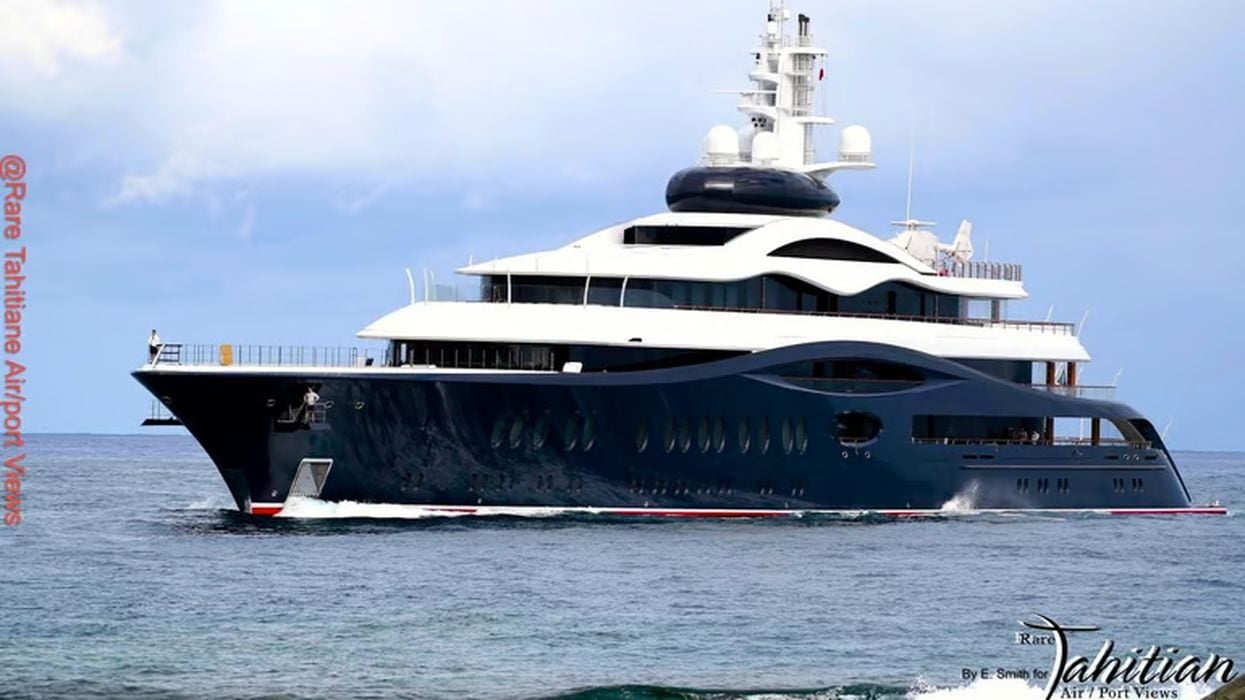
Charles R. Goulding and Preeti Sulibhavi test the waters on how 3D printing is transforming luxury yacht building—from hull molds to bespoke interiors—pushing the boundaries of customization at sea.
When one thinks of a superyacht, terms like “handcrafted joinery,” and “exotic veneers,” as well as the start-of-the-art kitchen galleys, typically come to mind. But beneath the surface, 3D printing is quietly redefining many aspects of how yachts are built, outfitted and personalized. From tooling and molds to bespoke interior elements, additive manufacturing is pushing the envelope in luxury marine engineering. In this article, we examine what kinds of 3D printers are currently used, how much of a vessel can realistically be printed today, and where the industry is headed.
Why Yachts? Unique Challenges, Unique Opportunities
Yacht construction is a high-stakes business—clients demand flawless aesthetics, structural integrity, and durability in a punishing environment of salt, sun, and vibration. Traditional manufacturing relies heavily on molds, CNC machining, composite layup, and artisan craftsmanship. These processes are often slow, capital-intensive, and inflexible when it comes to late-stage custom changes.
3D printing (or additive manufacturing, AM) offers advantages that align with luxury marine demands:
- Geometric freedom: Complex internal structures, integrated conduits, and organic forms are easier to conceive and print than to engineer via subtractive or mold-based processes.
- Low-volume / one-off parts: High-end yachts are often built in series of one, meaning the economics of tooling are weak. AM can produce small runs or unique parts without the expense of molds.
- Speed in prototyping and iteration: Interiors, trim components, and furniture can be prototyped rapidly for owner review.
- Weight and material optimization: Through lattice structures, topology optimization, and tailored material choice, parts can be lighter yet strong.
- Supply chain rationalization: On-demand printing of spare parts or components reduces the need for large inventories or long procurement lead times.
However, the marine environment imposes strict demands on materials (resistance to UV, salt spray, mechanical fatigue) and regulatory acceptance (class, safety, and certification). Thus, additive is not replacing traditional shipbuilding wholesale—yet—but it is carving an increasingly significant niche.
What Is Being Printed Today
Tooling, Molds & Plugs
One of the most mature uses of 3D printing in yacht construction today is in tooling and molds (or molds’ master plugs). Rather than machining a giant foam plug or building a wooden mold, forward-looking shipyards are either printing the mold itself or printing a master that can be used to generate molds more efficiently.
A case in point: Thermwood, a builder of large-format AM machinery, printed sections of a mold for a 51-foot yacht hull using its LSAM (Large-scale Additive Manufacturing) line. The printed parts were made of carbon-fiber reinforced ABS (from Techmer PM) and were trimmed and assembled into mold halves. In that demonstration, each mold section weighed ~4,012 lbs and required about 65.5 hours of printing. The idea is that by printing the actual mold rather than a plug, one reduces intermediate steps, and one-off molds for hulls or sections become feasible.
Another trend is the use of Large Format Additive Manufacturing (LFAM) or pellet extrusion systems to print molds or tooling structures. For example, CEAD Group (via its customers) describes switching from CNC-machined polyurethane foam molds to 3D printed molds using glass-fiber reinforced polypropylene, cutting labor by up to 50%. Likewise, the leading yacht-builder, Hänssler, uses LFAM with nozzle diameters up to 20 mm and a gantry that incorporates a 5-axis milling head for trimming, enabling large custom interior parts for yachts. Such hybrid systems (print + CNC trim) are becoming more common in marine shape work, because as printed parts grow large, some level of finishing and precision machining remains essential.
By printing molds or mold sections, shipyards can compress lead time, reduce waste (versus carved foam), and allow late-stage design modifications without restarting tooling entirely.
Structural and Hull Components
Moving beyond molds, additive manufacturing is edging into actual hull or structural components, though at a modest scale today. In the U.S., the first large-scale 3D printing marine company, ErectorCraft has recently begun commercial production of 3D printed boat hulls using marine-grade HDPE via LFAM. They also supply “ErectorBot” systems to shipyards to allow printing of large structural parts onsite, reducing logistics burdens.
In another development, a collaboration between V2 Group, of Austin, Texas, and Caracol AM, a Spanish boat-builder, produced a 3D printed double-hulled catamaran, showing that robotic large-format AM is beginning to bridge into full hull construction. These prototypes signal the possibility of scaling to larger pleasure craft in years to come.
Still, for full-size superyachts, printing the entire hull is not yet practical—material, structural, and certification issues remain major barriers. Instead, hybrid strategies prevail: printed structural subcomponents, integrated housings, bulkheads, stringers, or even secondary hull segments may be combined with traditional composite layups.
Custom Interiors, Furniture & Decorative Elements
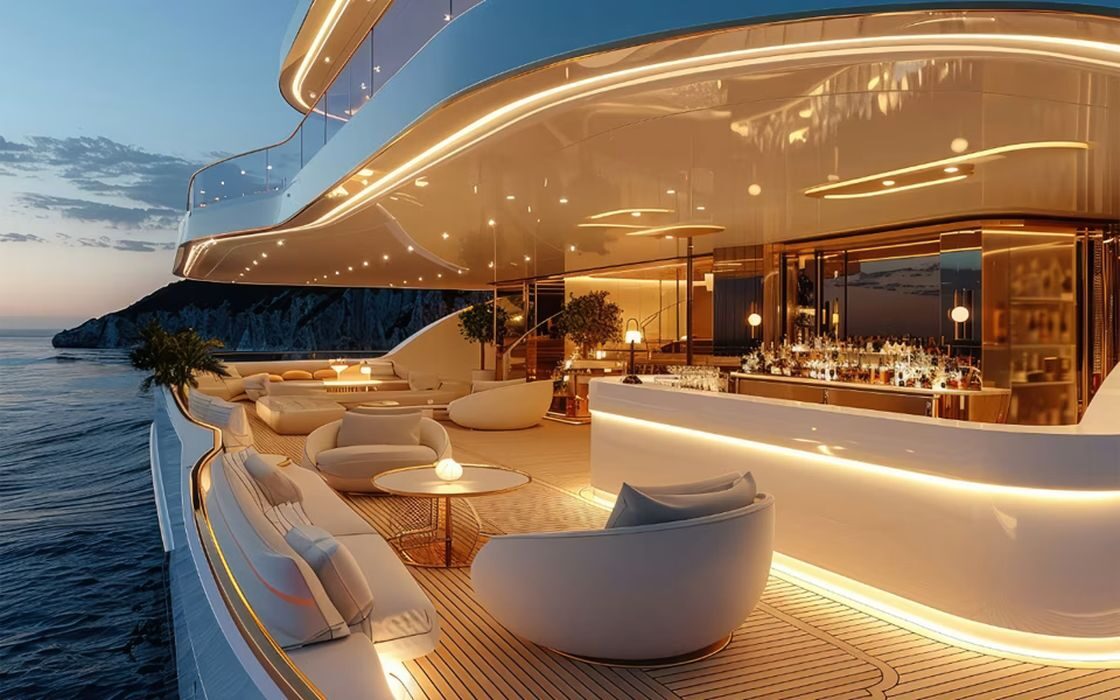
Perhaps the most visible application today is in the interior design, trim, and decorative elements of luxury yachts. Here, additive freedom truly shines, because interior designers and owners crave uniqueness, organic forms and personalization.
- Large-format interior panels and cladding: Companies in Europe are already producing full-size interior wall or ceiling panels for yachts via LFAM. The firm Hänssler advertises that its system can produce parts up to 2600×1700×950 mm in a single print, using materials such as ABS, PC, PP, PET, and PA6/PA12, reinforced with glass or carbon fiber.
- Furniture & bespoke joinery: Additive allows seamless integration of curved forms, inlaid lighting channels, structural “veins,” and built-in conduits for wiring or plumbing. Silverlining Furniture, known for yacht-furniture, is experimenting with 3D printed versions of ceramics or complex surfaces (e.g., bas-reliefs) that would be difficult via mold casting.
- Functional fittings & hardware: On smaller components—door latches, light housings, actuator mounts, instrument pods—yards like Hodgdon Tenders already 3D print metal or polymer parts as standard.
- Rapid prototyping & mockups: Yacht interior outfitting is notoriously iterative. List GC, a major interior outfitter, uses in-house 3D printing to prototype design elements, test fit, and iterate in days rather than weeks.
- Decorative, sculptural elements: For bespoke installations—artistic panels, wave forms, bas-relief installations—designers are partnering with 3D fabrication specialists (e.g., Nagami) to produce intricate, large-scale decorative elements out of recycled or composite polymers.
- Luxury conceptual projects: Some visionary yacht designs are pushing the envelope: for instance, the “glass 3D printed superyacht” concept PEGASUS proposes a fully integrated hull and superstructure printed with lightweight glass-like materials embedded with solar PV. Although conceptual, this illustrates how additive integration may transform future superyacht architecture.
The upshot: interior 3D printing is already in commercial use for yachts, especially in customization-heavy zones, and these applications scale more readily than full hull printing does today.
How Much of a Yacht Can Be 3D Printed
At present, printing a whole superyacht hull and deck structure via additive manufacturing remains aspirational. The challenges are steep: certification by marine classification societies, long-term fatigue and marine durability, large-scale material consistency, integration with structural systems, and cost/size constraints of printers.
That said, the percentage of a yacht (by volume, cost, or functions) that is or could be additively manufactured is gradually growing. In mature projects today:
- Tooling and molds may be almost wholly 3D printed (i.e., 80–100 % of the mold or plug structure).
- Interiors may see 20–40 % of elements, especially unique or decorative zones, produced via additive routes.
- Furniture and decorative components might be 50–100 % printed, especially custom one-offs.
- Structural subcomponents or non-primary load-bearing bulkheads might see additive integration at the 10–20 % level in advanced builds.
Looking ahead—over the next decade—the proportion could shift more aggressively. As machine envelope sizes grow, multi-material and composite-based printing matures, and regulatory acceptance improves, it is plausible that 30–50 % of a large yacht’s non-primary structure could be produced via additive means in future projects.
Moreover, customized designs like PEGASUS, a Slovenian yacht-builder, additive fabrication is envisioned for the integrated hull + superstructure in a unified print, suggesting a future in which additive is the dominant method rather than merely an accelerator.
Market Uptake: Where Are We Now?
3D printing in yachting is undeniably still in a nascent stage—but uptake is accelerating in key areas:
- Interior outfitters & speculative designers: Firms such as List GC are already embedding 3D printing into their design and production pipelines.
- Tooling houses and composite yards: Companies like Thermwood have demonstrated scaled mold printing and are pushing industry awareness.
- Startups venturing into hull 3D printing: ErectorCraft aims to disrupt hull manufacturing via LFAM and modular printing.
- Prototype and concept vessels: Small catamarans, tenders, and test vessels are already being printed to validate integration and marine viability (e.g., the V2/Caracol project, UMaine’s marine prints).
- Speculative high-end market: The concept of a glass 3D printed superyacht underscores potential market interest in additive-driven novelty.
- Broader yacht-market signals: According to a recent Financial Times article, orders for larger new-build superyachts remain strong, especially in the 30–40 m segment, even in the face of market softening. The appetite for bespoke, eco-conscious, technologically advanced yachts may help drive further adoption of additive techniques.
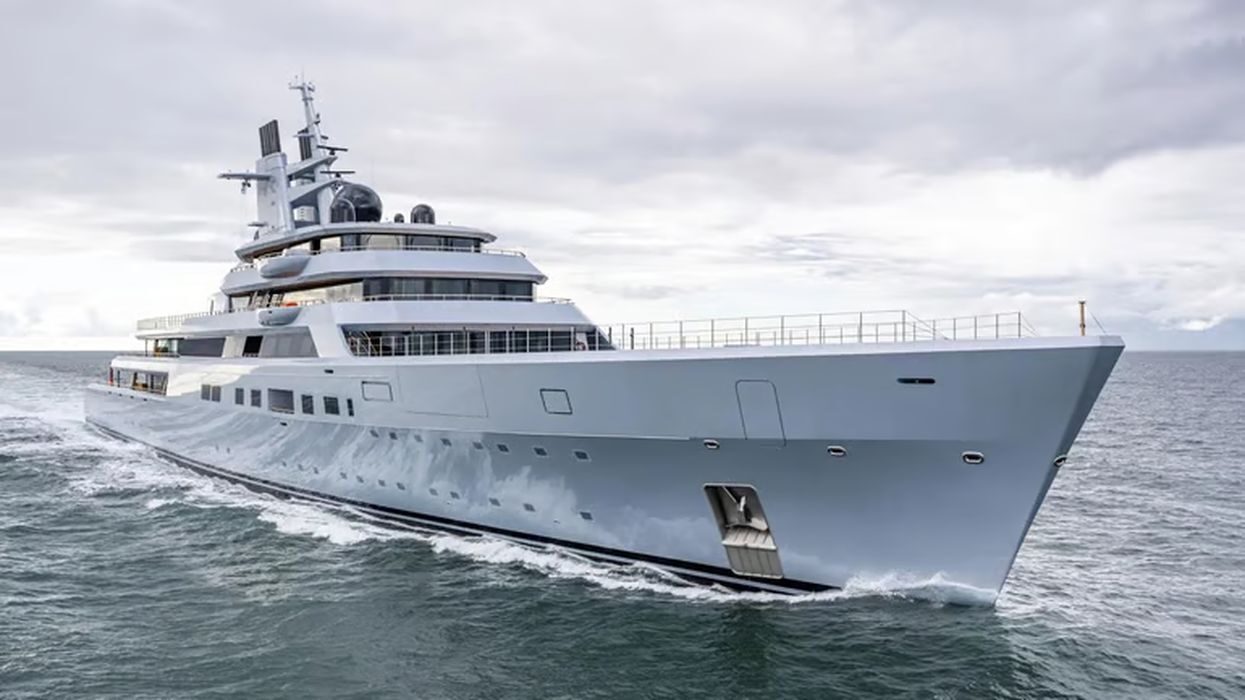
A growing number of high-profile celebrities are getting on board with the megayacht trend. Mark Zuckerberg, Meta’s Founder and CEO, recently purchased the 387-foot megayacht, “Launchpad,” originally referred to as Project Alibaba, which made a remarkable debut, including a minor collision at the Lȕrssen, Hamburg’s shipyard.
Another Silicon Valley billionaire, Sergey Brin, Google’s co-founder, is cruising to some of the world’s most exotic locales, joining the ranks of fellow tech billionaires Jeff Bezos and Mark Zuckerberg, as he takes ownership of his stunning superyacht named “Dragonfly.” According to Boat International, the 466-foot megayacht made its maiden voyage to the Mediterranean about a year ago.
Still, the absolute number of yachts with major additive components is small. Many shipyards remain cautious, preferring time-tested methods for structural and safety-critical systems. The additive community must continue demonstrating reliability, durability, and regulatory alignment to accelerate adoption.
Barriers, Risks & The Path Forward
To scale adoption in luxury yacht manufacture, 3D printing must solve or mitigate several challenges:
- Material certification & durability
Marine use demands UV, salt, fatigue, creep, fire and impact resistance. Many printed polymers or composites still lag traditional boat materials in long-term behavior, and classification societies often lack thorough guidelines for additive marine materials. - Structural integrity & safety
Load paths, hull stiffness, buckling, and crash resistance tend to favor continuous fiber-reinforced laminates or metallic substructures. Additive parts must integrate seamlessly into hybrid builds without introducing weak zones. - Size and printing envelope constraints
Superyacht hulls and decks span tens of meters. Even large-format machines often max out at a few meters in one axis, requiring modular assembly or joining techniques—both of which introduce complexity and weak points. - Surface finish & precision
High-end yachts demand flawless surfaces and tight tolerances. Many printed parts require post-machining, sanding, or coatings, which adds cost and time. Hybrid systems (print + CNC) mitigate this but at capital cost. - Cost and economics
At present, the capital and operational cost of large 3D printing (machines, materials, maintenance) often remains higher than conventional tooling for large volumes. Only in highly customized or small-batch cases does AM’s flexibility offer clear ROI. - Regulatory & class approval
Classification bodies (Lloyd’s, DNV, ABS, etc.) have limited precedent for additive marine parts. Gaining acceptance for safety-critical or structural printed parts requires rigorous testing and certification.
Overcoming these requires coordinated efforts: material developers, AM machinery makers, naval architects, and classification societies collaborating to create validated marine-grade systems. Demonstration projects will be key to building confidence. The plug-to-mold and mold-to-hull phases are likely transitional stepping stones before truly additive hulls become routine.
The Research and Development Tax Credit
The now permanent Research and Development (R&D) Tax Credit is available for companies developing new or improved products, processes, and/or software. 3D printing can help boost a company’s R&D Tax Credits. Wages for technical employees creating, testing, and revising 3D-printed prototypes can be included as a percentage of the eligible time spent for the R&D Tax Credit. Similarly, when used as a method of improving a process, time spent integrating 3D printing hardware and software counts as an eligible activity. Lastly, when used for modeling and preproduction, the costs of filaments consumed during the development process may also be recovered.
Whether it is used for creating and testing prototypes or for final production, 3D printing is a great indicator that R&D Credit-eligible activities are taking place. Companies implementing this technology at any point should consider taking advantage of R&D Tax Credits.
“Sea-ing” Clearly Now…
3D printing will not replace traditional composite, aluminum or steel yacht building overnight—but it is increasingly woven into the fabric of luxury yacht manufacturing and outfitting. Tooling, molds, interior components, furniture, and decorative features are rapidly becoming common additive targets. Structural and hull-level printing still lag behind, but new developments in LFAM, modular printing, and hybrid composites bring that frontier into view.
For our readers, the emerging story is this: additive manufacturing is maturing from a design novelty into a serious tool in the superyacht world. As machines grow larger, materials more robust, and certification catches up, expect newer yacht builds (especially in the 30–70 m class) to boast ever-greater percentages of 3D printed components—perhaps 20–40 % or more of interior / non-critical structure within this decade.
The sea is a harsh critic—if these parts can survive salt spray, fatigue, and real-world vibration, they will earn their place. But if additive proponents succeed, yacht design’s next chapter may be “printed, not carved.”