
Charles R. Goulding and Preeti Sulibhavi look at how Beckham’s global brand, the explosive growth of soccer in North America, and advances in 3D printing are converging to create new opportunities for innovation and business.
For anyone who watched the 2026 FIFA World Cup on television, one thing became impossible to miss: David Beckham seemed to be everywhere. Whether it was before kickoff, at halftime, or during commercial breaks, the former England captain and global businessman appeared repeatedly, representing brands that have become household names.
That visibility is no accident. Beckham has spent decades carefully building one of the strongest personal brands in sports. While his playing career ended years ago, his commercial influence continues to grow. Today he is a successful entrepreneur, investor, philanthropist and one of the public faces of world football.
He also happens to be connected with several companies that have embraced 3D printing as part of their product development and manufacturing strategies.
That makes Beckham an unexpectedly interesting figure for the additive manufacturing industry.
His business portfolio extends well beyond endorsements. Beckham owns roughly 26 percent of Inter Miami CF, the Major League Soccer club that has become one of the sport’s hottest franchises. The arrival of Lionel Messi transformed the club into a global attraction, helping elevate MLS to new levels of popularity while dramatically increasing the team’s value and international visibility. Messi’s impact has also generated significant economic activity throughout South Florida, boosting tourism, hospitality and retail around the club.
While Beckham himself is not directly involved in additive manufacturing, several of the brands most closely associated with him are.
Perhaps the best example is Adidas. Beckham is affiliated with Adidas and was seen sporting their kicks in advertisements during the World Cup. Adidas, and its industry competitor Nike, both competed for advertising time during the World Cup, are comfortable with 3D printing technology.
Adidas and 3D Printing
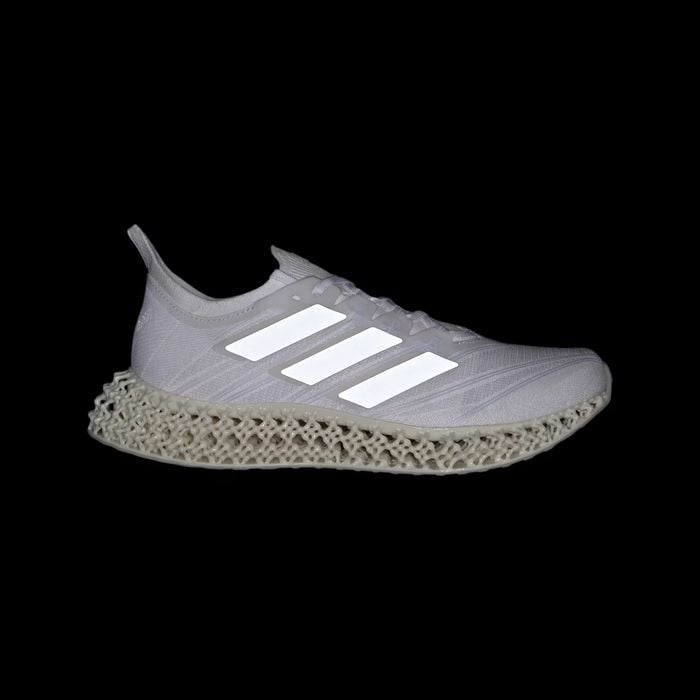
Adidas has been one of the most visible consumer companies investing in additive manufacturing over the past decade. Its Futurecraft 4D initiative demonstrated that lattice midsoles produced through advanced manufacturing could deliver highly tuned cushioning while showcasing design geometries that traditional molding simply cannot achieve.
Although Adidas has adjusted its commercial strategy since the original Futurecraft launch, the company continues to use computational design, lattice engineering and advanced manufacturing techniques in performance footwear development. Many of the design principles pioneered through 3D printing have migrated into mainstream running shoes, allowing engineers to optimize weight, flexibility and energy return with unprecedented precision.
Equally important, additive manufacturing continues to play a major role inside Adidas’ product development process. Rapid prototyping dramatically shortens design cycles by allowing engineers to evaluate multiple concepts in days instead of weeks. For footwear companies operating in highly competitive markets, that speed can provide a significant advantage.
Nike Has Also Embraced Additive Manufacturing
Adidas’ biggest rival, Nike, has followed a similar path.
Nike has invested heavily in 3D printing for athlete-specific prototyping and rapid product development. Elite runners and professional athletes often receive customized prototypes created using additive manufacturing before production versions are finalized.
The company has also introduced limited-production football boots incorporating 3D printed components, including the Air Zoom Mercurial concept developed for elite players. The technology allows designers to optimize traction, stiffness and weight while rapidly iterating designs based on athlete feedback.
Rather than replacing traditional manufacturing, additive manufacturing has become an engineering accelerator for both companies, enabling faster innovation while reducing the time required to move new ideas from digital models to on-field testing.
During the World Cup, Adidas and Nike once again competed head-to-head. Their television advertising campaigns, athlete sponsorships and product launches reminded viewers that global sporting events are also showcases for technology and innovation.
More Beckham Brands Using 3D Printing
Beckham’s commercial partnerships extend beyond sportswear.
Nespresso has adopted additive manufacturing throughout its product development operations, using industrial 3D printing for rapid prototyping of coffee machines, packaging concepts and manufacturing tooling. Like many consumer appliance companies, the ability to quickly evaluate multiple design iterations has shortened development cycles while reducing engineering costs.
SharkNinja has similarly incorporated additive manufacturing into product development. Vacuum cleaners, kitchen appliances and robotic products all require extensive ergonomic testing and functional validation before reaching production. Industrial 3D printing enables engineers to evaluate hundreds of design variations long before expensive tooling is commissioned.
Consumers may never see these printed prototypes, but they play an increasingly important role behind the scenes.
Netflix Has Helped Build the Beckham Brand
Another smart move by Beckham has been embracing streaming media.
Netflix’s documentary series Beckham introduced millions of viewers to his career, family life and business ventures. The series accomplished something that traditional sports documentaries often struggle to achieve: it reached audiences well beyond soccer fans.
Formula One demonstrated the power of this strategy with Drive to Survive, which helped introduce the sport to younger viewers and significantly expanded its popularity, particularly in North America.
Soccer has benefited from a similar effect.
Streaming platforms have transformed athletes into global personalities whose influence extends well beyond competition. For Beckham, that expanded visibility reinforces every commercial partnership associated with his name.

A Record-Breaking World Cup
The 2026 FIFA World Cup has become the largest tournament in the competition’s history, featuring 48 national teams competing across the United States, Canada and Mexico.
The response from fans has been extraordinary.
FIFA reported unprecedented demand before the tournament began, including more than 500 million ticket requests during one major sales phase. Nearly two million tickets had already been sold before the final sales period opened, placing the tournament on course to become the highest-attended World Cup ever.
As the tournament progressed, attendance largely lived up to expectations. Through the opening weeks, matches averaged approximately 99.6 percent stadium occupancy with nearly 2.9 million spectators attending the first 44 matches, despite premium ticket pricing.
The economic impact is also substantial.
FIFA and independent economic analyses estimate approximately 6.5 million total attendees across the tournament, with potential worldwide economic output approaching US$47 billion. The United States alone could see roughly US$17 billion added to GDP while supporting approximately 185,000 full-time equivalent jobs.
Although some economists caution that host cities may realize more modest direct financial returns than FIFA itself, the influx of visitors has generated meaningful gains for hotels, restaurants, transportation providers and local businesses throughout the three host countries.
Soccer’s Momentum Continues
The growth of soccer in the United States has accelerated over the past decade.
Youth participation continues to expand, television audiences are increasing, and MLS has become a stronger commercial league. International stars such as Messi have attracted new fans, while influential ambassadors including Beckham have helped position soccer as a mainstream American sport rather than simply a global one.
We recently highlighted Michele Kang’s efforts to expand opportunities for women’s soccer, demonstrating that the sport’s momentum extends well beyond the men’s professional game. Grassroots programs, youth development and increased participation among girls and women are all contributing to soccer’s long-term growth across North America.
Technology will continue supporting that growth.
3D printing already plays an important role in producing lighter footwear, customized orthotics, goalkeeper protection, training equipment, rapid design prototypes and manufacturing tooling. As mass customization becomes increasingly practical, future players may routinely wear footwear optimized for their individual biomechanics rather than choosing from standardized sizes.
The Research and Development (R&D) Tax Credit
The developments described may support R&D credit opportunities because many of the activities go beyond ordinary product styling or branding and involve technical experimentation, prototyping, and performance improvement. Under IRC § 41, qualifying research generally must involve technological uncertainty, a process of experimentation, and work aimed at developing or improving a product or process.
The 3D printing examples are especially relevant. Adidas’ use of additive manufacturing in its Futurecraft 4D initiative, lattice midsole design, rapid prototyping, and performance testing may reflect the type of iterative engineering work that can support R&D credit claims. Nike’s athlete-specific prototypes, limited-production football boots with 3D printed components, and testing to optimize traction, stiffness, and weight similarly point to experimentation around functionality and performance.
Other companies described in the article may have similar opportunities. Nespresso’s 3D printing for coffee-machine prototypes, packaging concepts, and manufacturing tooling, and SharkNinja’s use of additive manufacturing for ergonomic testing, functional validation, and hundreds of design variations, are the kinds of activities that may involve modeling, testing alternatives, and refining designs. Many of these companies may already be claiming R&D credits where they can document qualified wages, supplies, and contract research tied to specific projects. The key is separating true technical experimentation from excluded activities such as routine production, cosmetic changes, adaptation, duplication, foreign research, or post-commercial-production work under IRC § 41(d)(4).
Bend it like…
David Beckham probably won’t be remembered as a 3D printing pioneer.
But through his partnerships with companies like Adidas, Nespresso and SharkNinja, he has become an indirect ambassador for businesses that rely on additive manufacturing to develop better products.
That seems fitting.
Throughout his career, Beckham has combined style with substance, understanding that innovation is as much about presentation as technology. As soccer continues its remarkable growth across the United States, and as additive manufacturing quietly reshapes the products surrounding the sport, both are likely to benefit from ambassadors who understand how to capture the world’s attention.
Sometimes, the best way to introduce innovative technology isn’t to simply talk about it but rather having the right brand-maker wear the right pair of shoes.