

Mango3D announced a new service: Lychee Gen.
Mango3D is known for their powerful third party slicing software, Lychee. The new service, Lychee Gen, is an AI-powered 3D generative service that can produce 3D models on request. This is similar to several other systems currently available.
The service has two stages: first, there’s a “text to image” step that creates a 2D image of the proposed 3D model. This can be regenerated with tweaked prompts to focus in on the desired geometry.
Then a second step is “image to 3D”, where that 2D image is converted into a 3D model.
I gave the service a test to see how well it worked. You need only enter a descriptive prompt and select a style. The style can ensure there is a base (or not), or similar types. It appears that Mango3D will be adding additional styles in the future.
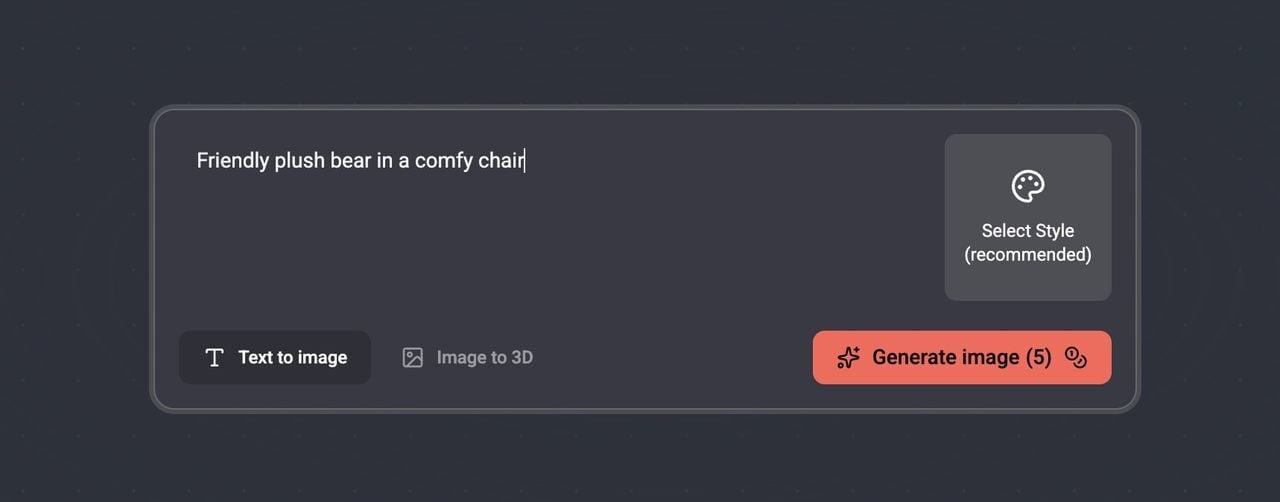
My first prompt was “friendly plush bear in a comfy chair”. Below you can see what I received. It seems to be more like a “friendly plush bear AS a comfy chair”.
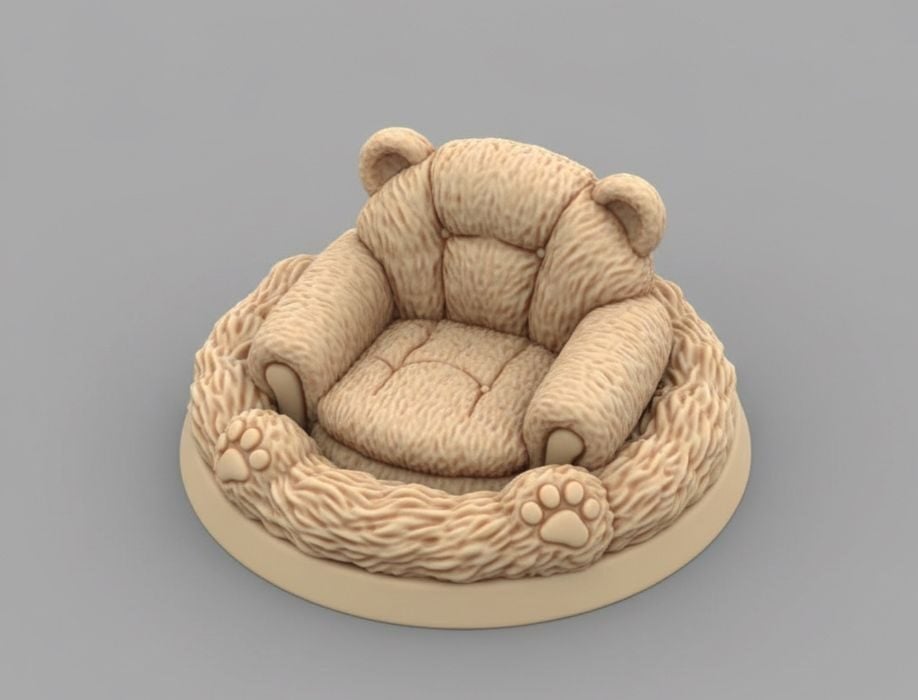
I realized that Lychee Gen was likely getting confused with the “two object” prompt. Sometimes text to image AI systems can’t really understand multiple things at once.
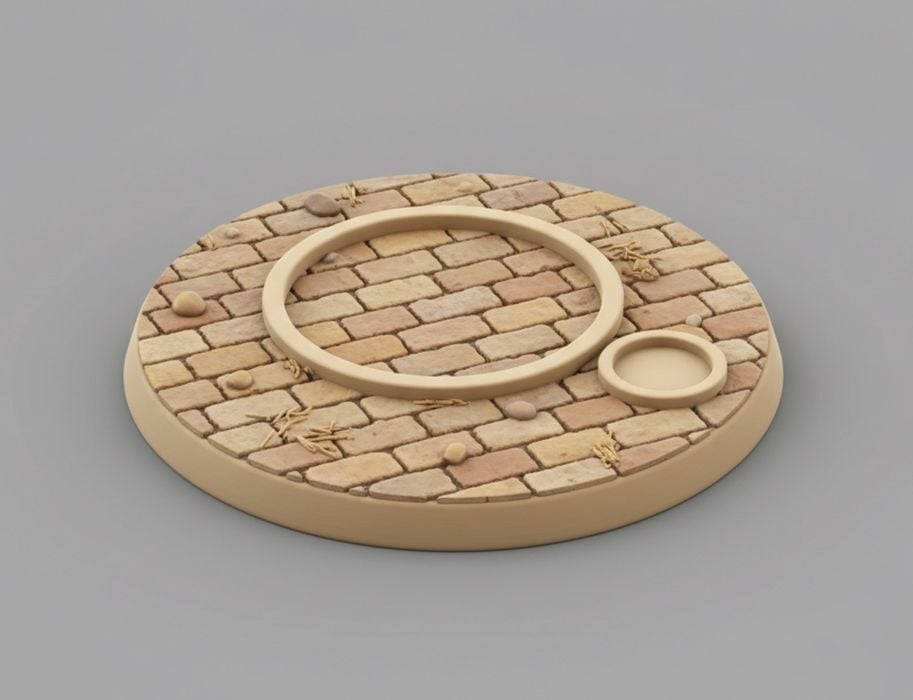
I tried simplifying things using only “friendly plush bear”, and received this. It seems that I’m getting only the base. I then realized that the regenerative prompts are altering the original generated image, not starting from scratch. I ended up burning some credits before starting fresh.
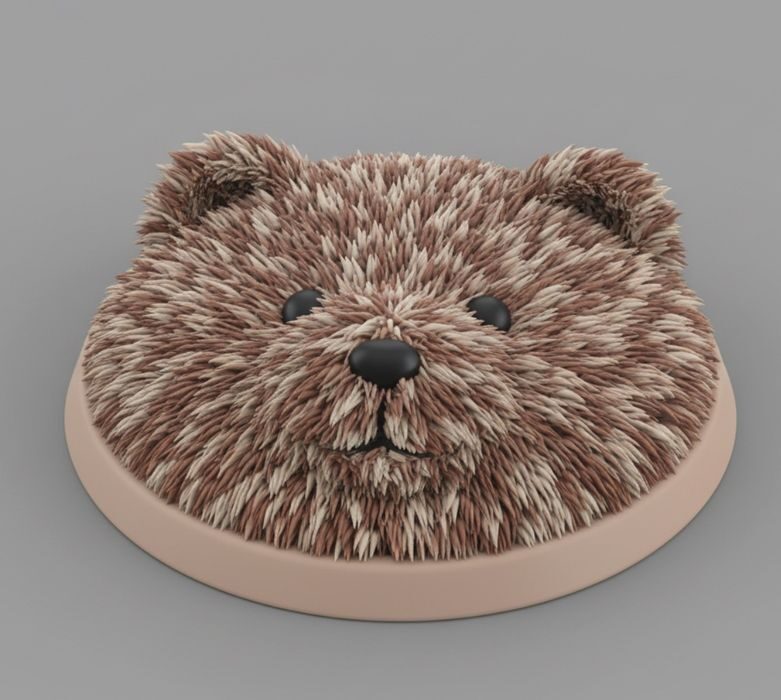
With a fresh generation, and selecting the “base” style to ensure the model would stand up, my “friendly plush bear” generated this. It seems to be a bear face on a platter, not exactly what I wanted.
Starting fresh yet again, I selected the “no base” style because it was now clear that the base style has a dramatic effect on the generation, usually negative.
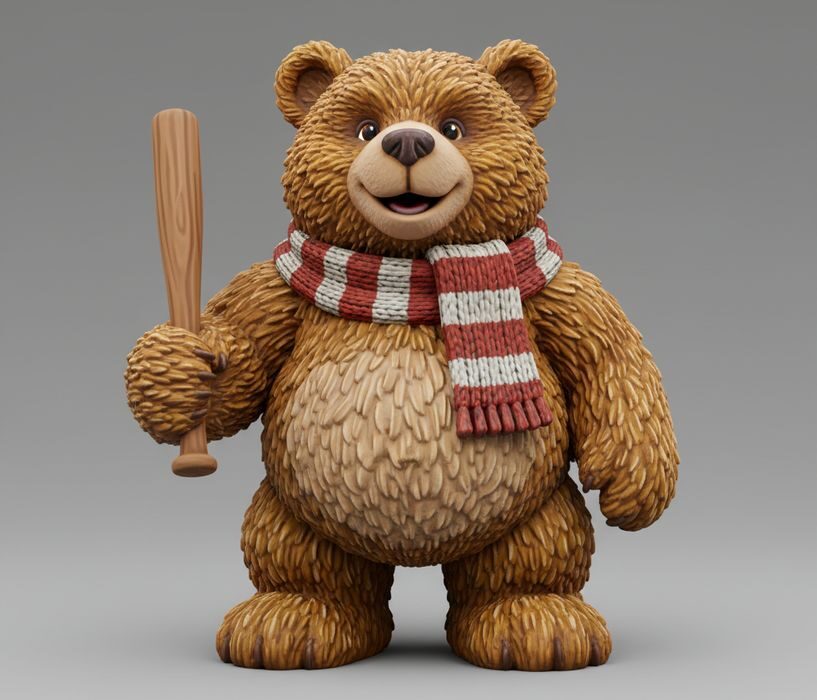
With the same prompt, “friendly plush bear”, I received this very decent bear image. Although I am not sure whether the baseball bat qualifies as “friendly”.
The next step was to make a 3D model of this bear, which is done at the touch of a button.
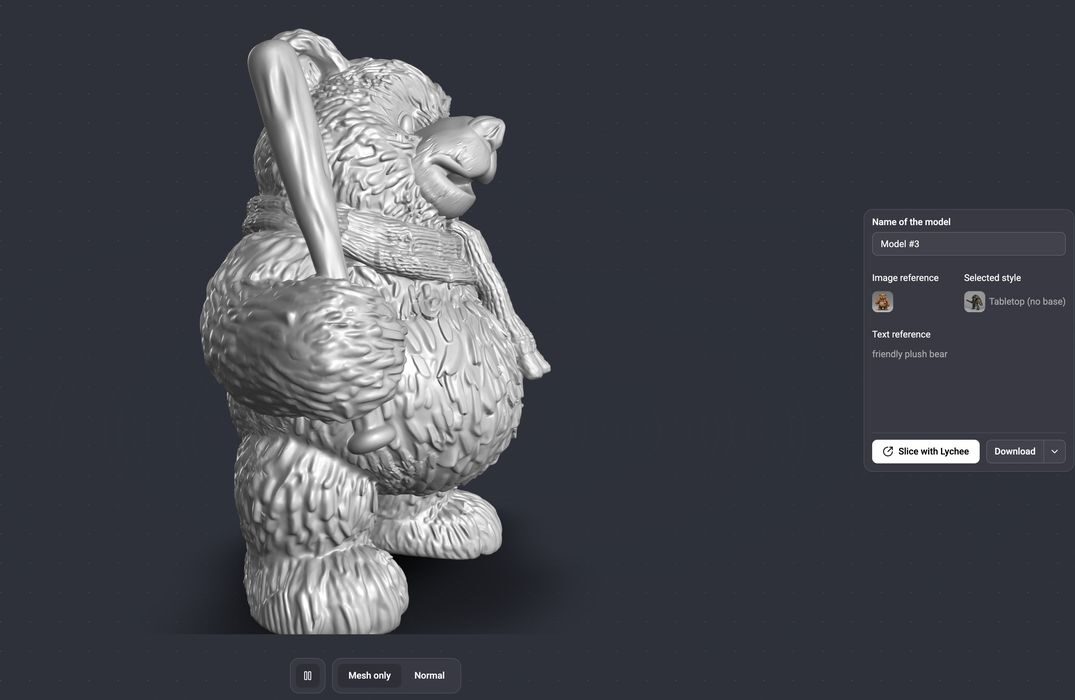
Generating the 3D model takes far longer than generating the 2D image, which takes less than a minute. However, you will likely have to generate several 2D images before you get one that is suitable for 3D generation. There are no parameters for the generation process; you just hit the button (and pay for it with some credits).
Once generated, Lychee Gen shows you a 3D spinnable view of the resulting model. Then you can either slice it for 3D printing with Lychee Slicer, or you can download it.
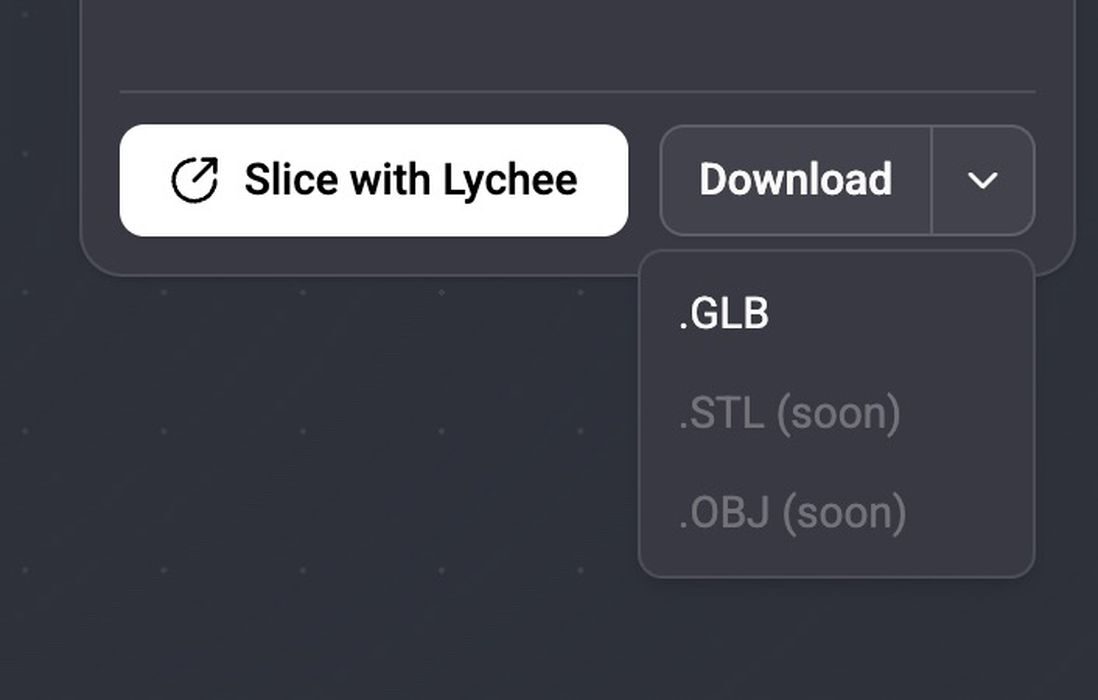
At this point, however, Lychee Gen only allows download in .GLB format, something normally used for 3D scenes, and typically not usable in 3D print software. The good news is that it is trivial to convert it to STL, which you can do by dropping the file into MeshLab, a free open source model manipulation tool.
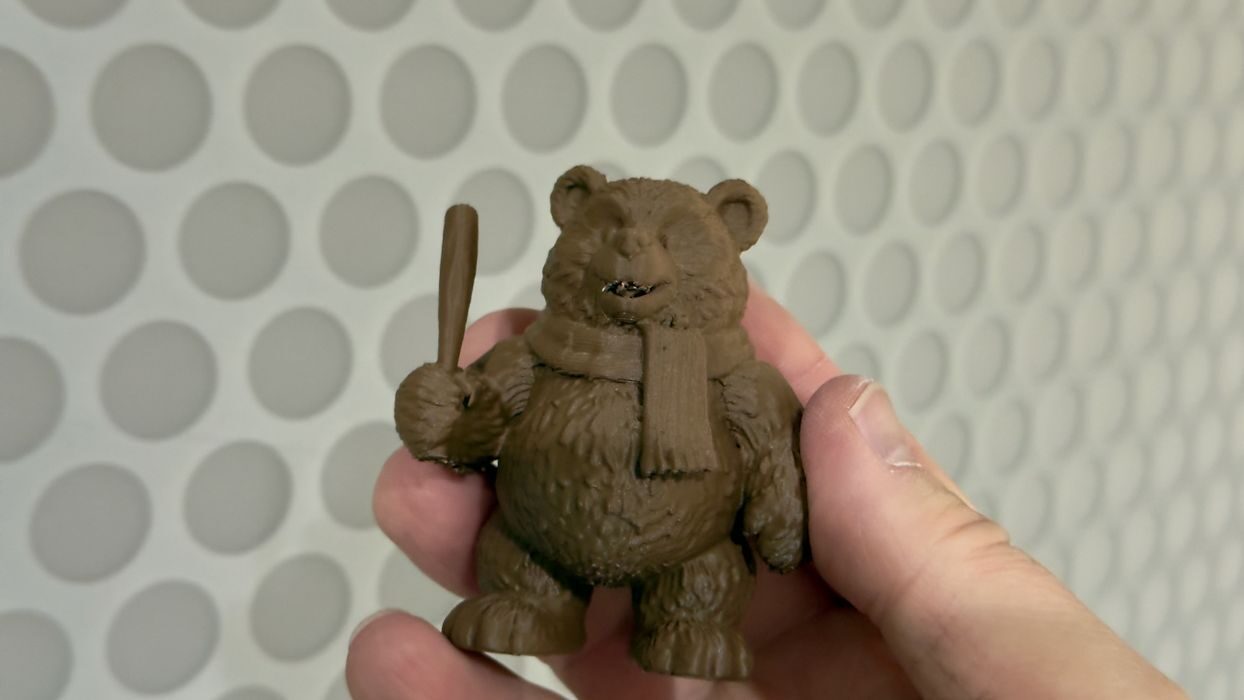
I printed the friendly bear and it came out quite well,
There are two issues I have with Lychee Gen.
The first is that there does not appear to be a way to upload your own image. Lychee Gen seems to be a little constrained in generating 2D images as compared to some other tools like Google’s Nano Banana, or even ChatGPT. I suspect this might be due to some relationship between the style of the image and the training of the 3D generator.
The second issue is that the prompts don’t always provide what you want. As you can see in my bear troubles above, Lychee Gen can easily generate completely incorrect images. Even the successful bear generation really wasn’t “friendly” at all.
Nevertheless, the generated 3D models were very crisp and quite accurate to the 2D image. This is far better than some other tools where the 3D model does not quite match the source 2D image.
Lychee Gen is not free, and requires payment for use. Fortunately, Mango3D provides a number of options, both subscription and on demand:
- €5 per month: ~10 model generations
- €10 per month: ~22 model generations
- €20 per month: ~46 model generations
- €7.49 one time charge: ~10 model generations
The payments put “credits” to your account. An image generation costs 5 credits, while a 3D model generation costs 45 credits.
This is an interesting move by Mango3D: you can generate a 3D model and inject it directly into the slicer. Is this a feature that other 3D print slicing software should offer?
If you’re a user of the Lychee Slicer, you might want to give Lychee Gen a try.
Via Lychee Gen
