
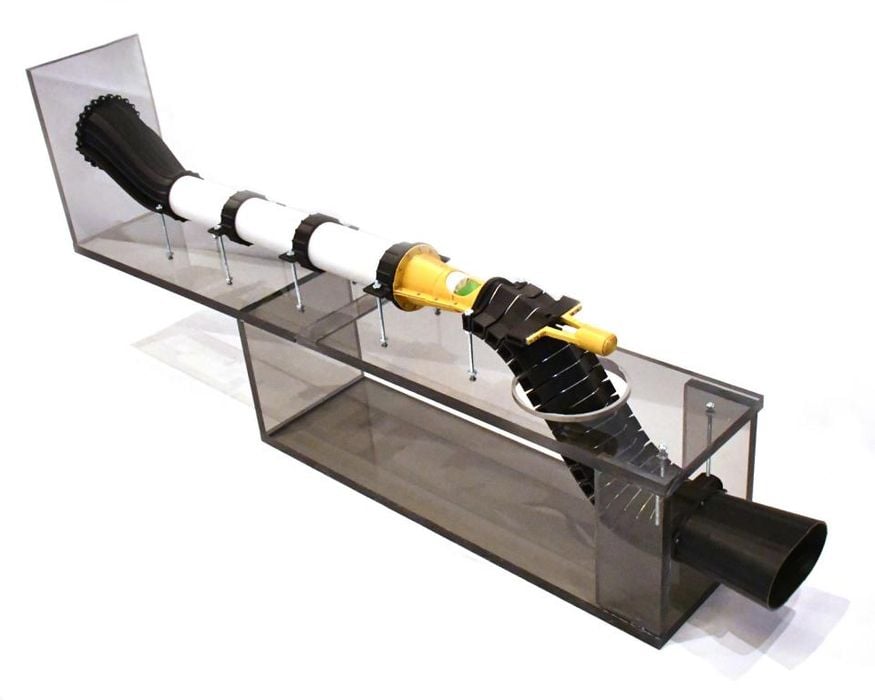
ORNL has been working on an interesting partnership to develop a 3D-printed micro-hydro system.
They’ve partnered with a Wisconsin startup company, Cadens, to address a large energy opportunity that has been ignored for decades.
That opportunity is micro-hydro, the ability to generate modest amounts of electricity from smaller rivers and dams.
It turns out that there are an astounding 91,000 dams in the US today, and apparently something over half of them have the potential to generate hydroelectricity. I take that to mean that the water drop through the dam is sufficient to turn a turbine.
Why hasn’t this been done already? It’s because hydroelectric installations have always been custom-built, a practice inherited from large-scale hydroelectric projects. This raised the cost beyond the value of the electricity that could be generated in these small setups.
So the water flows through these dams, and all the potential electricity is lost. ORNL reports that this could total an astounding 29GW of energy if implemented.
Their partnership with Cadens has developed a system (see image at the top) that can do so in a standardized manner. This eliminates the need for custom development, drastically lowering the cost of implementation.
Cadens provided the software to quickly design a configuration, and ORNL developed a method to manufacture the design, which ended up with a considerable amount of 3D-printed parts.
The design focuses around a standard PVC pipe, through which the water flows. Many polymer parts were 3D-printed for the design, except for the critical “runner housing”, which encloses the turbine itself.
For this part, ORNL 3D-printed a mold and cast the part in fibreglass. This is because the part must be extraordinarily strong and extremely durable due to its 24/7 operation.
This is an interesting project not only because it addresses an energy problem, but also because it illustrates how 3D printing can be used to solve long-standing issues and open up new opportunities.
3D printers can make anything, but the key is to find an application with significant benefit. A
Via ORNL
