
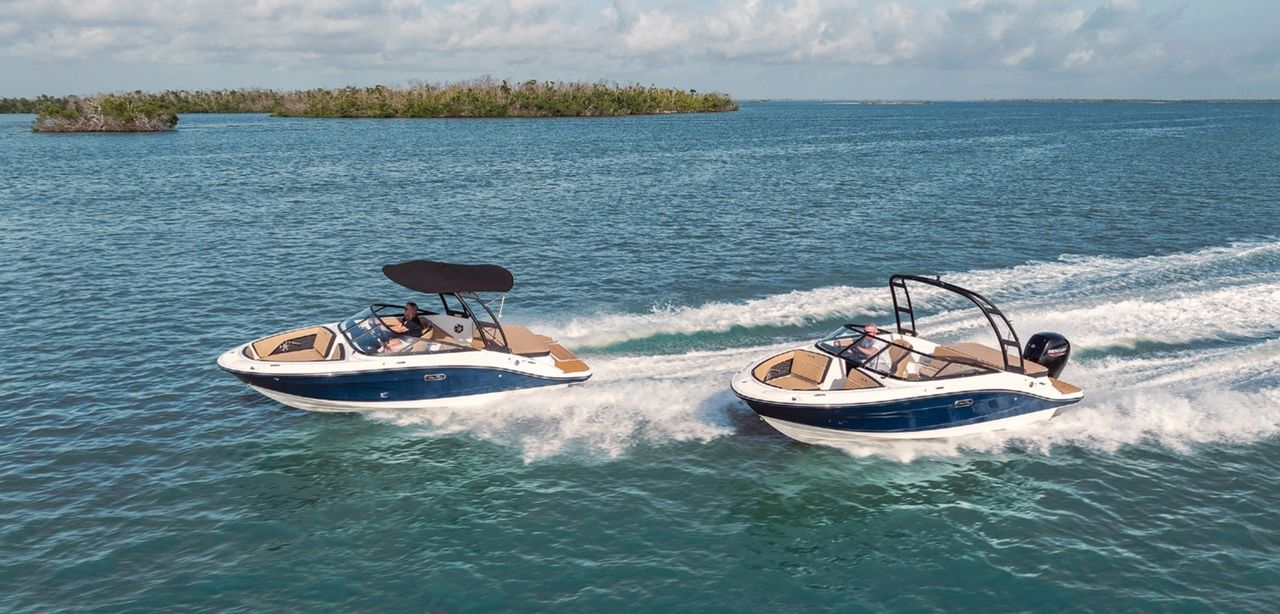
Charles R. Goulding and Kate Esposito chart how additive manufacturing is powering everything from Mercury Marine’s 600HP engines to Sea Ray’s luxury yachts and custom boat components.
Introduction
From Greek triremes to industrial steamships, boats have long been an integral part of human history. Over time, they have evolved from primitive rafts to high-powered, state-of-the-art machines. Recently, the engine manufacturing company Mercury Marine has turned heads with its development of the first 600 horsepower motors. These engines are taking the boating world by storm, offering unprecedented power and showcasing what the future of maritime travel holds.
Mercury Marine is owned by Brunswick Corporation, a global leader in marine recreation. In addition to Mercury, Brunswick owns many other marine companies, including Sea Ray, Boston Whaler, and Bayliner. Brunswick and its brands have integrated additive manufacturing into their workflows to enhance design flexibility, accelerate time-to-market, and reduce production costs. In addition to aiding in the creation of Mercury’s groundbreaking motors, 3D printing has enabled the production of numerous important parts across the Brunswick Corporation family.
Mercury Marine Makes Waves
As the world’s largest builder of recreational marine engines, Mercury Marine is at the forefront of production technologies. The company utilizes 3D printing to overcome complex engineering and manufacturing challenges, recognizing the many benefits the technology offers. Additive manufacturing is leveraged across the entire Mercury product lifecycle, from early-stage functional testing to high-volume operations.
Mercury uses additive manufacturing to accelerate pre-production analysis, allowing engineers to test performance before committing to permanent, expensive tooling. For instance, Mercury uses 3D printing to produce plastic and metal water pump impellers on demand. This helps the company test and tweak vane shapes and performance curves far faster than traditional machining methods. Additionally, Mercury 3D prints stainless steel trim tabs to test structural integrity under real-world marine conditions. This method lends itself to design adjustments without the high costs and long lead times associated with traditional trim tab stamping tools.
One of Mercury’s biggest successes involves creating custom fixtures for applying brand decals to engine cowls. Traditionally fabricated, outsourced fixtures took six months to produce, cost US$1,250 each, and were easily damaged. It was also extremely difficult to match the cowl’s curvature using conventional methods. Mercury turned to additive manufacturing, using a Stratasys F370CR composite printer to create a multi-material fixture that meets all of the requirements for the cowl’s structure.
The 3D-printed part is stronger and lighter, making it less prone to breakage and easier for operators to use. This shift reduced lead times from six months to one week and cut production costs by 68%, providing significant time and resource-saving manufacturing capabilities.
Mercury Castings, a division of Mercury Marine, specializes in advanced casting technologies and produces high-precision aluminum, iron, and stainless steel components. The division uses 3D printing and additive techniques to accelerate development cycles and optimize complex casting die components. In May 2025, Mercury Castings partnered with Oak Ridge National Laboratory (ORNL) to integrate additive manufacturing into its foundry operations. The partnership demonstrated the viability of using wire arc additive manufacturing (WAAM) to rapidly produce steel components for high-pressure die-casting tools.
Tooling is the largest capital expense for high production casting projects, with lead times between 9-12 months. Utilizing WAAM instead of traditional tooling methods provides a path for rapid tool replacement and design updates, moving from concepts to parts in days instead of months and reducing costs drastically.
To create their revolutionary 600 horsepower boating engines, Mercury Marine employs numerous additive manufacturing techniques. Before finalizing the design of the motors, Mercury uses 3D printing to test critical parts, including water pump impellers and trim tabs. The motor features a massive V12 engine block, which is made using high-pressure die casting (HPDC).
Since launching their partnership with ORNL, Mercury Castings has used WAAM to make the tool components necessary to complete the HPDC process. To finish the motors, Mercury uses their 3D printed fixtures for precise assembly and branding of the engine cowls. Once the engines are made, they must maintain a compact size and high power-to-weight ratio.
Mercury addresses this by using 3D printing to develop and test composite or polymer materials to replace heavier metal units. Additive manufacturing is used throughout the entire design and production process of these motors. Utilizing these AM technologies has enabled Mercury Marine to develop a ground-breaking product that is transforming the marine industry.
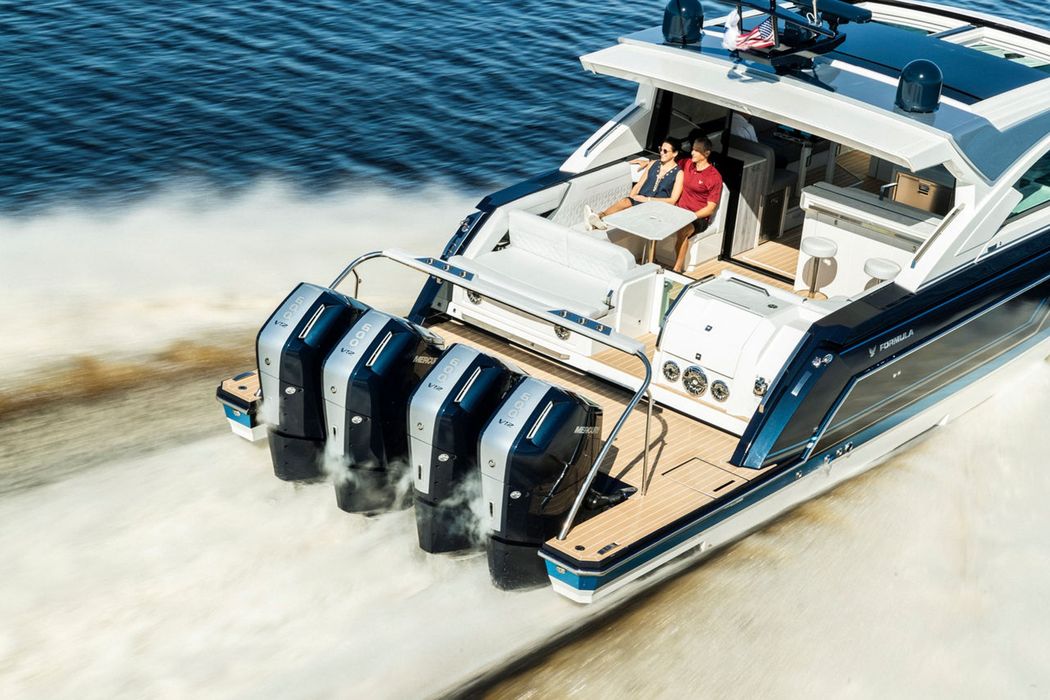
Sea Ray Uses Additive Manufacturing to Sea-ze Success
Sea Ray, a luxury yacht brand under the Brunswick Corporation, has integrated additive manufacturing into its design and production workflows to bridge the gap between initial prototypes and final production parts. Additive manufacturing is especially helpful to Sea Ray thanks to its ability to reduce lead times for evaluation parts, transition quickly between development phases, and unlock a new realm of design possibilities. The company began utilizing 3D printing around 2015 and has since taken advantage of the technology for many different projects.
When Sea Ray redesigned the air-conditioning drainage system for its L650 Fly yacht, it struggled to produce a corrosion-resistant grill cover without encountering supply chain issues or high manufacturing costs. Sea Ray initially chose to make the part out of cast urethane, which quickly became too expensive. The company also ruled out conventional injection molding because it only needed a small volume of the parts. Sea Ray decided to work with Protolabs, a digital manufacturing company that provides rapid prototyping and on-demand production of custom units.
Protolabs manufactures its molds from an advanced aluminum alloy, eliminating the long lead times and high costs of traditional methods. Switching grill production to Protolabs’ injection molding process brought immediate quality improvements. The components are stronger than the cast urethane grills and have a better surface finish, requiring less touch-up work before custom painting. The speed at which injection-molded and 3D-printed parts are sent from Protolabs to Sea Ray has greatly decreased lead times, shortening them from a few months to three weeks.
Following the success of the drainage grills, Sea Ray expanded its use of digital manufacturing to create plastic switch plate covers. Injection molding is used to create the covers’ switch cutouts and rounded edges, which previously had to be machined. Eliminating this step erases the need for intensive labor, enables blank covers to be painted immediately, and allows for the name of each switch function to be engraved. The use of Protolabs’ technology has helped Sea Ray transition more seamlessly from prototype to production, which is extremely important in the boating industry.
Brunswick Corporation Builds Toward the Future
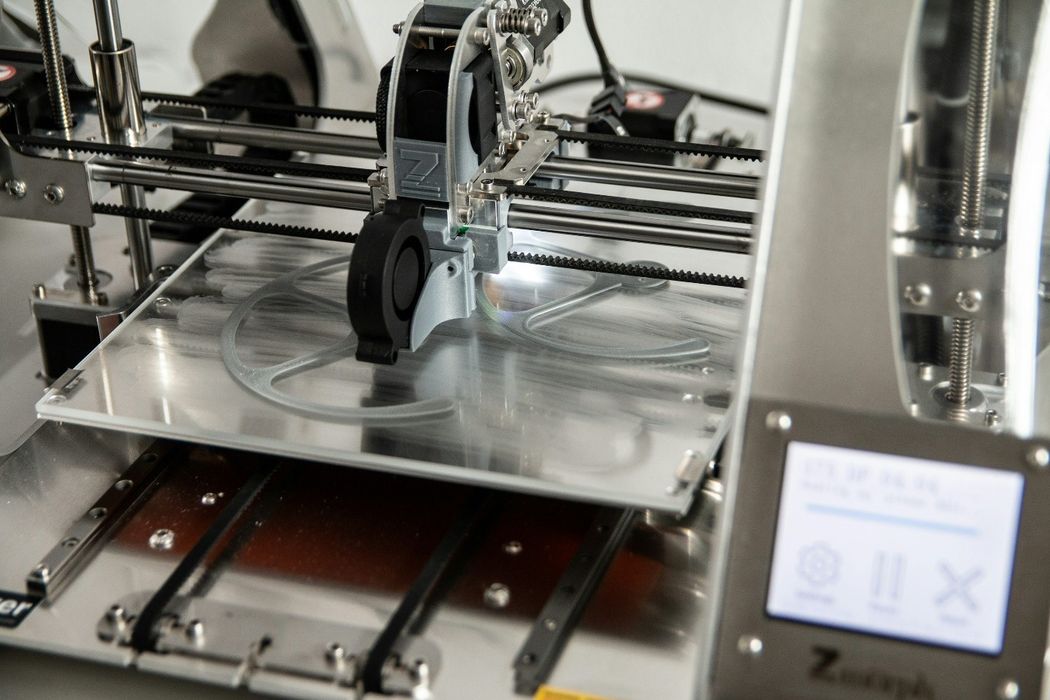
Like its subsidiaries, Brunswick Corporation relies on additive manufacturing for rapid prototyping, cost-control efficiency, and specialized tool creation. Engineers quickly build and test physical models of new boat parts using 3D printed units before committing to heavy manufacturing. Brunswick also uses additive manufacturing for components that would be too expensive to produce via traditional steel tooling, which often requires large volume commitments. The corporation is expanding its use of 3D printing for factory-floor assets like jigs, assembly guides, and custom fixtures. In some instances, 3D printed parts serve as end-use production parts on luxury yachts until long-term injection molded versions are available.
Additionally, Brunswick leverages the economic benefits of low-volume 3D printing to support its model of highly customizable luxury boats. Additive manufacturing allows the corporation to produce specific, customer-requested components on demand. These include personalized emblems and medallions, custom lighting fixtures, specialized grab handles, cup holders, and other fittings. Utilizing additive manufacturing allows Brunswick Corporation to deliver personalized aesthetic enhancements that cannot be made with mass production.
Looking to the future, Brunswick leadership anticipates the expanded adoption of additive techniques. This growth is specifically targeted at increasing the proliferation of 3D printed tooling components and expanding the variety of end-use parts. This will allow Brunswick Corporation to maintain a competitive edge in the high-end marine market while managing overhead expenses and industry uncertainties. Commitment to additive manufacturing is the key to Brunswick’s continued success.
Below is a table that presents the recent research and development (R&D) investments made by Brunswick in comparison to its human capital.
| Tax Year | R&D Expenses | Human Capital | Book R&D per Capita |
| 2025 | $168,700,000 | 14,000 | $12,050 |
| 2024 | $169,600,000 | 15,000 | $11,307 |
| 2023 | $185,200,000 | 17,300 | $10,705 |
| 2022 | $202,900,000 | 19,000 | $10,679 |
Brunswick Corporation R&D Per Capita [Source: R&D Tax Savers]
The Research and Development Tax Credit
Brunswick Corporation and its subsidiaries, including Mercury Marine and Sea Ray, appear to actively integrate additive manufacturing and 3D printing technologies into their core production workflows – ranging from wire arc additive manufacturing (WAAM) for high-pressure die-casting tools to rapid additive prototyping for water pump impellers and yacht drainage systems. Such initiatives evaluate advanced polymers and composite materials to optimize structural integrity and power-to-weight ratios for complex marine hardware, such as Mercury’s V12 600HP motor, while significantly reducing traditional pre-production tooling lead times.
Under Internal Revenue Code (IRC) § 41, these activities may directly satisfy the statutory Four-Part Test required to claim the federal R&D Tax Credit. The iterative CAD modeling, thermal/stress testing, and hydrodynamic evaluations conducted prior to commercial production freeze, serve to eliminate technical uncertainties regarding component durability, manufacturing methods, and optimal design. Because these efforts rely on physical science, metallurgy, and mechanical engineering to develop improved business components, the associated labor, materials, and prototyping costs most likely would qualify as eligible research expenditures.
To secure the R&D credit, the companies involved must establish a direct nexus between specific employee activity and individual business components. By compiling contemporaneous documentation – such as revision-controlled CAD files, Finite Element Analysis (FEA) simulation logs, material testing results, and project-level time tracking – Brunswick, and any companies acting in a similar manner, can substantiate qualified in-house wages, prototype supplies, and third-party development fees. The R&D tax credit is available for all eligible for-profit companies to claim for designing or developing new and/or improved products or processes, or for software development and qualifying upgrades. R&D Tax Savers has helped hundreds of companies claim these credits since the inception of the R&D credit in 1981.
Conclusion: Additive Manufacturing Ensures Smooth Sailing Ahead for Brunswick Corporation
The incredibly high demand for Mercury Marine’s 600HP engines suggests that the future will hold much success for the Brunswick Corporation and its subsidiaries. The technological innovations that additive manufacturing fosters are reshaping the boating industry, creating a new paradigm of marine performance. From initial prototyping to final tool production, additive manufacturing is revolutionizing all aspects of the marine tool development process. Brunswick’s and its subsidiaries’ investments in 3D printing technology are paying off, and it is highly likely that these companies will continue to move full steam ahead with additive manufacturing technologies.