
Powder removal is one of those 3D printing jobs that looks simple until you have a production batch in front of you.
PostProcess Technologies has now described a machine that attempts to solve the problem with a toolkit: vibration, solid abrasive media, controlled airflow, acoustic energy and even weighing.
The US patent application, published as US20260307335A1, is titled “Methods and System for Removal of Powder From an Additively Manufactured Part.”
The basic problem is familiar to anyone running SLS or MJF equipment. After a build, the parts are buried in loose powder. Some of it falls away easily. Some remains trapped in cavities, channels, lattices and other tricky features. Getting it out can involve brushing, blasting, vacuuming, shaking and inspecting each part by hand.
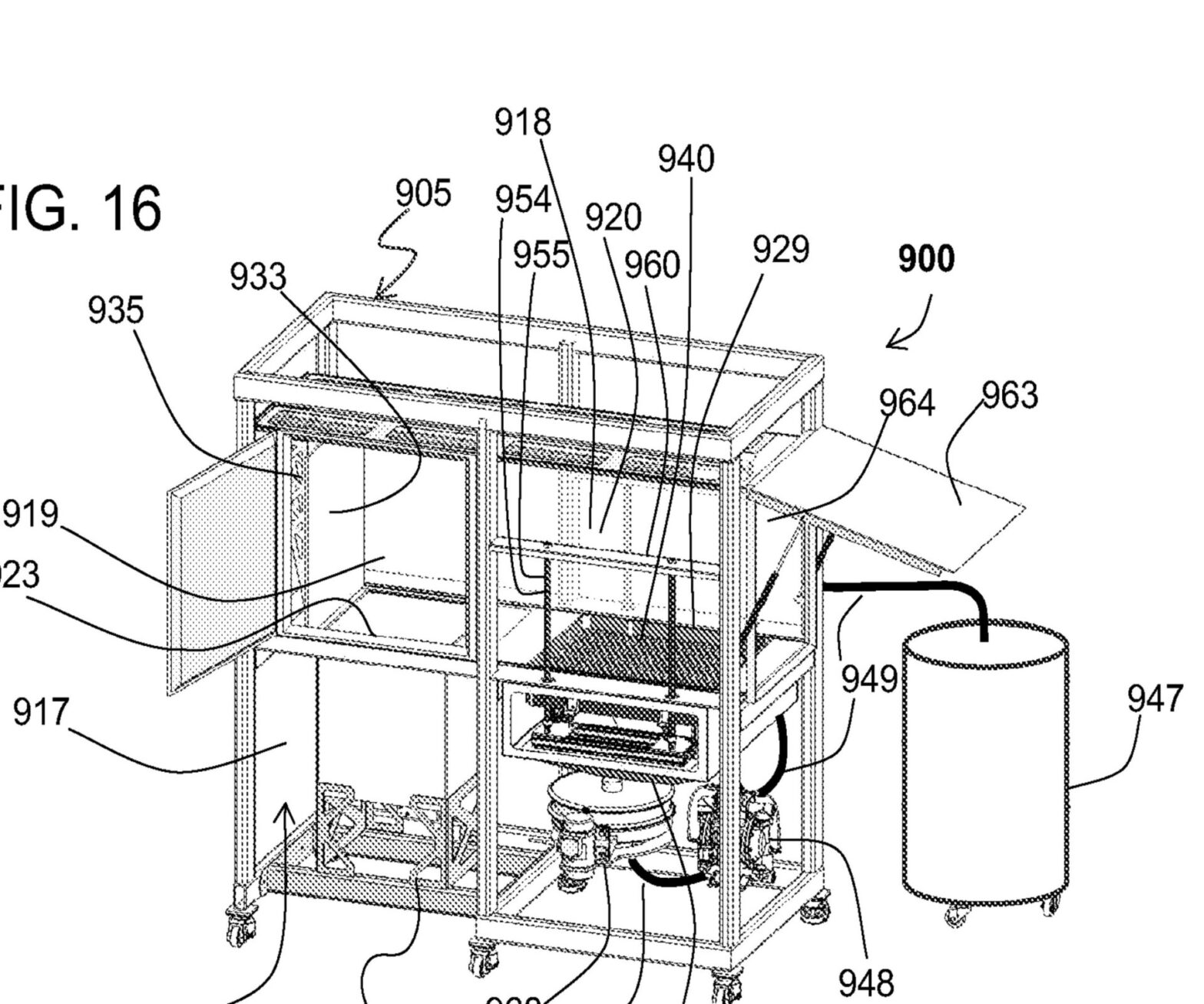
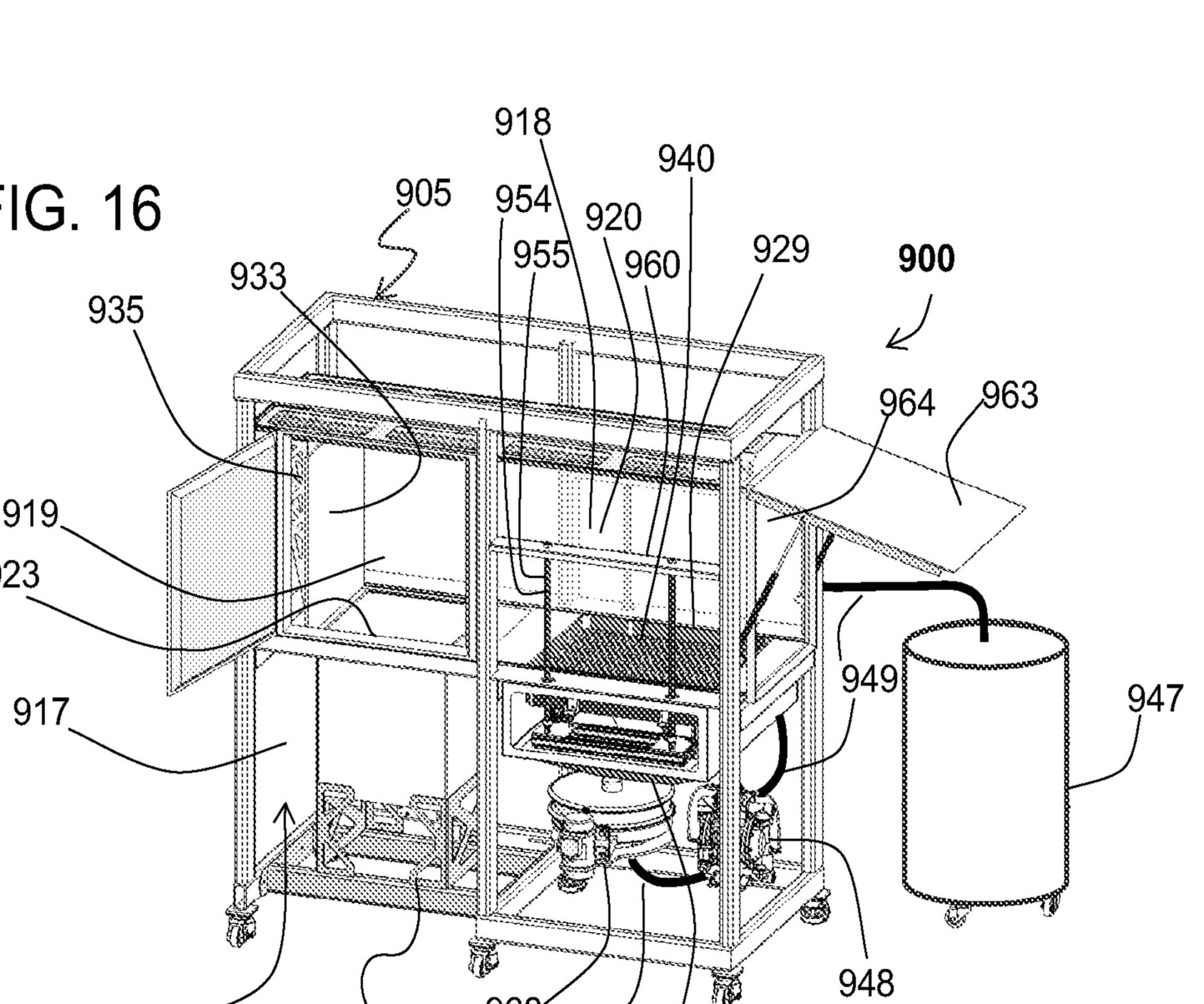
PostProcess proposes placing the parts inside an enclosed processing system on a platform that can vibrate. Solid abrasive media is added around the parts. The patent describes media such as small pellets or other particulate objects that can move across the part as the platform oscillates.
Why add more solid material to remove unwanted material? The moving media can reach surfaces and openings that a simple air blast might miss. As the platform vibrates, the media repeatedly contacts the printed parts and helps dislodge powder. The unwanted powder then falls through openings in the platform and is conveyed out of the chamber.
The system is depends on multiple cleaning steps. It creates a controlled environment in which vibration and media do the mechanical work, while a separate material path collects the powder.
The more elaborate versions add cyclone-generated airflow and acoustic energy. Air can help evacuate the loosened powder, while sound waves are described as another way to disturb powder sitting on or inside a part. The patent also shows different vibration profiles, including patterns intended to make the platform move in more than one direction.
A scale underneath the platform is another interesting feature. The machine could monitor the changing weight as powder leaves the chamber, then use that information to decide whether the cleaning cycle is complete. Stop when there’s no more powder coming out. That would be much better than having an operator to guess whether the part is done.
The drawings also show an exchangeable printer frame. Instead of manually transferring a build into a separate cleaning setup, the frame containing the printed objects and surrounding powder can be loaded into the depowdering machine. The parts and powder are then moved onto the processing platform, where the cleaning sequence begins.
That frame-to-platform handoff could be important in a production environment. Every transfer of loose powder creates another opportunity for spills, contamination and operator exposure. It also consumes time that does not improve the printed parts.
There is a complication, of course. Abrasive media must be chosen carefully. It has to be energetic enough to remove powder without damaging edges, thin walls or delicate surfaces, and it must not become lodged in the same internal features the system is trying to clean. Media recovery and separation will also need to be reliable.
Even so, this looks like a really good step forward for PostProcess. Their application considers depowdering as a measurable, repeatable machine process rather than an operator with a brush and a flashlight. For complex powder bed fusion parts, that may be the opening that could take part printing to production.
Via Espacenet