
Charles R. Goulding and Kate Esposito highlight how the BMW Group is leveraging cutting-edge additive manufacturing technologies to reduce costs, speed production, and drive the future of electric vehicle manufacturing.
Introduction
Since 1990, the BMW Group has used 3D printing to help it maintain its status as the world’s leading provider of premium cars and motorcycles. The company initially focused on producing prototype parts and components for concept cars, which laid the groundwork for its extensive use of additive manufacturing in production processes.
Today, the group is transitioning from using additive manufacturing as a workshop for parts to a fully integrated technology at the core of production activity. Through the use of specialized hubs, automated robots, and cutting-edge 3D printing technologies, the BMW Group is at the forefront of additive manufacturing in the automobile industry.
BMW Group Shifting to More Heavily Include Additive Manufacturing
The BMW Group, home of the BMW, MINI, Rolls-Royce, and BMW Motorrad brands, has long placed sustainability and resource conservation at the heart of its business. From supply chain production to end use phases, the company is using additive manufacturing to drive innovation.
In the past, BMW solely used 3D printing for trial component creation, prototyping, or special applications. It is now an established part of everyday industrial operations and is gradually evolving into a fully incorporated production technology. Instead of a peripheral solution, additive manufacturing is becoming an extremely relevant building block throughout the vehicle lifecycle.
Additive manufacturing is incredibly helpful when used to enhance automation and broaden technological capabilities. For the BMW Group, its greatest strength lies in its ability to accelerate development processes, increase flexibility in production, and open new possibilities for component design. 3D printing offers unprecedented speed and greater freedom to create customized solutions while traditional workflows are hindered by tool logic and lead times.
Furthermore, additive manufacturing allows targeted modifications to be made as required and parts to be tested in real-world conditions early in the development process. For instance, AM can produce highly functional units for use in dynamic functional tests and crash tests.
This shortens development time because when a part fails testing, engineers no longer need to commission new tooling and wait weeks for it to arrive. Instead, additively manufactured elements can be redesigned, produced, and ready for retesting within hours. BMW’s expansion into AM means it can produce components and vehicles at lower costs with shorter lead times, higher levels of customization, and less reliance on third-party suppliers.
The Additive Manufacturing Campus
In 2020, the BMW Group created the Additive Manufacturing Campus (AMC). Located north of Munich in Oberschleissheim, the AMC serves as the company’s central hub for the production, research, and development of 3D printing technologies. The facility represents a nearly €15 million (US$25 million) investment designed to consolidate BMW’s additive manufacturing expertise under one roof.
At the AMC, workflows are conceived, rapidly tested, scaled, and rolled out across the company. Upon opening, the campus employed 80 associates and 50 advanced 3D printing systems for processing metals and plastics. Since launching, the campus has manufactured over 1.6 million components. Over time, the AMC has evolved from a specialized workshop into a pacesetter for BMW’s global production network.
The next stage of additive manufacturing development is underway as the team at the AMC expands its expertise and technological breadth with a clear focus on scalable industrial applications. The BMW Group is investing in new systems, larger build volumes, and digitally connected process chains with the aim of integrating AM into existing production structures more closely and effectively.
The AMC’s discerning standards are evident in its ability to identify new technologies early and develop them systematically to series maturity. For instance, researchers at the AMC began working with wire arc additive manufacturing two years ago, have since greatly expanded its capabilities, and plan to implement it on a wider scale in the near future.
Wire Arc Additive Manufacturing (WAAM)
In 2024, the team at the AMC developed wire arc additive manufacturing (WAAM) to produce large-format, single-piece structural metal components. WAAM is incredibly beneficial because it allows for the creation of large forms that previously required the complex assembly of multiple individual parts.
By using an electric arc to deposit metal at high speeds and scales, BMW aims to print sizable structural elements without the need for conventional tooling. This makes the company much more flexible and less dependent on traditional supply chains while saving significant time and costs.
The BMW Group began using WAAM to manufacture components for prototyping and vehicle testing in 2025 and plans for the first vehicle parts produced via WAAM to enter series production in 2027. This technology is firmly established in prototype development and is particularly valuable for crash tests because of how quickly units can be redesigned and printed.
By making components in-house and on-demand, BMW has easy access to upgrades or repairs for customers without needing to carry massive amounts of inventory on hand or keep customers waiting weeks for parts to be manufactured. Using WAAM technology enables rapid prototyping, seamless tool replacement, and inexpensive production, resulting in substantial savings in both time and money for the BMW Group.
3D Printed Robot Grippers
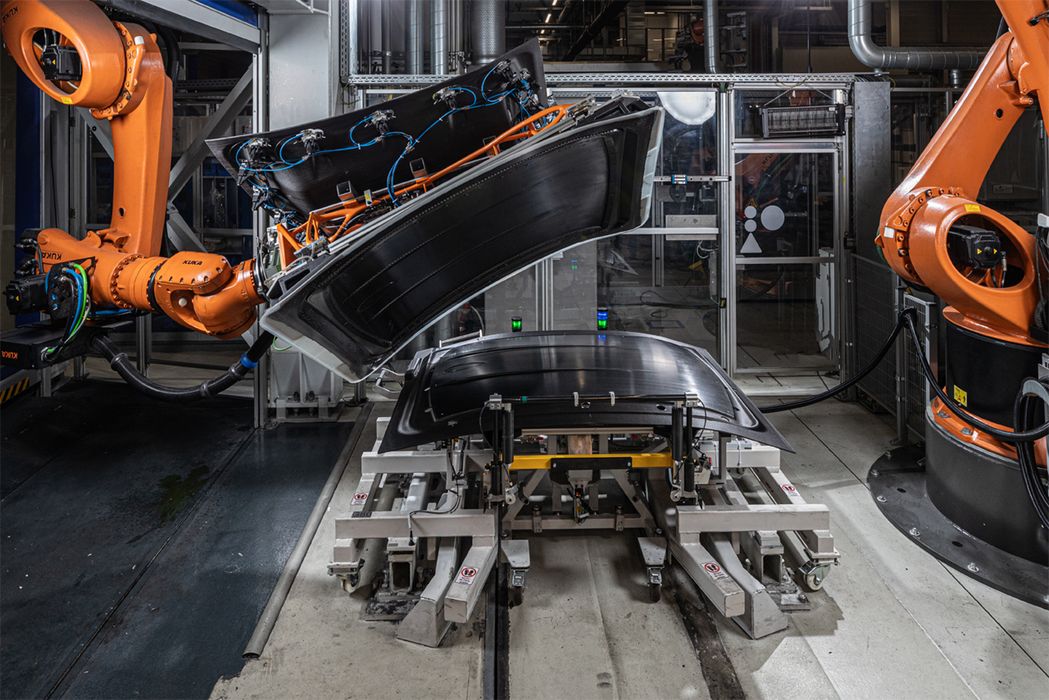
BMW utilizes 3D printed robot grippers as critical production aids to handle heavy vehicle components such as roofs, doors, and entire floor assemblies. These grippers provide significant technical and environmental advantages over traditional manufacturing methods. They can be individually adapted to specific requirements at any time, including weight optimization.
Lighter grippers enable higher speeds on the production line, shorter cycle times, and decreased costs. For one robot, the grippers weigh around 150 kilograms (about 330 pounds) and can be manufactured in 22 hours. Compared to conventional grippers, the 3D printed versions are 20% to 30% lighter, which extends operating life and decreases wear and tear on the system. Since 2023, BMW has used these grippers in their Landshut, Munich, and Regensburg plants.
To create these grippers, BMW employs a variety of additive manufacturing techniques. Large-scale printing, which uses injection molding granules and recycled plastics, produces the grippers’ large, sustainable bearing structures and roof shells. Selective laser sintering is used for intricate components that require high precision, including vacuum grippers and needle clamps.
For heavy-duty applications, sand-casting molds are created and filled with liquid aluminum to produce load-optimized structures such as the floor assembly. Additive manufacturing has transformed gripper production, allowing BMW to revolutionize its manufacturing capabilities and transition toward more energy-efficient robotics in its production lines.
Neue Klasse
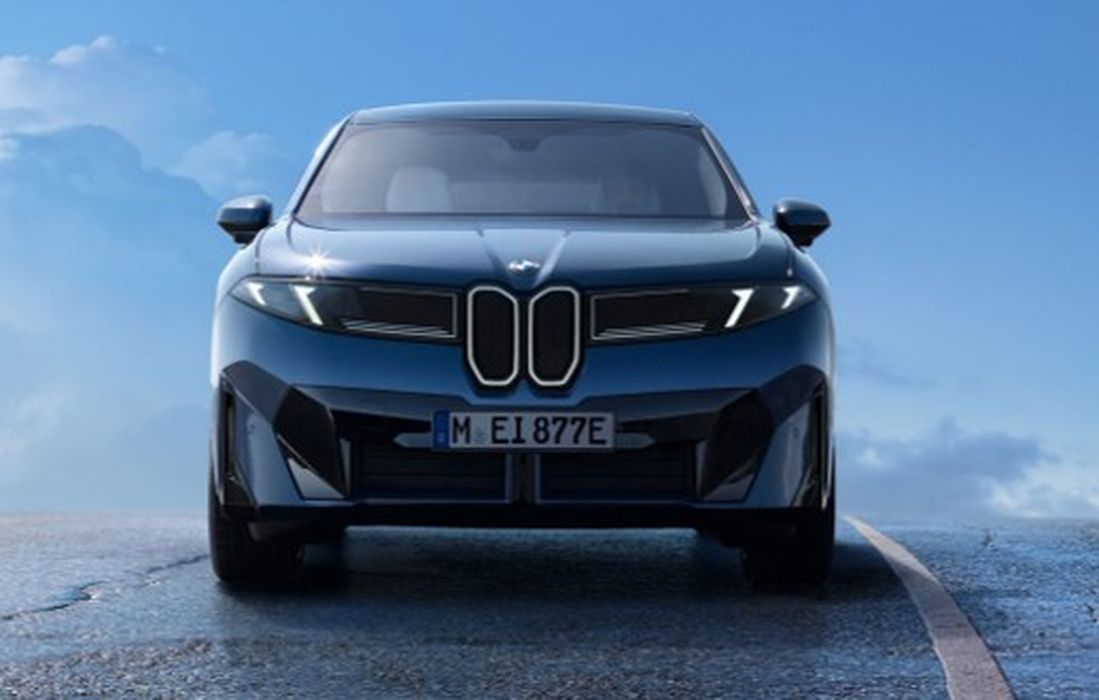
The BMW Neue Klasse is BMW’s next-generation platform, design language, and technology suite that defines the brand’s shift into all-electric vehicles. Additive manufacturing has supported the group’s development and validation of Neue Klasse vehicles and produced 3D printed components for the latest-generation electric drive.
Additive manufacturing has greatly decreased the time required for crash testing, which in turn has shortened the development timeline of Neue Klasse platforms. Failed components can be redesigned, printed, and ready for retesting almost immediately without the need for expensive and time-consuming traditional prototype tooling.
Beyond the development phase, AM is being used to manufacture highly functional components for the latest generation of electric drive technology implemented in these vehicles. As the BMW Group moves toward full industrial series production, new facilities such as Plant Debrecen in Hungary are supporting the Neue Klasse production line.
The plant features its own 3D printing facility that has accelerated manufacturing since production of the Neue Klasse models began at the end of 2025. The plant supplies its own production aids, tools, and auxiliary devices, preventing assembly line downtime by allowing for rapid on-site response times and short optimization loops. The BMW iX3 is the first available vehicle from the Neue Klasse line and BMW aims to implement this technology in its entire portfolio by the end of 2027.
The Research and Development (R&D) Tax Credit
BMW Group’s AM initiatives may support IRC § 41 R&D tax credit eligibility where the work is performed domestically and is treated as domestic research or experimental activity under IRC § 174A, is technological in nature, and involves a process of experimentation intended to improve function, performance, reliability, or quality. The article notes BMW’s expansion of 3D printing from prototype and concept parts toward core production technology, supported by its Additive Manufacturing Campus as a central hub for AM production, research, and development.
Potential business components may include new and/or improved products and separate manufacturing processes (plant processes/machinery/techniques).
Examples could include BMW’s WAAM development for large-format, single-piece structural metal components and rapid redesign/reprinting for crash-test parts, 3D printed robot grippers that are 20%–30% lighter, and AM-supported Neue Klasse development/validation and production aids. It is imperative to exclude foreign research, post-commercial-production work, mere adaptation/duplication, funded research, and style/cosmetic changes. R&D Tax Savers has helped thousands of companies navigate the complexities of the R&D credit since the R&D credit’s inception in 1981.
Conclusion
The BMW Group, a long-time user of 3D printing, has recognized the many benefits that additive manufacturing offers in the automotive industry. While the company has utilized 3D printing on a small scale since 1990, it is now using it as a core production activity. From rapid crash testing to more efficient robots, additive manufacturing is revolutionizing the BMW Group’s production scale and growing its business ventures tremendously.
The creation of the Additive Manufacturing Campus and use of wire arc additive manufacturing highlight BMW’s dedication to this technology and understanding that it has the power to transform the company. Long-term investments in 3D printing have paid off for the BMW Group, giving it the keys to drive toward future success.