Charles R. Goulding considers Toyota’s evolving “Toyota Way” philosophy is quietly driving a 3D printing revolution — and Stratasys is in the driver’s seat.
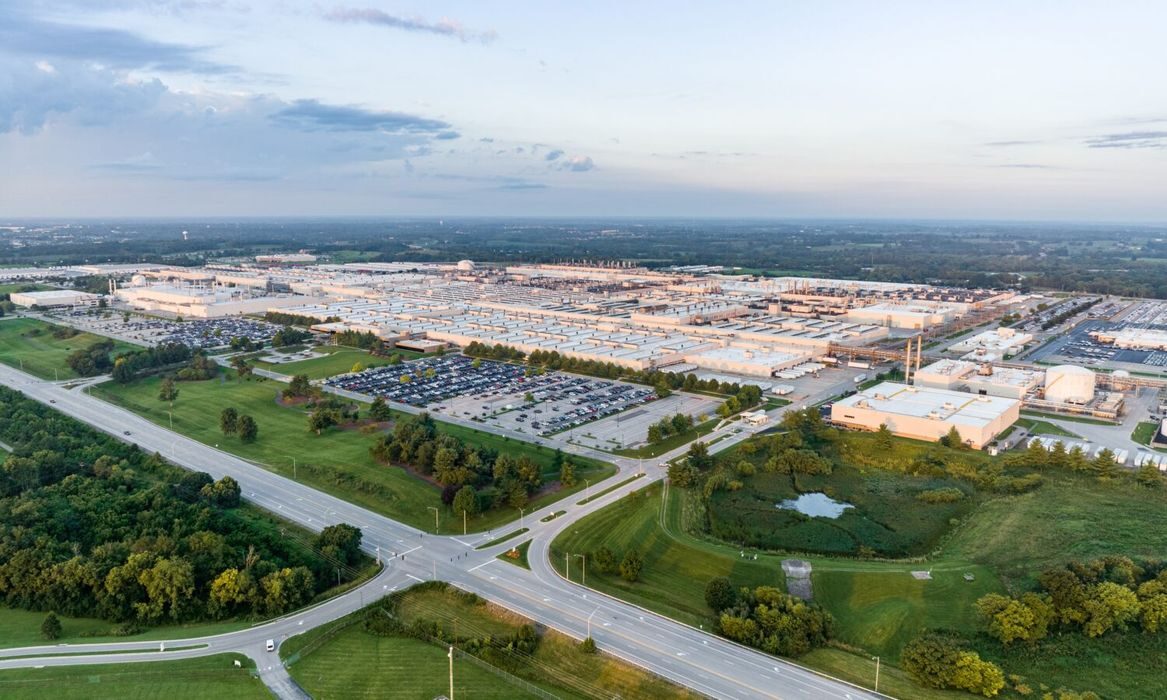
Toyota Kentucky Plant Overview
Popular Mechanics recently published a fascinating deep dive into Toyota’s enormous automobile manufacturing plant in Georgetown, Kentucky — the largest Toyota facility in the world outside Japan. As someone who grew up flipping through the pages of Popular Mechanics and Popular Science in my father’s magazine rack, I have a soft spot for how these publications bridge the gap between engineering and imagination. They were the original Wired and Fast Company, long before those titles hit the newsstand. It’s remarkable that Popular Science dates all the way back to 1872 and Popular Mechanics to 1902 — both still thriving in a digital world that prizes fast innovation.
Toyota’s Kentucky operation is a case study in scale, precision, and long-term thinking. The sprawling nine-million-square-foot complex employs around 8,000 people and produced more than 435,000 vehicles in 2024, including the flagship Camry, the RAV4 Hybrid, and the Lexus ES 350. When you think of a car plant that size, it’s easy to picture a fully robotic assembly line — but Toyota’s approach has always been more nuanced.
The company blends automation, AI, robotics, and human craftsmanship in a way that feels distinctly Toyota. Robots and autonomous guided vehicles move materials seamlessly through the facility, while sensors and data analytics fine-tune efficiency. Yet the heartbeat of the operation remains human — the skilled technicians and engineers who continuously improve every step of the process through kaizen, the Japanese philosophy of continuous improvement.
This philosophy is what Toyota calls “The Toyota Way.” It’s not just a slogan — it’s a management culture built on respect for people, relentless problem-solving, and long-term thinking. The company trains its employees to identify inefficiencies, develop solutions, and implement improvements collaboratively. The result? A manufacturing ecosystem that evolves organically, balancing automation with human insight.
In 2025, this mindset is increasingly linked to advanced digital manufacturing — especially 3D printing.
Toyota and Stratasys: A Model Partnership in Additive Manufacturing
While Toyota has used 3D printing for decades, the scope and sophistication of its efforts have grown dramatically in recent years. A major catalyst for that expansion is Toyota’s deep partnership with Stratasys, one of the global leaders in additive manufacturing technology.
Earlier this year, Stratasys released a behind-the-scenes video showing how Toyota engineers are using its industrial-grade printers for tooling, prototyping, and even limited-run production parts. The collaboration highlights a growing shift at Toyota: integrating 3D printing directly into the manufacturing floor, not just the design lab.
Toyota engineers use Stratasys FDM (Fused Deposition Modeling) and PolyJet systems for a wide range of applications. On the production side, 3D printed jigs, fixtures, and robotic end-of-arm tools have replaced traditional machined aluminum components. These printed tools are lighter, easier to handle, and faster to produce — all without compromising precision.
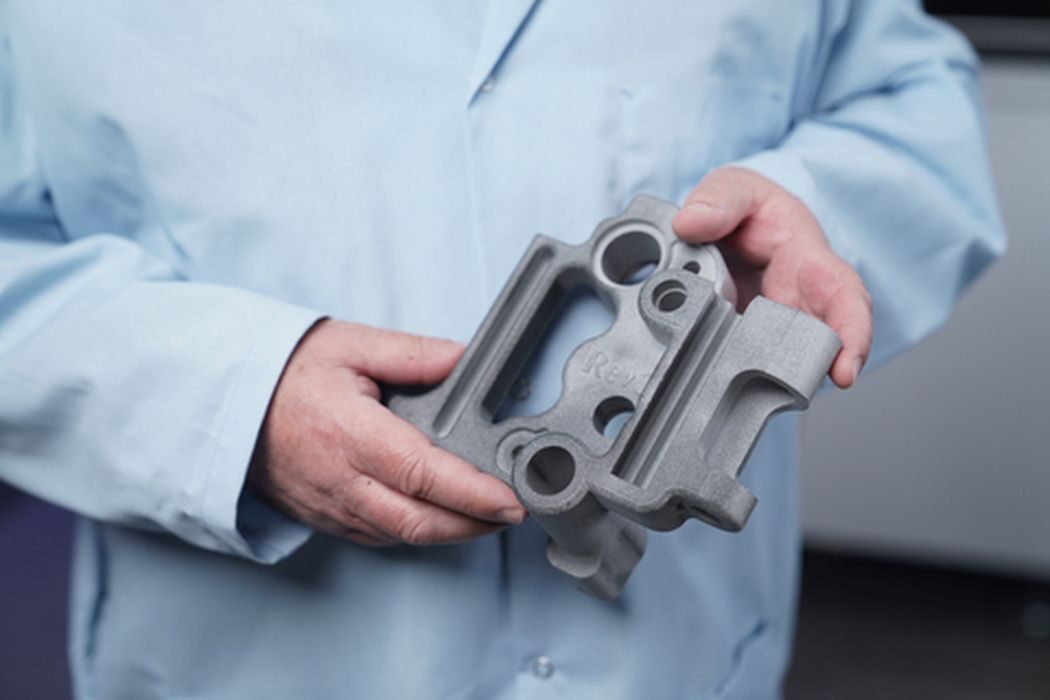
For example, when a team on the floor identifies an ergonomic issue with a part-handling fixture, they can now redesign and print a new version within days. That feedback loop — from problem to solution — has been drastically shortened. It’s the Toyota Way, meets digital manufacturing.
In the video, Toyota engineers point out that what once took several weeks and cost thousands of dollars can now be achieved in a few days at a fraction of the cost. That level of agility is critical in an industry that’s evolving toward electric and hybrid platforms, where new designs and configurations are constantly emerging.
Beyond the hardware, Stratasys provides software tools that integrate seamlessly with Toyota’s design and production management systems. This ensures traceability, repeatability, and compliance — key elements for automotive-grade quality assurance. Toyota isn’t just experimenting with 3D printing; it’s embedding it into the DNA of its manufacturing ecosystem.
It’s worth noting that Toyota’s additive strategy also aligns with its global sustainability initiatives. 3D printing enables lightweighting, material efficiency, and localized production — all central to reducing waste and carbon emissions.
For more context on Toyota’s broader strategy in Japan and Asia, see my September 18, 2025, Fabbaloo article on Japan. That piece explores how Toyota’s domestic facilities are using additive manufacturing for prototype components and EV development, setting the stage for what we’re now seeing in Kentucky.
Training for the Future
A big part of Toyota’s success has always been how it trains its people — and this applies just as much to 3D printing as to any other discipline. Workers on the floor are encouraged to understand not only how to use 3D printed tools but also how to design and iterate them. Engineers collaborate closely with production staff to refine digital models, often in real time.
This human-centered approach to advanced manufacturing helps demystify the technology. Rather than isolating 3D printing as a niche skill for a few specialists, Toyota democratizes it across departments. Anyone who identifies a production challenge can work with additive experts to develop a printed solution.
That collaborative model is what allows Toyota to extract continuous value from additive manufacturing — not just as a cost saver, but as a creative enabler. It turns problem-solving into part of the daily routine.
This mindset is also reflected in Toyota’s partnerships beyond Stratasys. The company collaborates with local universities and technical schools to ensure the next generation of engineers is fluent in additive technology. It’s a long-term investment that pays dividends in innovation capacity.
The Broader Industry Context
Toyota’s methodical, partnership-driven approach stands in contrast to how some companies adopt 3D printing. While many manufacturers treat it as a quick prototyping tool or a cost-cutting measure, Toyota treats it as a strategic capability — one that complements its larger production philosophy.
This distinction is critical. Additive manufacturing isn’t just about printing parts; it’s about rethinking workflows, supply chains, and even design principles. By bringing Stratasys into its ecosystem, Toyota ensures that its 3D printing strategy evolves in lockstep with its operational and cultural principles.
For Stratasys, the relationship is equally valuable. Working with Toyota provides real-world insights into large-scale automotive manufacturing challenges. That feedback helps Stratasys refine its hardware, materials, and software offerings. In essence, Toyota’s continuous improvement loop now extends to its 3D printing supplier — a rare, symbiotic model in modern industry.
This mirrors what I discussed in my earlier Fabbaloo article about Japan’s industrial innovation culture: the most successful companies view partnerships not as transactions but as long-term learning relationships. Toyota’s work with Stratasys exemplifies that.
The Research and Development Tax Credit
The now permanent Research and Development (R&D) Tax Credit is available for companies developing new or improved products, processes, and/or software. 3D printing can help boost a company’s R&D Tax Credits. Wages for technical employees creating, testing, and revising 3D-printed prototypes can be included as a percentage of the eligible time spent on the R&D Tax Credit. Similarly, when used as a method of improving a process, time spent integrating 3D printing hardware and software counts as an eligible activity. Lastly, when used for modeling and preproduction, the costs of filaments consumed during the development process may also be recovered.
Whether it is used for creating and testing prototypes or for final production, 3D printing is a great indicator that R&D Credit-eligible activities are taking place. Companies implementing this technology at any point should consider taking advantage of R&D Tax Credits.
Going Places…
As Toyota continues refining “Going Places…With Toyota” for the digital age, its collaboration with Stratasys shows how additive manufacturing can seamlessly blend with traditional production methods. The Kentucky plant’s integration of AI, robotics, and 3D printing demonstrates that technology doesn’t replace craftsmanship — it amplifies it.
Toyota’s deep partnership with Stratasys is a model to watch. When a 3D printing solutions partner understands a client’s long-term strategy — and the client, in turn, opens its doors to continuous innovation — both sides evolve together. That’s not just good business; that’s the Toyota Way.