Charles R. Goulding and Preeti Sulibhavi unpack the seismic shifts in U.S.–Japan trade—from Warren Buffett’s renewed love affair with Japan’s “sogo shosha,” to Nippon Steel’s headline-grabbing U.S. Steel takeover, Honda’s AM ambitions, and Ricoh’s own print-on-demand for cameras—showing how, after years of stagnant growth, Japan’s industrial might is surging back powered by 3D printing and global investment.
On July 23, 2025, Washington and Tokyo announced a new U.S.–Japan Strategic Trade and Investment Agreement. The deal establishes tariffs in the 15–20% range, streamlines customs, and creates a framework for investment in semiconductors, energy, and autos. While trade pacts can be abstract, this one lands at a critical time: Japan is shaking off decades of low growth, attracting global investors, and leveraging technologies like 3D printing to compete in a new industrial era.
Fabbaloo has followed these developments closely. Charles R. Goulding and Preeti Sulibhavi have chronicled how Japanese corporations are weaving additive manufacturing (AM) into their strategies. With this new trade deal, those efforts now have stronger policy and financial tailwinds.
Below, we look at how the agreement touches Toyota, Honda, Nikon, and Ricoh, and the landmark Nippon Steel–U.S. Steel merger, all through the lens of 3D printing’s accelerating role.
Japan’s Re-Emergence and Buffett’s Bet
After years of anemic growth and deflationary pressure, Japan has re-emerged on the radar of global investors. The most visible sign came in 2023 when Warren Buffett expanded his stakes in Japan’s “sogo shosha” (trading houses) such as Mitsubishi and Mitsui, calling them undervalued and essential to global commodity and industrial flows. His move signaled renewed confidence in Japanese corporate governance and growth prospects.
This confidence dovetails with the trade deal’s emphasis on friend-shoring and secure supply chains. With tariff clarity and investment pathways, Japanese firms can expand in the U.S. while still channeling capital and innovation from Tokyo. 3D printing, with its ability to localize production, shorten supply chains, and reduce capital costs, fits squarely into this equation.
Nippon Steel and U.S. Steel: A Landmark Merger
The US$14.9 billion Nippon Steel acquisition of U.S. Steel, announced in late 2023 and still undergoing U.S. regulatory review in 2025, is a headline-grabbing example of Japanese resurgence. Nippon Steel, already the world’s fourth-largest steelmaker, is making a direct bet on U.S. infrastructure demand, auto manufacturing, and green steel.
Where 3D printing comes in:
- Powder metallurgy: Steel companies are increasingly producing powder alloys for additive manufacturing. Nippon Steel has signaled interest in expanding beyond bulk steel into high-performance alloys and advanced manufacturing feeds.
- Automotive and aerospace tie-ins: With U.S. Steel’s long supply relationships, Nippon can integrate AM-ready alloys into the automotive sector (Toyota, Honda) and aerospace (Boeing, Pratt & Whitney).
The trade deal makes it easier for these integrated supply chains to operate cross-border with fewer cost penalties, allowing AM-enabled steel components to become part of the production mix in U.S. and Japanese factories.
Toyota: Expanding AM Across Motorsports and Production
Toyota, long the global leader in automotive production, is already heavily invested in AM:
- Stratasys collaboration (2025): Toyota is expanding its use of Stratasys 3D printers for motorsports, prototyping, and production tooling. Additive allows the company to turn around fixtures and spare parts in days, not weeks.
- HP MJF with SOLIZE: Toyota has used HP Multi Jet Fusion with SOLIZE to print on-demand service parts, reducing inventory and logistics costs.
The trade deal’s tariff certainty reduces costs for printers, powders, and cross-border parts shipments, while its EV-related provisions—via the earlier critical minerals agreement—help Toyota ramp U.S. EV production. AM fits neatly here, enabling localized tooling and repair part networks that can keep factories running smoothly.
Honda: Agile Production and Motorsport AM
Honda, Japan’s second largest auto giant, is equally active with additive:
- Motorsport and F1 applications: Honda Racing has embraced 3D printing for engine components, cooling ducts, and aerodynamic testing—areas where iteration speed is everything.
- Production tooling: Honda’s U.S. and Japan plants employ 3D-printed jigs and fixtures to reduce weight, cut costs, and accelerate assembly line changeovers.
- EV prototyping: Honda has used AM to rapidly prototype components for its electric vehicle platforms, aligning with its plan to phase out ICE vehicles by 2040.
For Honda, the trade deal’s biggest benefit is shortened lead times for cross-border components. With customs streamlined, Honda can run distributed AM production across Japan, the U.S., and even Europe without bottlenecks.
Nikon: From Cameras to Metal AM Powerhouse
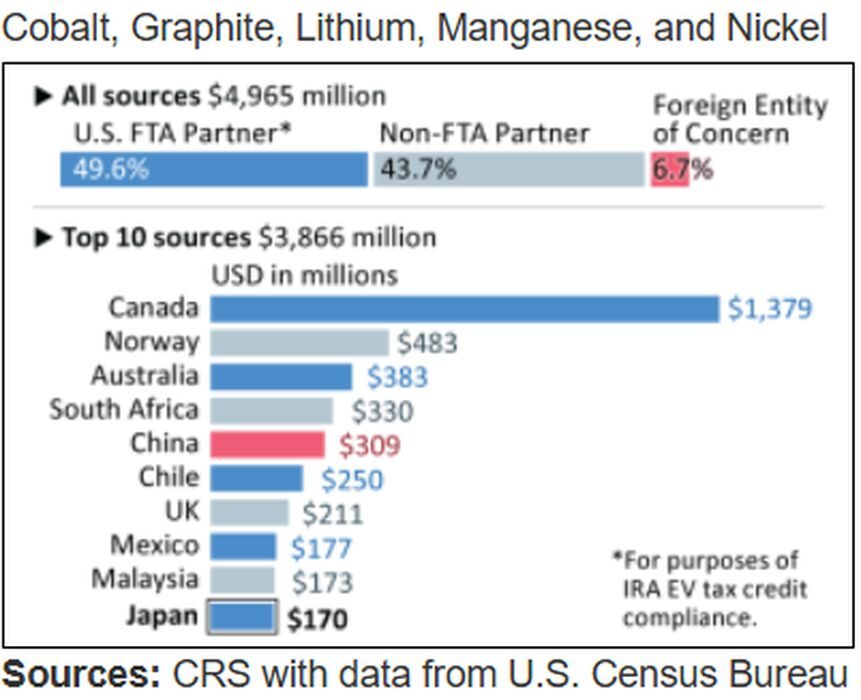
Once known almost exclusively for cameras and optics, Nikon has reinvented itself as a metal additive leader:
- Acquisition of SLM Solutions (2023): Nikon gained a suite of industrial metal printers, notably the NXG XII 600, one of the largest and fastest powder bed fusion systems.
- Nikon AM Synergy (California): The rebranded Morf3D now develops production-grade aerospace parts in the U.S., serving clients like Boeing and Northrop Grumman.
- Hydrogen applications: Nikon launched an H2AM initiative with partners like RINA, exploring 3D printing for hydrogen energy applications.
The new trade framework makes Nikon’s cross-border expansion easier—exporting large AM systems to U.S. clients without tariff friction and co-financing customer programs with new investment mechanisms.
Ricoh: Quiet but Strategic 3D Printing Moves
Often overshadowed by Nikon, Ricoh has also carved a niche in AM:
- Powder-based printing services: Ricoh offers 3D printing services in polymers and metals, focusing on medical devices, automotive components, and industrial tooling.
- Healthcare applications: Ricoh has partnered with hospitals in Japan and Europe to 3D print patient-specific anatomical models for surgical planning.
- Sustainability initiatives: Ricoh is exploring bio-based materials for AM, aligning with Japan’s carbon-neutral goals.
For Ricoh, the U.S.–Japan trade deal presents a chance to expand its service bureau footprint in North America, leveraging tariff and customs advantages to serve U.S. clients more directly.
What This Means for 3D Printing
This trade deal is best understood as a manufacturing accelerator:
- Tariff and customs clarity lower the total cost of ownership for AM equipment and consumables.
- Investment pathways help corporations co-fund application development and customer qualification programs.
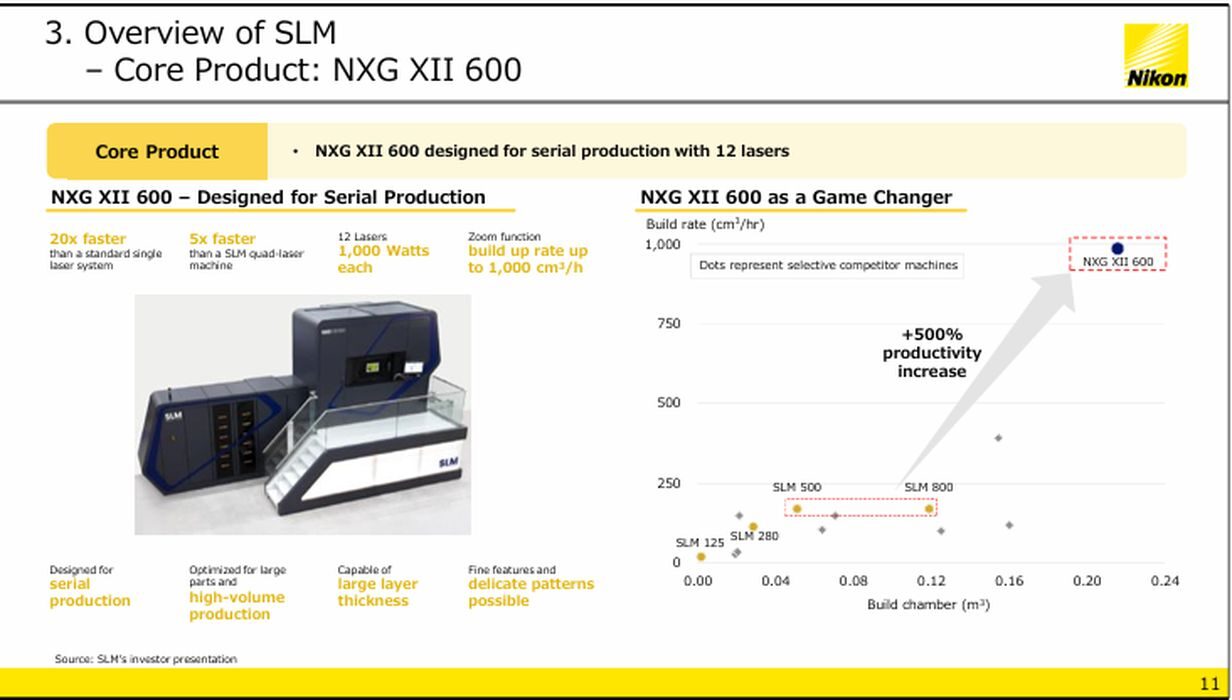
- Critical minerals alignment ensures Japanese EV makers keep access to U.S. tax credits, encouraging local production where AM will play a key role in tooling and spares.
- Cross-border corporate moves (Nippon Steel–U.S. Steel, Nikon AM Synergy, Ricoh services) demonstrate that Japanese firms are scaling not just in Japan, but in the U.S.—where AM can flourish.
The US$550 Billion U.S. Investment Fund: A Unique Feature
A defining aspect of this agreement is the creation of a US$550 billion Japan-backed investment fund—the largest foreign investment pledge in U.S. history.
- The fund will target semiconductors, energy infrastructure, critical minerals, pharmaceuticals, shipbuilding, and advanced manufacturing.
- It will be financed primarily by Japanese public financial institutions, such as JBIC and NEXI, through loans, guarantees, and equity stakes.
- 90% of profits will remain in the U.S., an unprecedented arrangement that reflects the deal’s pro-U.S. orientation.
- For 3D printing, this represents enormous potential:
- Semiconductors: AM-enabled tooling and prototyping for fab expansion.
- Energy/shipbuilding: Lightweight AM parts for turbines, vessels, and grids.
- Pharma/medical: Patient-specific devices and anatomical models, a Ricoh specialty.
- Automotive: Fund-backed EV programs where Toyota and Honda can embed AM tooling.
However, the operating terms of the fund have not been finalized. Governance, project selection, and accountability structures remain under negotiation. This means the fund’s true impact will unfold over the coming years—and will be a central point of analysis for both policy watchers and the AM community.
The Research and Development Tax Credit
The now permanent Research and Development (R&D) Tax Credit is available for companies developing new or improved products, processes, and/or software. 3D printing can help boost a company’s R&D Tax Credits. Wages for technical employees creating, testing, and revising 3D-printed prototypes can be included as a percentage of the eligible time spent for the R&D Tax Credit. Similarly, when used as a method of improving a process, time spent integrating 3D printing hardware and software counts as an eligible activity. Lastly, when used for modeling and preproduction, the costs of filaments consumed during the development process may also be recovered.
Whether it is used for creating and testing prototypes or for final production, 3D printing is a great indicator that R&D Credit-eligible activities are taking place. Companies implementing this technology at any point should consider taking advantage of R&D Tax Credits.
Conclusion
The U.S.-Japan trade deal lands at the exact moment Japan is regaining global momentum. Warren Buffett’s investments in the sogo shosha, Nippon Steel’s audacious U.S. Steel acquisition, and the additive manufacturing strategies of Toyota, Honda, Nikon, and Ricoh together signal a new phase:
- Japan is back, not just as a cautious economic player, but as a bold industrial partner.
- 3D printing is no longer peripheral—it is core to how these firms will localize, innovate, and compete in an environment of trade realignment and decarbonization.
New opportunities often usher in innovative technologies. Let’s see how the 3D printing industry will leverage this U.S.-Japan alliance to fuel innovation.