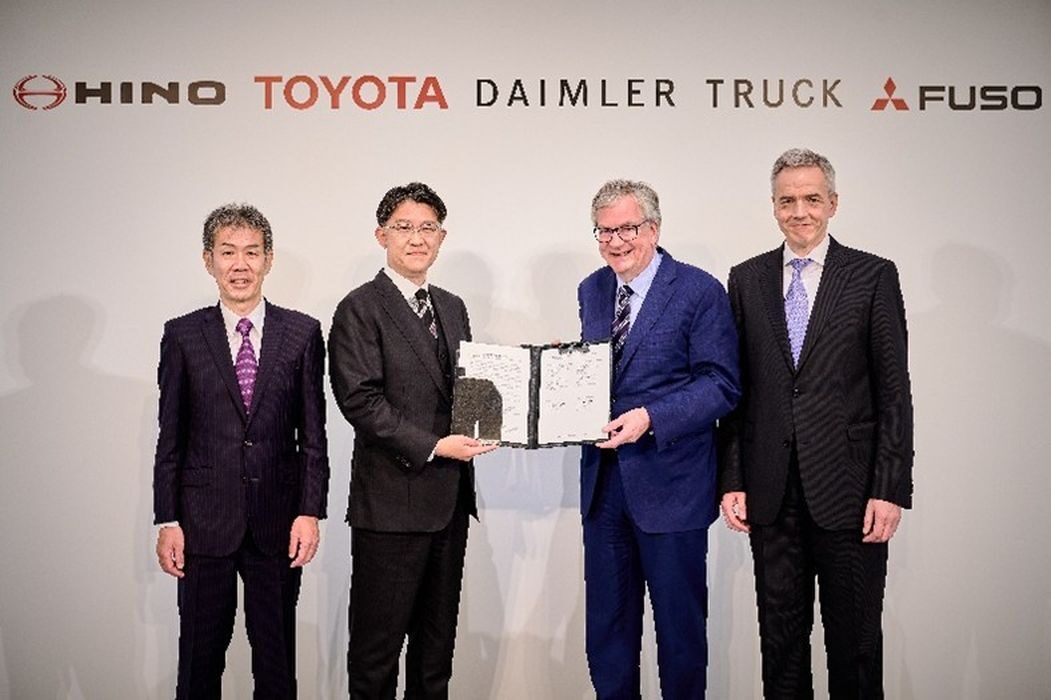
Charles R. Goulding and Aaron Rofe take you on a journey to discover how the landmark Daimler-Toyota truck merger, fueled by hydrogen ambitions and 3D printing innovation, is poised to redefine the future of global commercial vehicles.
Daimler Truck and Toyota Motor Corporation have officially finalized their agreement to merge their truck manufacturing subsidiaries, Mitsubishi Fuso Truck and Bus Corporation (Mitsubishi Fuso) and Hino Motors Ltd. (Hino), under a new holding company. This landmark collaboration aims to create a new worldwide trucking powerhouse and reshape the commercial vehicle landscape, with operations targeted to commence in April 2026.
The deal is significant as it combines two of the largest trucking companies in the world. The definitive agreements were concluded on June 10, 2025, solidifying a preliminary deal that was initially announced two years prior. The initial Memorandum of Understanding (MoU) back in May 2023 had aimed for the transaction to be completed by the end of 2024, with definitive agreements signed in the first quarter of 2024. Under the definitive terms, Mitsubishi Fuso and Hino will integrate on an equal footing, signaling a true partnership between the two entities. The new holding company, which will be headquartered in Tokyo, Japan, plans to list on the Prime Market of the Tokyo Stock Exchange and will own 100% of both Mitsubishi Fuso and Hino. Daimler Truck and Toyota will each hold a 25% stake in this new combined entity. Karl Deppen, who currently serves as the President and CEO of Mitsubishi Fuso, has been designated as the CEO of the new holding company. The combined company is expected to employ over 40,000 workers globally, creating a substantial workforce and significant industrial scale. Further details on the specific scope and nature of the collaboration, including the name of the new holding company, are expected to be announced in the coming months. The deal’s finalization is subject to approvals from relevant boards, shareholders, and authorities.
This merger is a strategic and necessary response to the mounting pressures and transformative shifts within the commercial vehicle industry. A primary objective is to boost margins and accelerate the development of new technologies, which are becoming increasingly complex and costly. The partnership will also heavily focus on advancing CASE technologies (Connected, Autonomous/Automated, Shared, Electric), specifically mentioning the development of hydrogen as a vital energy source for future commercial vehicles.
Beyond the structural merger, both Daimler Truck and the Toyota Group, along with their associated companies, are heavily invested in advanced manufacturing technologies, particularly 3D printing. This commitment is driven by a shared vision to enhance efficiency, reduce costs, and improve supply chain resilience, proving crucial for innovation in the rapidly evolving commercial vehicle sector.
Daimler Truck | Daimler Buses has pioneered a revolutionary solution for remote spare part printing through a strategic collaboration with 3D Systems, Oqton, and Wibu-Systems. This innovative initiative is meticulously designed to maximize vehicle uptime by decentralizing spare part production, directly addressing a critical challenge for commercial vehicle operators. Prior to this solution, service providers often faced significant downtime when even a few specific parts were needed, leading to delays of several weeks due to limited local supply chain infrastructure and inventory. This new approach enables Daimler Buses-certified 3D printing partners to manufacture spare parts locally and on-demand. These parts include common components such as pins, covers and inserts used in underhood and cabin interior applications.
A significant benefit of this decentralized production is the ability to overcome traditional supply chain bottlenecks, which can be particularly impactful in the complex logistics of commercial vehicle maintenance. The solution can reduce part delivery time by up to 75%, drastically cutting down wait times that previously could cause operational delays of several weeks. This not only increases flexibility and efficiency for service partners but also results in substantial indirect cost savings for commercial truck, bus, and touring coach companies by minimizing vehicle downtime for maintenance. A crucial aspect of this solution, as highlighted by Ralf Anderhofstadt, head of the center of competence additive manufacturing at Daimler Truck and Buses, is the utilization of digital rights management from Wibu-Systems, which securely protects Daimler Buses’ valuable intellectual property (IP) and competitive position while expanding their manufacturing footprint.
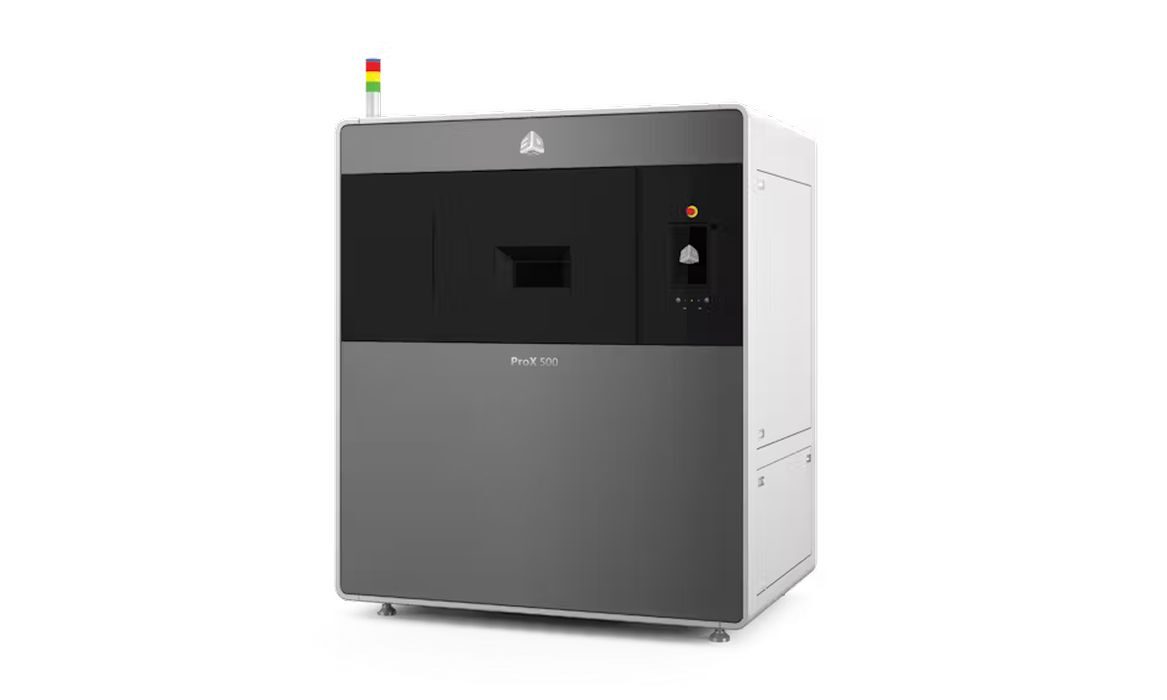
The system utilizes Oqton’s 3DXpert software, an all-in-one additive manufacturing solution, which plays a pivotal role in streamlining the complete workflow from part design to printing. This software enables certified partners to decrypt the design files for specific repair jobs and produce only the exact quantity of parts needed, making on-demand manufacturing highly efficient. Currently, parts are primarily 3D printed on 3D Systems’ SLS 380, a high-throughput additive manufacturing solution known for its unprecedented levels of consistency, performance, and yield. Looking ahead, Daimler Buses anticipates integrating other 3D Systems’ polymer and metal 3D printers into this solution, further broadening its capabilities. This strategic move by Daimler Truck | Daimler Buses aligns with the broader trend of additive manufacturing growth in the automotive sector, a market valued at US$2.9 billion in 2022 and projected to reach US$7.9 billion by 2027.
The Toyota Group, which includes entities like Toyota Industries and DENSO, is actively leveraging 3D printing to optimize its diverse manufacturing processes and drive continuous innovation. This commitment is part of a larger corporate transformation, exemplified by Toyota Group’s plan to take Toyota Industries Corporation private in an US$33 billion deal. This significant move aims to deepen collaboration within the group and allow for the agile advancement of activities related to the movement of goods as Toyota transforms into a comprehensive mobility company. Toyota Industries specifically focuses on developing autonomous technologies for logistics equipment, logistics management software, and environmentally friendly powertrains, all areas that benefit from rapid prototyping and production enabled by 3D printing.
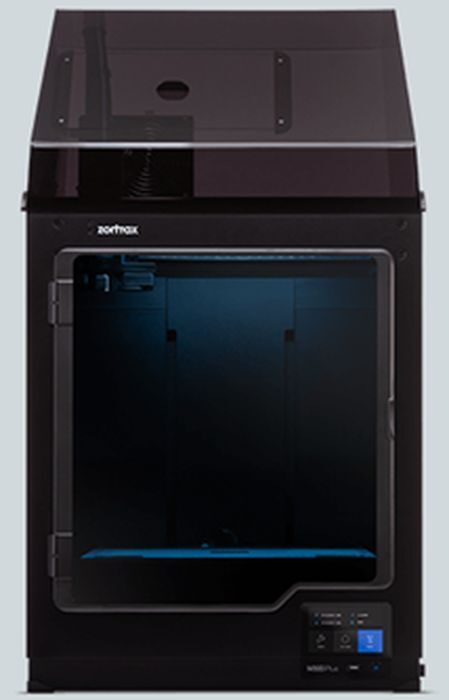
At the factory level, Toyota manufacturing plants in Poland, which specialize in assembling hybrid and conventional drives and engines for cars shipped across Europe, have been utilizing Zortrax 3D printers for years. Toyota has found that investment in this technology can potentially pay for itself within one year, demonstrating its clear economic benefit. The primary application for 3D printers at these facilities is the on-demand manufacturing of various jigs and fixtures, which are critical tools for precise assembly and positioning. These include positioning jigs, assembly jigs, assembly tools, and seals and covers. Engineers at Toyota use 3D printing for both rapid prototyping and direct production of end-use tools, enabling swift geometry changes and on-the-fly design adjustments, allowing for multiple design iterations and prints within a single shift. The agility of 3D printing technology is highlighted as its key advantage, even more so than just manufacturing speed, as it eliminates the need to stock large quantities of spare parts and significantly reduces lead times from weeks to days or even hours by allowing on-demand printing and free design optimization. For example, a jig prototype with a 3D printed body, combined with metal components and CNC-milled nylon parts for durability, was used daily for six months before breaking, and a replacement could be printed on the same Zortrax M300 Plus printer in just 7 hours, a speed impossible with traditional methods. Over 95% of the 3D printed jigs at the factory are produced using LPD technology, and the integration of other solutions like the Zortrax Apoller for vapor smoking or the industrial Zortrax Endureal for high-performance polymers further expands the range of applications for functional tools on the assembly line.
Within the Toyota Group, DENSO, a major auto parts manufacturer, is also making ambitious strides in additive manufacturing. DENSO established a dedicated additive manufacturing team in 2020 within its North America Production Innovation Center. This team views additive manufacturing as crucial for future growth, recognizing its potential to deliver parts with improved performance, simplified fabrication, reduced costs, and unique features that can even increase parts’ lifespan by making them “wear” less. DENSO has set an ambitious goal to produce the first high-volume production auto part globally using 3D printing within the company as early as 2027. Dave Grimmer, NAPIC’s Senior Vice President, predicts that additive manufacturing will rival traditional manufacturing costs within five years and surpass them in ten, positioning North America as a global strength for DENSO through innovative teamwork. To accelerate these goals, DENSO made a strategic investment in Seurat Technologies in June 2021, participating in its Series B funding round. This investment aims to speed up the development and commercialization of Seurat’s patented Area Printing technology, which promises cost-effective mass production of metal parts with high speed, precision, and reliability. Beyond internal advancements and strategic partnerships, DENSO also supports the broader development of additive manufacturing skills through educational initiatives, providing grants to institutions like California State University Long Beach (CSULB) for crucial equipment such as an X-ray CT Scanner and an Electronics 3D Printer. The CT scanner is vital for meticulously assessing the internal geometry of 3D printed products, ensuring higher durability and safety for automotive applications, while the electronics 3D printer uses nano-metallic ink to create conductive electronic traces, opening possibilities for advanced electronics manufacturing.
In another significant step towards sustainable transport, Mercedes-Benz Trucks has played a central role in PepsiCo’s latest move towards sustainable delivery, with its core transport partner, XPO Logistics, selecting the eActros 600 to spearhead its transition to battery-electric transport across England Wales. Six fully electric Mercedes-Benz eActros 600 trucks will replace diesel-powered vehicles within XPO Logistics’ core distribution fleet for PepsiCo. This initiative will enable over one million kilometers (620,000 miles) per year to be driven with zero emissions, projected to eliminate more than 1,200 tons of carbon dioxide emissions annually – a significant step in PepsiCo’s journey toward net zero by 2050. The Mercedes-Benz eActros 600, recently crowned International Truck of the Year 2025, represents the next generation of sustainable freight mobility, offering a real-world range exceeding 500 km (310 miles) per charge, supported by three battery packs providing a total capacity of 621 kWH. This transition is further supported by XPO Logistics’ AI-Driven CO₂ Reporting Dashboard, which allows for real-time tracking and optimization of carbon savings, providing actionable insights to improve logistics efficacy and further reduce emissions. This partnership underscores the commitment of XPO Logistics, PepsiCo, and Mercedes-Benz trucks (Daimler Truck UK) to achieving their sustainability goals and accelerating the shift toward clean, electric transport solutions.
The Research & Development Tax Credit
The now permanent Research and Development (R&D) Tax Credit is available for companies developing new or improved products, processes and/or software.
3D printing can help boost a company’s R&D Tax Credits. Wages for technical employees creating, testing and revising 3D printed prototypes are typically eligible expenses toward the R&D Tax Credit. Similarly, when used as a method of improving a process, time spent integrating 3D printing hardware and software can also be an eligible R&D expense. Lastly, when used for modeling and preproduction, the costs of filaments consumed during the development process may also be recovered.
Whether it is used for creating and testing prototypes or for final production, 3D printing is a great indicator that R&D Credit-eligible activities are taking place. Companies implementing this technology at any point should consider taking advantage of R&D Tax Credits.
When a company expands its facilities in California, the company will be able to utilize the lucrative California R&D tax credit for its U.S. innovation activities, in addition to the federal.
Conclusion
The strategic merger of Hino Motors Ltd. And Mitsubishi Fuso Truck and Bus Corp. represents a pivotal response by Daimler Truck and Toyota Motor Corporation to global industry pressures. This landmark agreement aims to create a new strong Japanese truck powerhouse that will bolster profitability, accelerate the development of advanced technologies, and enhance the competitiveness of Japanese commercial vehicle manufacturers. Slated to begin operations by April 2026, the new Tokyo-headquartered holding company will see both Daimler Truck and Toyota holding a 25% stake, with Karl Deppen designated as its CEO. This collaboration is driven by a shared vision to collectively tackle critical industry challenges, including achieving carbon neutrality and improving logistics efficiency, with a significant focus on advancing CASE technologies, specifically Hydrogen. This move is expected to improve business efficiency across development, procurement, and production, simultaneously addressing past issues like Hino’s emissions scandal recovery and Mitsubishi Fuso’s profitability drag. As Toyota CEO Koji Sato stated, this agreement is the starting line for shaping a more sustainable and technologically advanced future for global commercial vehicles.