
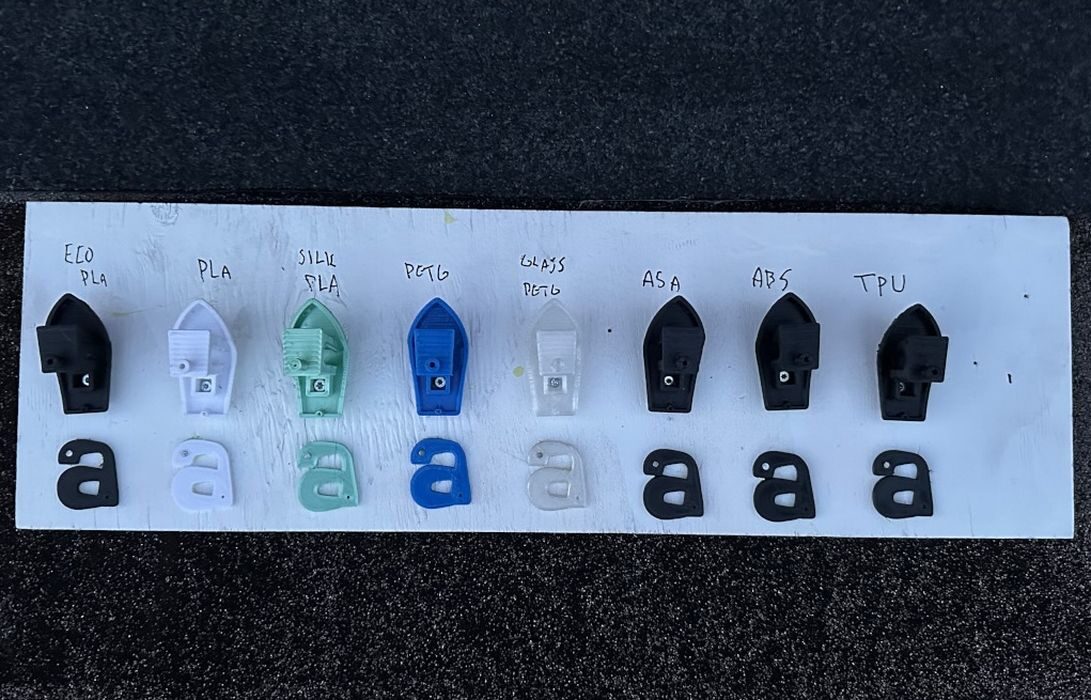
A 3D printer operator is undertaking a long-term filament endurance test.
Finland-based Ari Sovijärvi posted a description of the project earlier this month. The test intends to determine the truth about outdoor capabilities of several common 3D printing filaments.
There are plenty of conflicting statements about 3D printer filament materials, usually by overly eager marketing persons looking to promote their products. For example, PLA is widely thought to be an eco-friendly, recyclable product, when it is actually not that at all. It is only derived from sustainable sources and is not easily recycled.
Sovijärvi writes:
“I wanted to test what would actually happen if some test pieces were left outside for a longer period of time. The goal is to get real-life results of weather extremes’ effects on generally available 3D printing materials.”
To that end, Sovijärvi selected eight very common 3D printer filaments for the test:
- Polyterra Eco PLA, black
- Clas Ohlson PLA, white
- eSun Silk PLA, rainbow
- Snapmaker PETG, blue
- Formfutura hdglass PETG, clear
- Polymaker ASA, black
- Clas Ohlson ABS, black
- Fiberlogy Fiberflex 40D TPU, black
As you can see, there is quite a bit of variation in material type, colour, and brand.
For the test, Sovijärvi printed a #3DBenchy in each, along with a lowercase letter “a”. These were mounted on a plank and set outside in the Finnish environment, where they would be subject to high (+30C) and low (-30C) temperatures, along with significant rain and snow exposure.
It’s one thing to test a material in a specific dimension, like temperature, but this test involves all of the factors an object might encounter when outside — because they ARE outside.
Sovijärvi intends to check the samples periodically to determine if there is degradation.
One suggestion I would make is that the test might have involved multiple copies of each material. Then, at set intervals, one copy could be destructively tested to determine strength changes over time.
Nevertheless, this is a very interesting, real-world test of 3D prints, and I’m interested to see the results as they arrive.
Via Ari Sovijärvi
