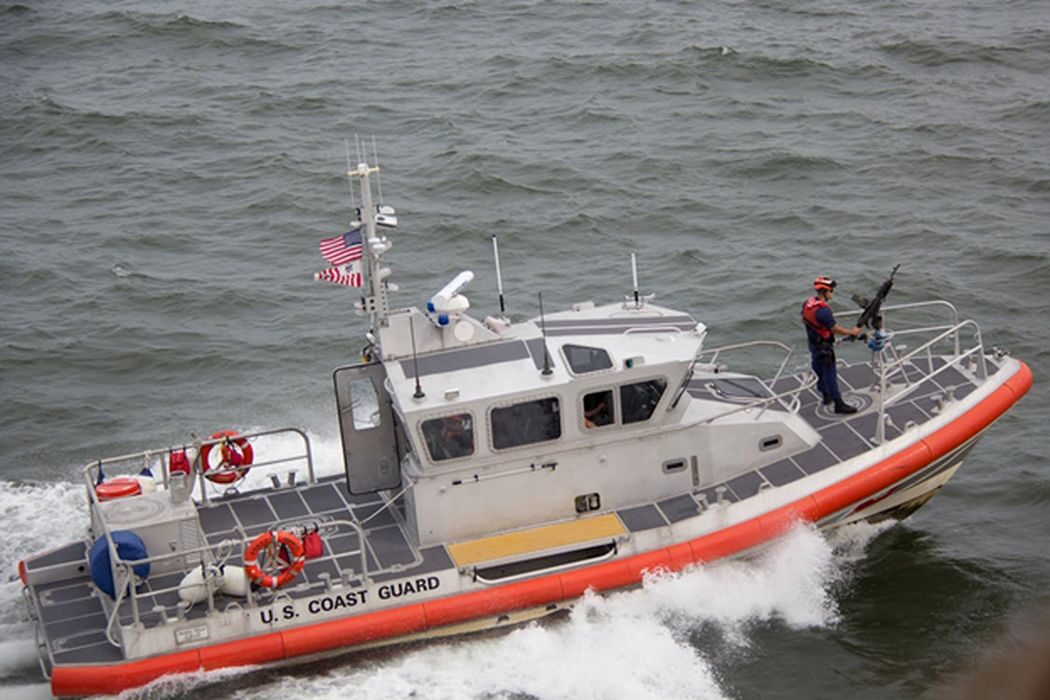
Charles R. Goulding and Kate Esposito tred uncharted waters on how the One Big Beautiful Bill is reshaping the Coast Guard with historic funding and cutting-edge 3D printing technology.
Introduction: How the Big Beautiful Bill is Helping the Coast Guard
The One Big Beautiful Bill Act, signed into law by President Trump on July 4th, 2025, includes many new funding and tax provisions. Among these is a $25 billion investment in the United States Coast Guard – the largest single commitment of funding in the service’s history. Meant to modernize Coast Guard operations and capabilities, this investment supports Force Design 2028, the Homeland Security Secretary’s effort to transform the Coast Guard into a stronger, more capable, and better prepared fighting force. The Coast Guard has stated that this money will strengthen their ability to counter drug and human trafficking, enhance navigational safety, conduct search and rescue, and enable maritime trade. This funding will also enable the Coast Guard to continue researching new technologies that could revolutionize their branch of the military, including the application of 3D printing.
Coast Guard Implementation of Federal Funds
The money gained from the bill will be spent to help bolster the Coast Guard. 21 cutters, 17 icebreakers, and over 40 MH-60 helicopters will be added to the Coast Guard’s fleet, along with various other aircraft and ships. Funds will also be allocated to enhance maritime surveillance and shore-side infrastructure, with $4.4 billion for shore systems, training facilities, and homeports, $2.2 billion for depot-level maintenance to sustain operational readiness, and $170 million to increase maritime domain awareness, including the adoption of next-generation sensors.
Of the money spent on the cutters, 9 Offshore Patrol Cutters will be purchased for US$4.3 billion and 3 Arctic Security Cutters will be purchased for US$3.5 billion. US$4.3 billion will also be spent on Polar Security Cutters, $1 billion on Fast Response Cutters, US$816 million on light and medium Icebreaking Cutters, and US$162 million on Waterways Commerce Cutters.
More than US$3 billion will be spent on the procurement of fixed-wing, rotary, and uncrewed aircraft. US$2.3 billion will go to acquiring the MH-60 helicopters, US$1.1 billion for six new HC-130J aircraft and simulators, and US$266 million for long-range unmanned aircraft systems.
3D Printing Implementation Within the Coast Guard
The Coast Guard has already begun implementing additive manufacturing to fulfill a variety of needs. Most commonly, 3D printing is used to replace minor parts quickly and inexpensively, such as when a fuse aboard the CGC Forward did not fit into a critical circuit. Rather than waiting for a replacement part, a crew member used his own CAD software to design and 3D-print an adapter that fit perfectly and completed the circuit. The part, which was printed in a matter of minutes, saved hundreds of thousands of dollars that would have been lost while the ship was temporarily out of commission.
Even in early stages of implementation, additive manufacturing has enabled quick solutions and made a difference within the Coast Guard. Following a Command Readiness Inspection, some areas of the Command, Control, Communication, Computer, Cyber, and Intelligence Service Center (C5ISC) were in danger of failing due to missing emergency shut-off switch covers. Instead of ordering new covers and risking that they would not arrive before the next inspection, the C5ISC Electronics Repair Facility (C5ISC-ERF) 3D-printed the covers and shipped them overnight.
To further expand its knowledge of additive manufacturing techniques, the Coast Guard has installed 3D printers on board five of its cutters, as well as at several operational shore units including Base New Orleans and the Surface Forces Logistics Center Engineering Services Division in Baltimore. Additionally, the Coast Guard’s Additive Manufacturing Working Group is sending personnel to a four-month industry course and then a six-week training with the Navy, the military branch that has implemented additive manufacturing to the fullest. The Working Group aims to determine which expensive aids and prototypes could be 3D-printed more economically.
In the past three years alone, 3D printing has saved the Coast Guard’s Shore Infrastructure Logistics Center (SILC) more than US$650,000 in acquisition costs and placed 164 repaired pieces of equipment back into inventory, showcasing how 3D printing has helped the Coast Guard become more efficient.
Future Applications of 3D Printing to Further Transform the Coast Guard
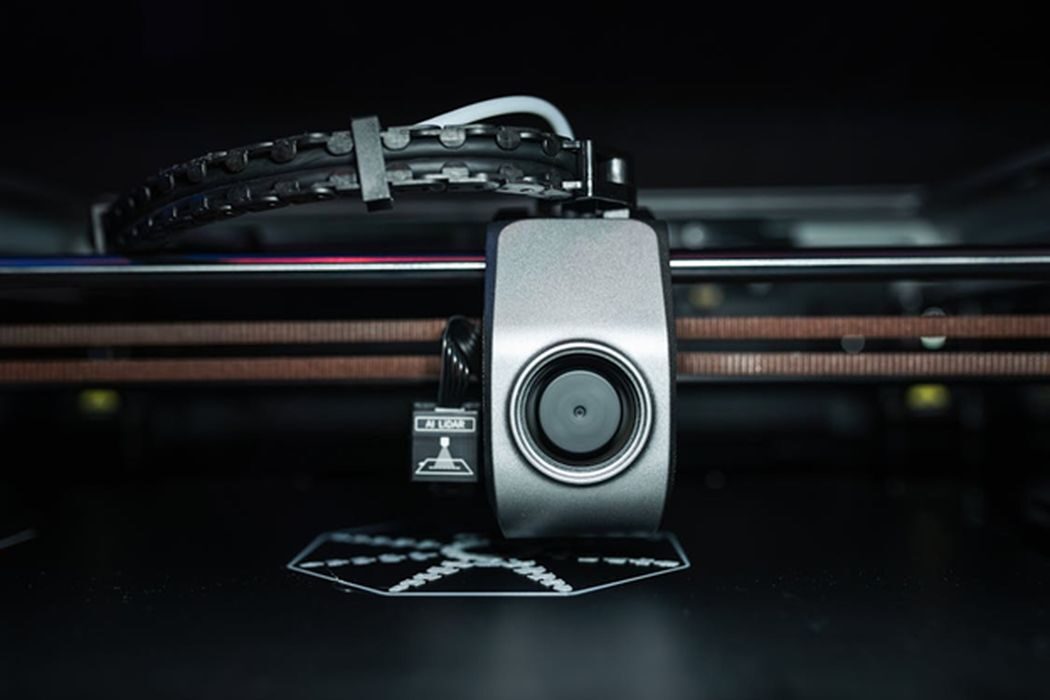
3D printing has the potential to further revolutionize the Coast Guard in the future. Sikorsky, producer of the MH-60T Jayhawk helicopter used by the Coast Guard and of which 40 more will be purchased with the new funding, has accredited 3D printing with enabling them to outperform their competitors. The company has begun utilizing automated tools and additive manufacturing to reduce production timelines and costs. Looking to the future, Sikorsky has invested in new additive manufacturing capabilities, including 18 thermoplastic 3D printers and two metal 3D printers. They have also ordered the Stratasys F3300 3D printing system, a groundbreaking new technology that promises faster print speeds, significantly reduced downtimes, and up to 25% improved accuracy and repeatability. With these new 3D printing capabilities, Sikorsky looks to implement 3D printing even further within their facilities to improve their products, which will in turn give the Coast Guard access to upgraded, state-of-the-art helicopters.
The Coast Guard can also work with Aker Arctic, a Finnish company leading the world in icebreaker design and development, to use additive manufacturing on the 17 new icebreakers that will be purchased. Aker Arctic relies on 3D printing to produce hull parts for model tests, including rudders, ice knives, bilge keels, and other smaller parts. This allows the company to produce parts quickly to try various options or alter designs, improving flexibility in model testing. Furthermore, large portions of Aker’s icebreakers are built off site and then assembled quickly and precisely. 3D printing aids in this endeavor by producing impeller components, interior ventilation systems, and precision nozzles for propulsion. Aker has utilized additive manufacturing to help them create the best icebreakers possible. Should the Coast Guard choose to partner with Aker Arctic, they will likely witness the benefits of 3D printing within ship building.
The Research and Development Tax Credit
The now permanent Research and Development (R&D) Tax Credit is available for companies developing new or improved products, processes, and/or software. 3D printing can help boost a company’s R&D Tax Credits. Wages for technical employees creating, evaluating, and revising 3D printed prototypes are typically eligible expenses toward the R&D Tax Credit. Similarly, when used as a method of improving a process, time spent integrating 3D printing hardware and software can also be an eligible R&D expense. Lastly, when used for modeling and preproduction, the costs of filaments consumed during the development process may also be recovered.
Whether it is used for creating and testing prototypes or for final production, 3D printing is a great indicator that R&D Credit-eligible activities are taking place. Companies implementing this technology at any point should consider taking advantage of R&D Tax Credits.
Conclusion
The One Big Beautiful Bill marks a historic turning point for the United States Coast Guard, providing them with the resources to enhance their fleet and operational readiness while also researching new technologies such as 3D printing that could further improve performance. From next-generation helicopter components to precision-built icebreakers, additive manufacturing and the One Big Beautiful Bill will help transform the Coast Guard.