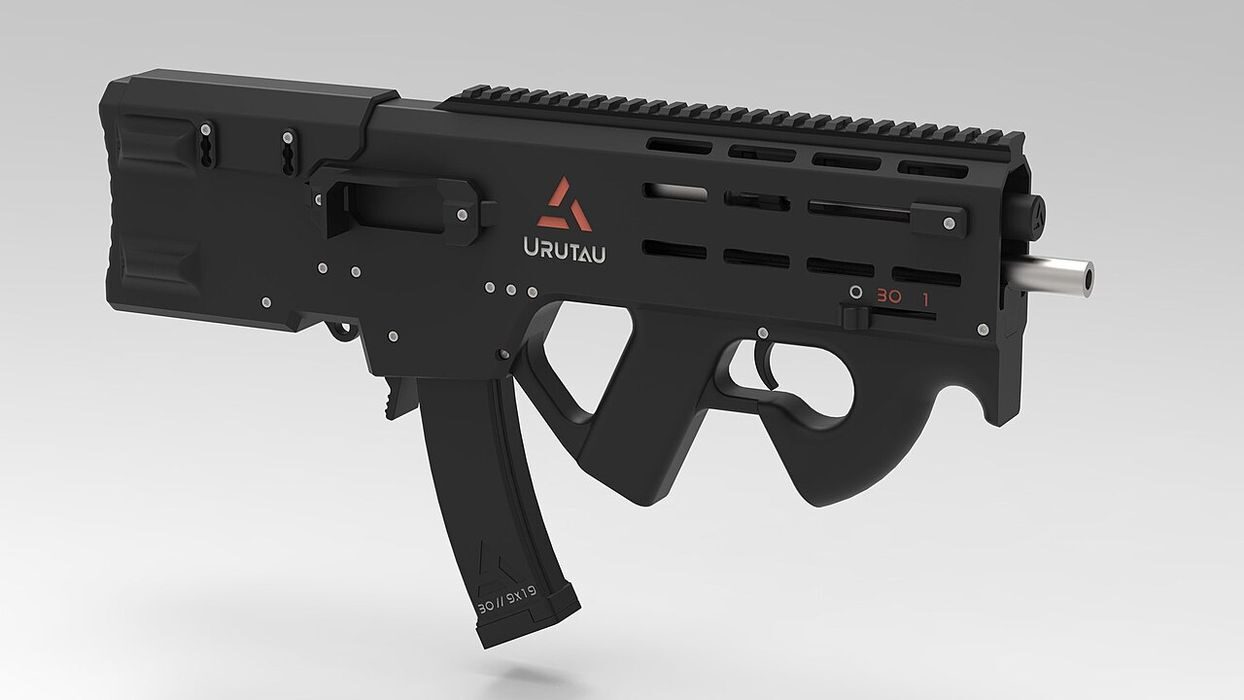
Charles R. Goulding and Jacob T. Nolan report on how New York is combining court rulings, AI content filters, and forensic science to shut down 3D printed firearms.
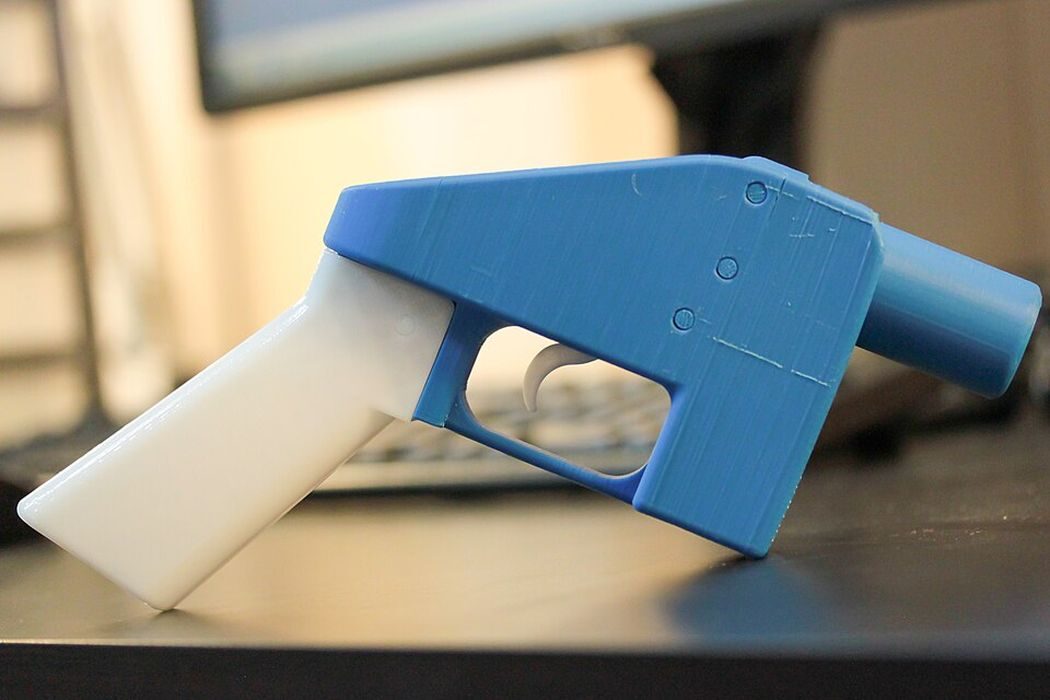
3D printing has revolutionized manufacturing, enabling everything from custom household items to industrial prototyping. However, it also enables what many consider one of the most dangerous technological loopholes: ghost guns. These untraceable, homemade firearms are being produced with downloadable CAD files and consumer-grade machines. Today, federal courts, forensic scientists, and New York’s top legal leaders are confronting this challenge in a coordinated offensive.
Supreme Court Confirms Federal Authority Over Ghost Guns
On March 26, 2025, the U.S. Supreme Court issued a 7–2 decision in Bondi v. VanDerStok, affirming that downloadable firearm CAD kits and unfinished receivers fall under the Gun Control Act and must be regulated accordingly. Justice Gorsuch’s opinion held that any kit readily converted into a weapon qualifies as a firearm, thus mandating serialization and background checks. This landmark ruling uses long-standing definitions to close critical loopholes around 3D printed ghost guns.

New York Begins a Legal Offensive
With the Supreme Court ruling as legal grounding, Manhattan District Attorney Alvin Bragg and New York Attorney General Letitia James have taken decisive action on multiple fronts.
DA Bragg sent formal letters to major 3D printing companies such as Creality, Bambu Lab, and digital design hubs like Thingiverse, urging them to integrate AI-driven filters that detect and block CAD files resembling gun components. These letters came after his office and the NYPD discovered hundreds of such designs circulating freely online. Bragg has also pushed legislation to criminalize the manufacturing of ghost guns outright and levy penalties for sharing blueprints. His Ghost Guns Initiative has already led to arrests in Manhattan neighborhoods including Harlem and the East Village.
Attorney General Letitia James has partnered with the DA’s team to strengthen state-level enforcement and support federal regulation. Since the March decision, New York has experienced a surge in ghost gun prosecutions and successful takedowns of illegal CAD files hosted on platforms within its jurisdiction.

Major Platforms, Major Change
Digital design giant Thingiverse, home to thousands of user-uploaded 3D printable files, recently committed to deploying automated detection and removal of weapon CAD designs. This came directly in response to outreach from the Manhattan DA’s office. Company engineers reported that after implementing content filters, hundreds of illicit files were flagged and deleted during internal audits.
Thingiverse also issued a public statement affirming its commitment to preventing the sharing of unlawful and harmful content and pledged to continue refining its content moderation practices. The move is part of a broader strategy urging stakeholders printer manufacturers, hosting platforms, and design firms to make it significantly more difficult for users to access and print ghost gun blueprints.
Top 3D Printers Under the Spotlight
As enforcement intensifies, attention has turned toward the most used 3D printers found in ghost gun manufacturing operations. While the companies behind these machines do not promote illegal use, their products have become widely used by individuals creating untraceable firearms due to affordability, performance, and open-source accessibility.
One widely used printer, manufactured by a leading Asian tech firm, has become a favorite among entry-level hobbyists. Its low price point and modifiable software make it easy to adapt for printing lower receivers, pistol frames, and other firearm components. These machines have appeared in numerous ghost gun seizures across the United States, including high-profile busts in New York.
Another popular printer, designed by a fast-growing company known for speed and precision, has been tied to printed suppressors and handgun parts. This model is favored in urban settings because it prints cleanly, quietly, and quickly, allowing illegal weapon production to fly under the radar.
A third well-known printer, produced by a respected European brand, is often praised for its reliability and strong user community. Despite the company’s commitment to ethical standards, its open hardware design has been exploited in various ghost gun cases. Law enforcement reports show that its printers have been used to fabricate AR-15 receivers, magazines, and other accessories.
In 2025, three major design platforms companies were contacted by the Manhattan District Attorney’s office and asked to implement stronger safeguards. These included deploying AI-driven software filters, moderating design uploads in online communities, and sharing red flag data with law enforcement agencies. While their responses have varied, the pressure reflects a growing belief that tech companies must take a more active role in preventing the misuse of their platforms and tools for illegal firearm production.
Tracing the Digital Weapon Trail Through Forensics
Regulation and enforcement are being bolstered by advances in forensic science. Law enforcement agencies are analyzing microscopic toolmarks unique “fingerprint” patterns left behind by different 3D printers to trace printed firearms back to their source. Though this technique is still evolving, it represents a substantial breakthrough in making these unregulated weapons traceable after production.
Wider Enforcement and Future Prospects
Since the Supreme Court ruling, New York’s coordinated legal and technological clampdown has set a precedent others may follow. The partnership between federal and state authorities, digital platforms, and forensic labs represents a comprehensive response: legal definitions that include CAD kits, company-level content redactions, and forensic traceability via printer toolmarks.
Yet challenges remain. CAD files can resurface on decentralized platforms. Enforcement varies by jurisdiction. And as 3D printing becomes ever more accessible and affordable, the risk of ghost guns spreading beyond urban legal frameworks grows. For ghost gun control to be effective, these measures must be replicated across states and platforms and sustained over time.
Where We Go from Here
The Bondi v. VanDerStok decision clarified federal authority, enabling agencies like the ATF to treat downloadable ghost gun kits as regulated firearms. In turn, New York has focused enforcement through legal measures, corporate outreach, and digital takedowns all under DA Bragg and AG James’s coordinated direction. Although CAD designs may still proliferate, a growing arsenal of legal, technological, and forensic defenses is narrowing the path for this new generation of untraceable weapons. The remaining test lies in scaling these efforts nationwide and ensuring they evolve alongside both technology and criminal ingenuity.
NYPD’s Role in Keeping New York Safe
The NYPD has become a critical enforcement partner in New York’s ghost gun crackdown. Working closely with the Manhattan DA’s office, the department has been instrumental in identifying illegal gun designs, tracing printed parts found at crime scenes, and executing raids on illegal print operations. Specialized units are now trained to identify 3D printed firearm components during arrests and seizures. In 2025 alone, the NYPD recovered over 400 ghost guns citywide, many of which were made using home printers and online blueprints. The department’s intelligence and cybercrime divisions have also partnered with federal agencies to monitor dark web forums and file-sharing networks for trafficking of gun CAD files. These joint efforts aim to ensure that New York City stays ahead of the ghost gun threat and remains a model for proactive urban enforcement.
The Research & Development Tax Credit
The now permanent Research & Development Tax Credit (R&D) Tax Credit is available for companies developing new or improved products, processes and/or software.
3D printing can help boost a company’s R&D Tax Credits. Wages for technical employees creating, testing and revising 3D printed prototypes can be included as a percentage of the eligible time spent on the R&D Tax Credit. Similarly, when used as a method of improving a process, time spent integrating 3D printing hardware and software counts as an eligible activity. Lastly, when used for modeling and preproduction, the costs of filaments consumed during the development process may also be recovered.
Whether it is used for creating and testing prototypes or for final production, 3D printing is a great indicator that R&D Credit eligible activities are taking place. Companies implementing this technology at any point should consider taking advantage of R&D Tax Credits.
Conclusion
The fight against 3D printed ghost guns is becoming a defining challenge of modern law enforcement, requiring a combination of legal reform, technological adaptation, and corporate accountability. With the Supreme Court’s 2025 ruling setting a clear legal precedent and New York’s leadership pushing aggressive enforcement, the groundwork is being laid for a more secure future. But as access to 3D printers and CAD files continues to grow, staying ahead of this threat will demand constant vigilance, cross-sector collaboration, and a commitment to innovation in both policy and policing.