
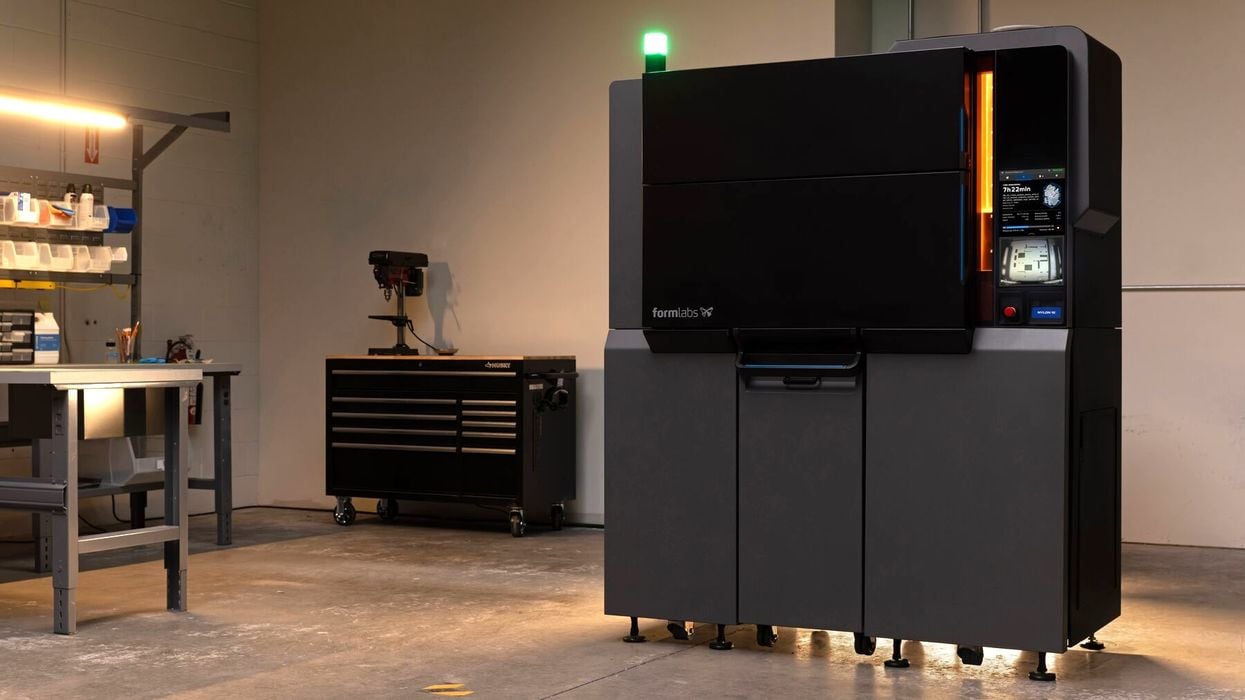
Formlabs announced a major new 3D printer, the Fuse X1.
This builds on Formlabs’ previous SLS system, the Fuse 1+. That system was intended as a low-cost, highly reliable SLS option mostly for those making prototypes. The new Fuse X1 is much larger and seems intended for manufacturers producing end-use parts.
As you can see in the images, this is a much larger device. The build volume is also quite large at 330 x 330 x 565 mm, with a tall orientation. There’s a reason for that, which we will see in a moment.
Correspondingly, the device is priced higher than the Fuse 1+’s US$25K price point. The Fuse X1 starts at US$85K, but is far more capable.
Formlabs explained that the system can produce parts with “up to 50% lower cost per part and 3 times the throughput of comparable industrial powder bed fusion systems.” It’s also quite a bit smaller than the competition, with a footprint that is “less than half” of “legacy” industrial SLS and MJF equipment.
It’s interesting that they mention MJF, HP’s 3D print process for manufacturing. This hints that Formlabs is using the new Fuse X1 to compete not only with other SLS options, but also with MJF. When they say they can achieve three times the throughput of competitors, I suspect they are pointing at MJF, which is notorious for print turnaround times due to the requirement for a lengthy cooling period.
The Fuse X1 is not just the printer. The entire system is composed of a post-processing station as well as a powder handling unit.
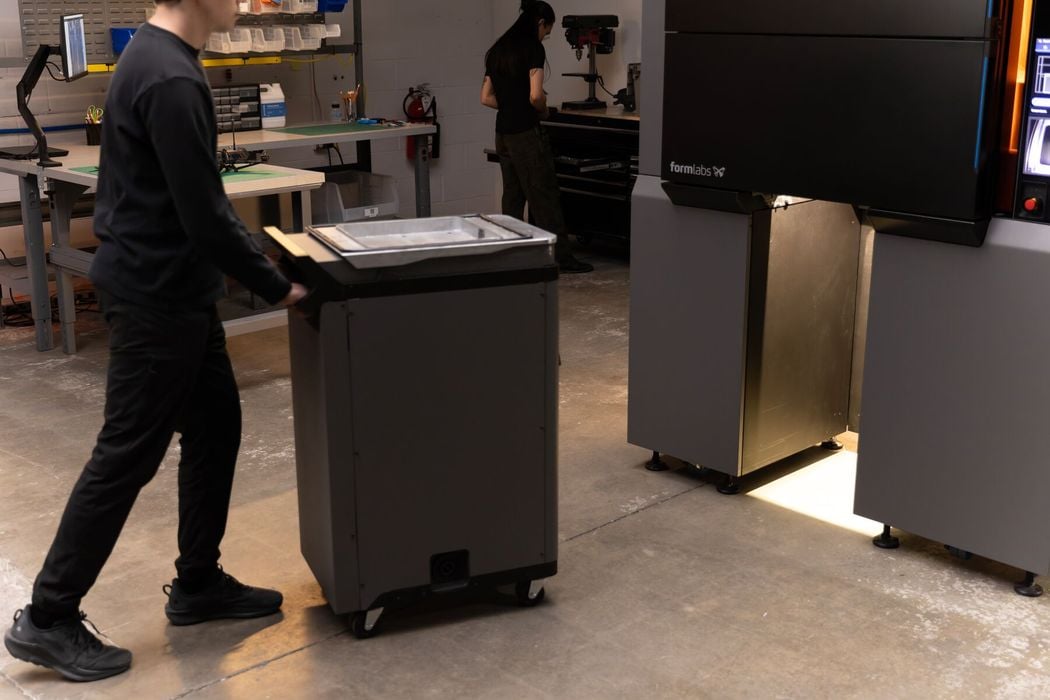
Here you can see how the system is loaded, with an operator rolling a unit into the Fuse X1 3D printer. They say it is possible to change over a print in only five minutes using this approach.
Formlabs has included a number of features to ensure print quality. These include a computer vision system that monitors each layer as it is built using thermal imaging. Defective parts are identified, and the remainder of those parts are not printed in the next layers, saving material. Of course, this is all AI-powered.
There is also a new thermal control system that automatically adapts to new conditions. This creates a much more stable thermal environment within the build chamber. Apparently, there are 13 separate thermal zones monitored, and Formlabs said the X1 is examining 700X more thermal data points per second than previous systems.
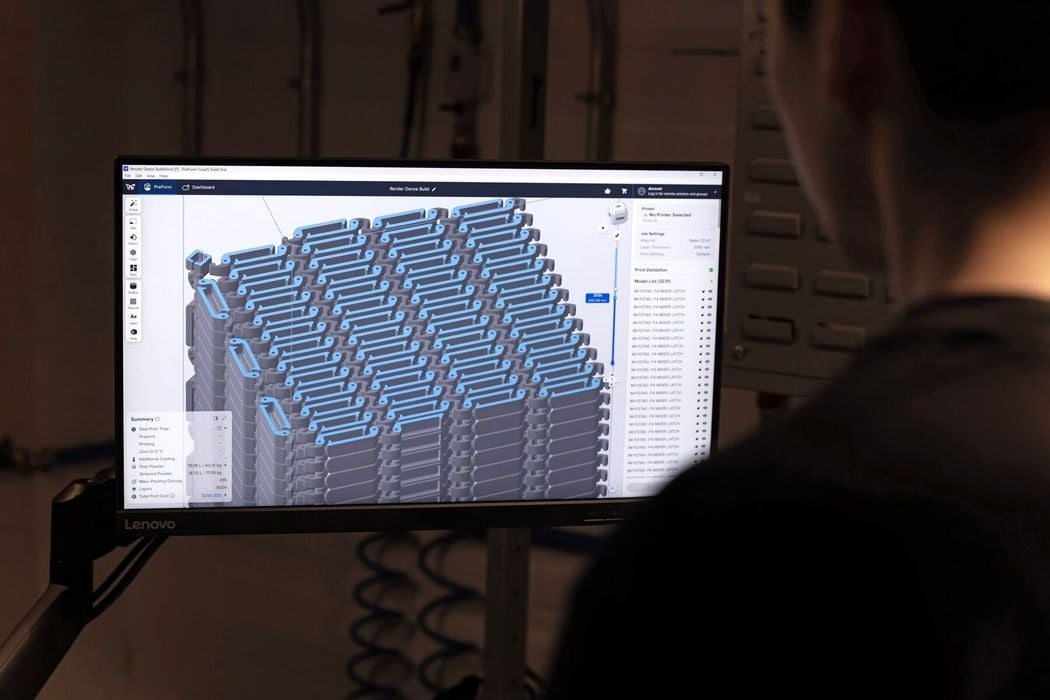
Another poke at MJF: Formlabs said the X1 can achieve packing densities of up to 30%, which is much more than MJF’s 10-15%. This should provide a significant throughput advantage over MJF.
Finally, Formlabs said there have been several major manufacturers quietly beta testing the Fuse X1 over the past few months, with apparently more than 30,000 parts produced. They are also providing a Fuse X1 parts printing service via their Form Now service, available today.
This is a rather huge move for Formlabs, which has squarely moved into the manufacturing space with the introduction of the X1.
This is a long way from their original desktop resin system for hobbyists. What will they announce next?
Via Formlabs
