
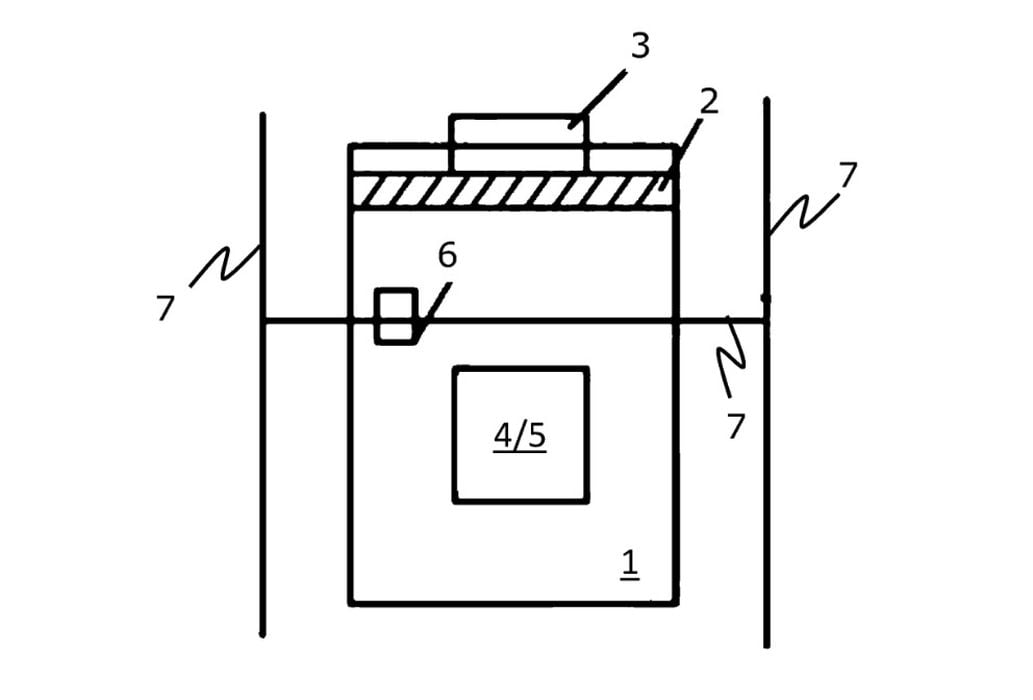
A new German patent application proposes a simpler way to automate part removal in 3D printers: use the motion system already inside the machine.
The application, DE102024135536A1, was published on 3 June 2026 and assigned to Dominic Jason Ring and Christian Tausch. It describes a “method and device for removing objects from a 3D printing environment”.
Many desktop and light industrial FFF machines still depend on an operator to remove finished parts, clear failures, and prepare the build surface for the next job. That is acceptable for one-off prints. It is, however, a problem when someone wants a printer to run unattended through a queue of jobs.
The patent’s idea is easy to understand. A removable part removal device, potentially a blade, is coupled to the printer’s existing motion system. In the patent examples, the driven element is the axis or carriage normally used to carry the printhead. Once coupled, the printer moves the removal device in a controlled way across the print plane to push, lift, tip, or eject an object from the build area.
In other words, instead of adding a separate motorized scraper system, the design uses the printer’s existing motion system.
Automated part removal has appeared before, including conveyor belts, tilting beds, flexible plates, robotic arms, and blade systems. But each adds cost, space, mechanical complexity, or a machine-specific design requirement. This patent targets a lower-cost method: add a coupling and a removal tool, then let the printer’s existing axes do the work.
The document specifically discusses a blade that can move along the print plane. It may first operate at a shallow angle to get under a part, then at a second angle to tip the part away from the bed. That second motion is important because simply loosening a part is not enough. Small or light objects can remain sitting on the blade, stick to the tool, or fail to leave the build area.
The patent also describes push and pull motions, repeated movements, and a shaking motion to help dislodge parts or debris. It even describes the possibility of using sensors, including optical sensors or a camera, potentially with artificial intelligence, to determine whether the print plane has actually been cleared.
That points to a more complete automated workflow: print, remove the object, confirm the bed is clear, and start the next print.
The application gives shoe insoles as one possible use case. Custom insoles are often relatively flat, repeatable, and produced in batches, making them a good candidate for automated removal. A printer making one custom part after another needs reliability.
I am a bit skeptical about this patent, since some prints and geometries do stick too much to the print surface and are hard to remove, even by hand. What would happen to this system if that happened? Would it have to wait for a lengthy period to ensure the plate was totally cooled down to proceed?
It may be that this works only with certain types of geometries, which could be OK for use in a factory situation where the same type of parts are repeatedly printed.
Via Espacenet
