
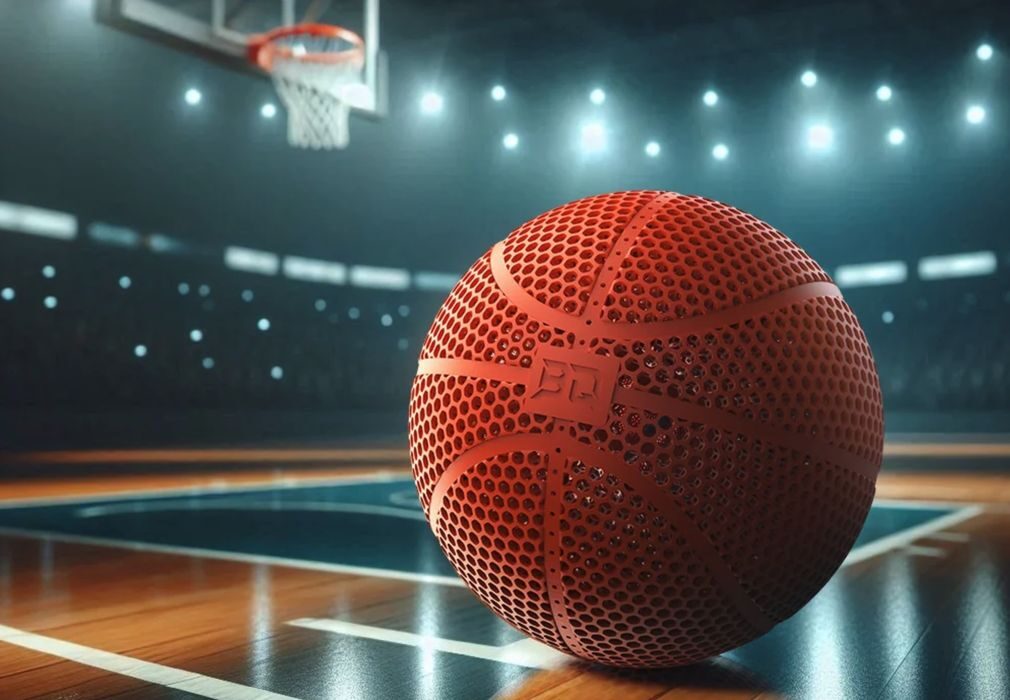
There are now 3D printer filaments designed for specific applications.
The first and likely most popular application is for 3D printed basketballs. Readers may recall a couple of years ago there was a notable publicity stunt by Wilson, EOS, and others to produce the first 3D printed basketball.
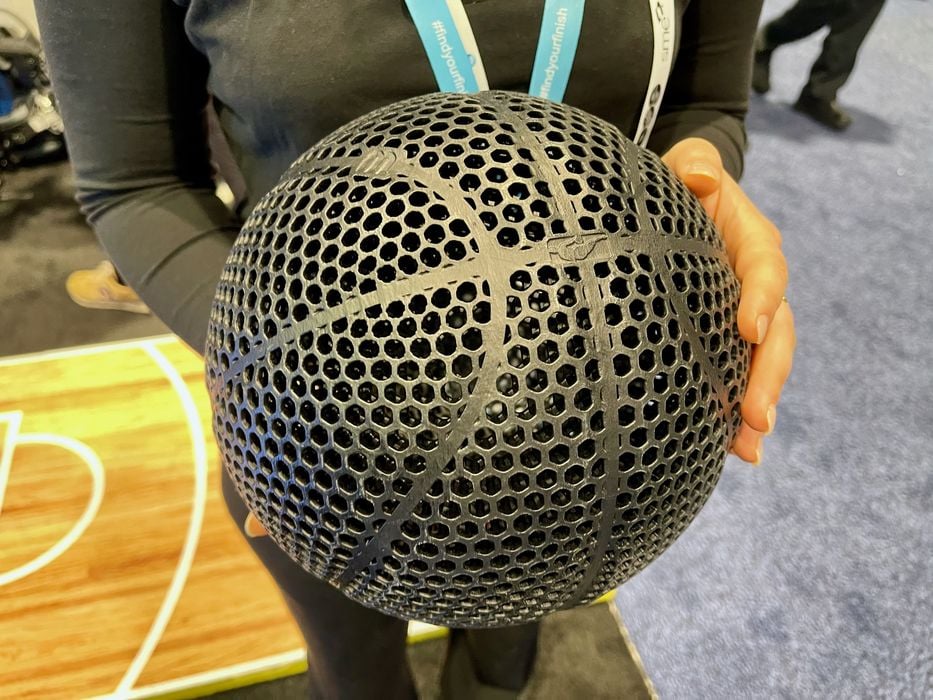
The project involved considerable design and materials work. Special software was used to design the lattice, and multiple materials were tested. They finally designed a combination of hardware, design, and materials to produce a real basketball. We tested the ball in person, and it really does act just like an actual basketball — yet there is no air in it.
The stunt proved very popular and left desktop 3D printer operators wondering, “Could I print a basketball too?”
Basketball designs began to appear on popular 3D model repositories like Thingiverse and Printables. But the question always ended up with: “What material is best for an airless basketball?”
TPU was found to be unsuitable. Some had success with Kimya’s PEBA material. However, Kimya subsequently exited the 3D print materials business, so that’s no longer an option. I’ve even read of people suggesting Fiberlogy’s Polypropylene.
None of these worked very well, apparently.
Then earlier this year BIQU came out with a new product, PLA-HR, which is specifically designed for 3D printing basketballs. This is the first time I’ve ever heard of a filament being marketed for a specific application.
Since then there have been several other materials appear, also specifically for basketball printing. These include WISDREAM’s FlexiTough, DUDV2’s PLA-B, and a few others.
These materials are designed to provide the correct “bounce” when printing basketballs, which is critical for usage.
However, they are all very challenging to print. They typically require very slow print speeds, specialized adhesion, low volumetric flow rates, wider nozzles (0.6mm typically), no bedslingers, no AMS (or equivalent), and other factors.
The print speeds are so slow that it will likely take two to five days to print a basketball. At that long duration, there are many more possibilities for print failure.
Even if you get past all that, the price of the print is high. The BIQU filament retails for US$59 per kg, about 3X the price of today’s standard PLA material. The WISDREAM filament is around US$66, and the DUDV2 is US$53. A single basketball would take up most of a kg to complete, making it quite expensive. It’s possible to purchase a real basketball for less money.
Is it worth it to print a basketball?
Only if you want to claim that you “printed a basketball”.
For some, that’s enough.
Via BIQU
