
The hidden cost of post-processing could hamper many manufacturers.
I’m reading a case study from Stratasys about one of their customers that significantly changed their workflow and efficiency by focusing on optimizing post-processing.
Post-processing is a hidden cost in the 3D print lifecycle. Much attention is paid to the cost of the machine and material costs, but in many cases, the cost of the labour associated with additive manufacturing is more than both of those. This is particularly so when complex 3D prints require considerable post-processing.
In the Stratasys study, a manufacturer had been 3D printing parts for “over a decade”, and had been manually removing support material through a long process. In their Stratasys workflow, support material must be dissolved in solvent, manually cleaned, washed, and dried. Apparently, this process took days and represented a major portion of the effort to produce a part.
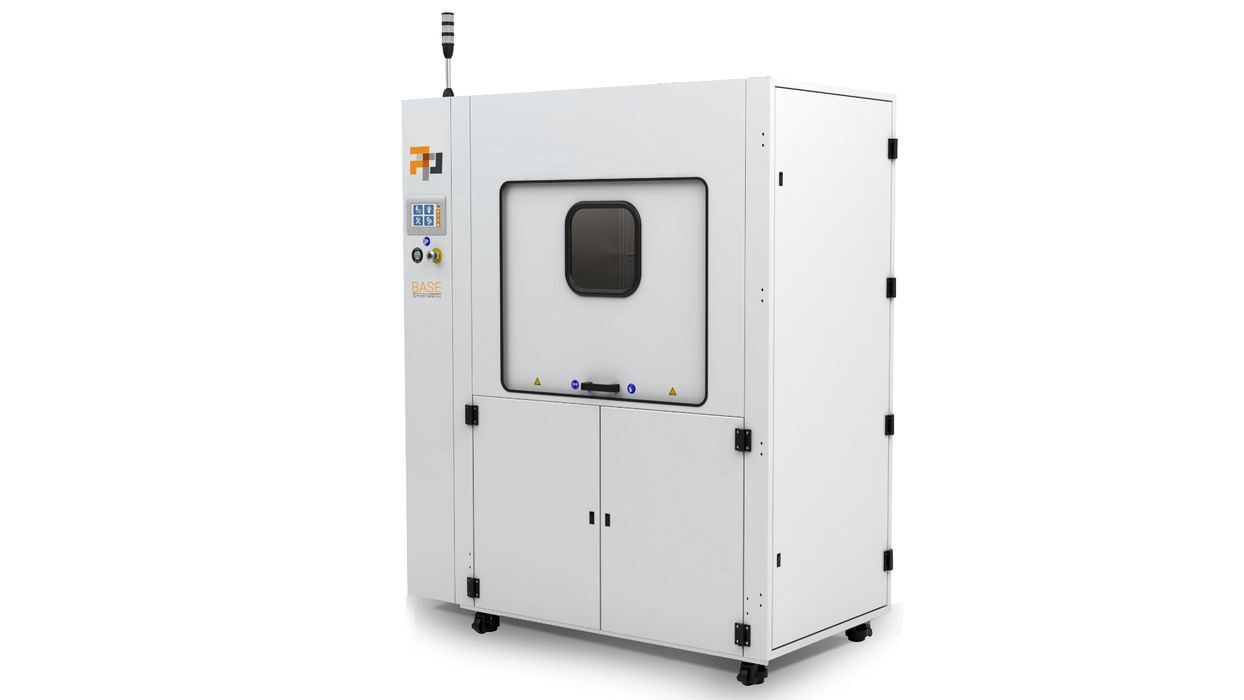
The company then acquired an automated post-processing system from PostProcess. Their BASE system is able to rapidly process freshly printed parts in only minutes, evidently saving around 78% of the time required to finish the parts.
This change in capability allowed the company to expand their use of 3D print technology because resources and time were freed up. In other words, their manual post-processing was actually a barrier to expanded use of the technology.
That’s a very good story, but a question arises: how many other companies using 3D print technology are also stuck in manual mode for post-processing? If Stratasys’ client was doing so for over a decade, then there are likely thousands of other companies doing the same.
Many could be unaware that there are now better solutions for automating the expensive post-processing steps. Perhaps this is why Stratasys chose to publish this particular case study: they might believe that post-processing costs are holding back 3D printing.
I tend to agree with this, simply for the reason that companies tend not to change once they’ve developed a system that works. A working system is understood and predictable in terms of costs, benefits, and risks. Change is viewed as risky and unpredictable.
In my experience, the only way to overcome the reluctance to change is to present a business case that is so overwhelming that the benefits outweigh the perceived risk of change.
That seems to be what Stratasys is doing here, and their customer is benefiting greatly.
Via Stratasys
