
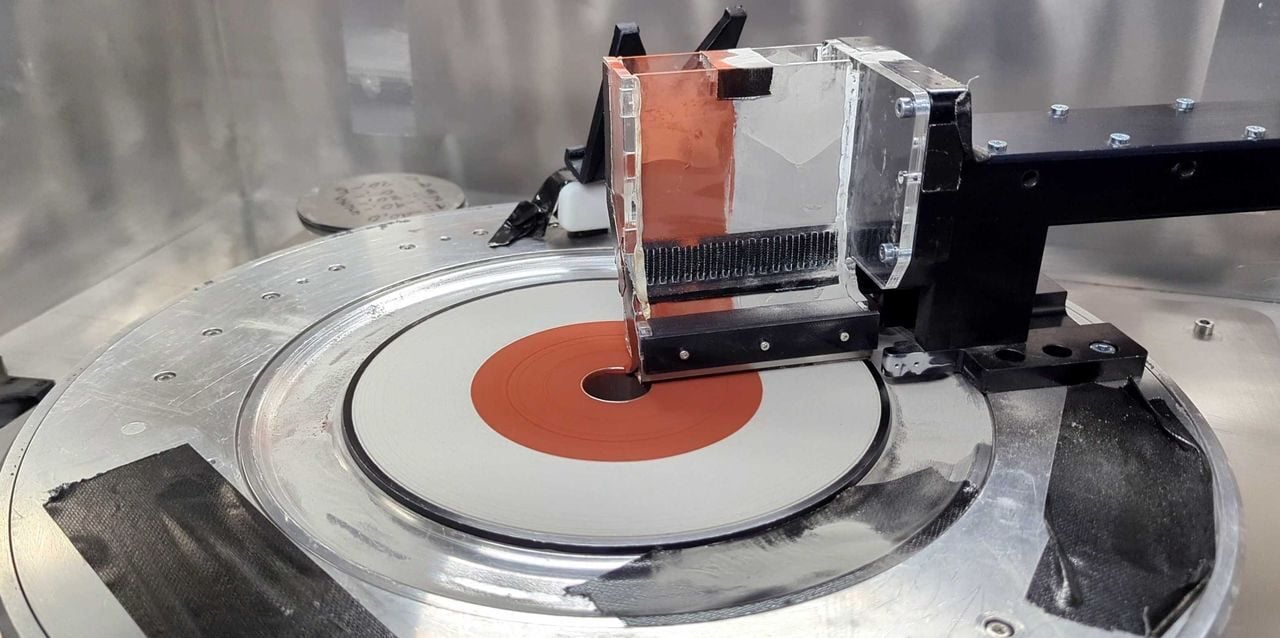
Researchers at ETH Zurich have designed a multimaterial powder 3D printer.
The trigger for their design was the need to produce rocket components, which optimally are made from multiple materials. That’s because rocket engines, which undergo significant stress and thermal extremes, would benefit from different engineering properties in the materials they’re made from.
The researchers looked at current metal 3D printing processes, in particular the most popular process, LBPF. In that process, the object is printed in layers, with each layer beginning with a uniform deposition of powder. Because each layer is laid down all at once, it is always the same material. That’s why LPBF is a mono-material process.
They came up with an entirely different mechanism they call RAPTURE. In their concept, the print plate is constantly rotating. Above the plate is a dispenser that can lay down powder. As the powder goes down, it is immediately fused by a powerful laser.
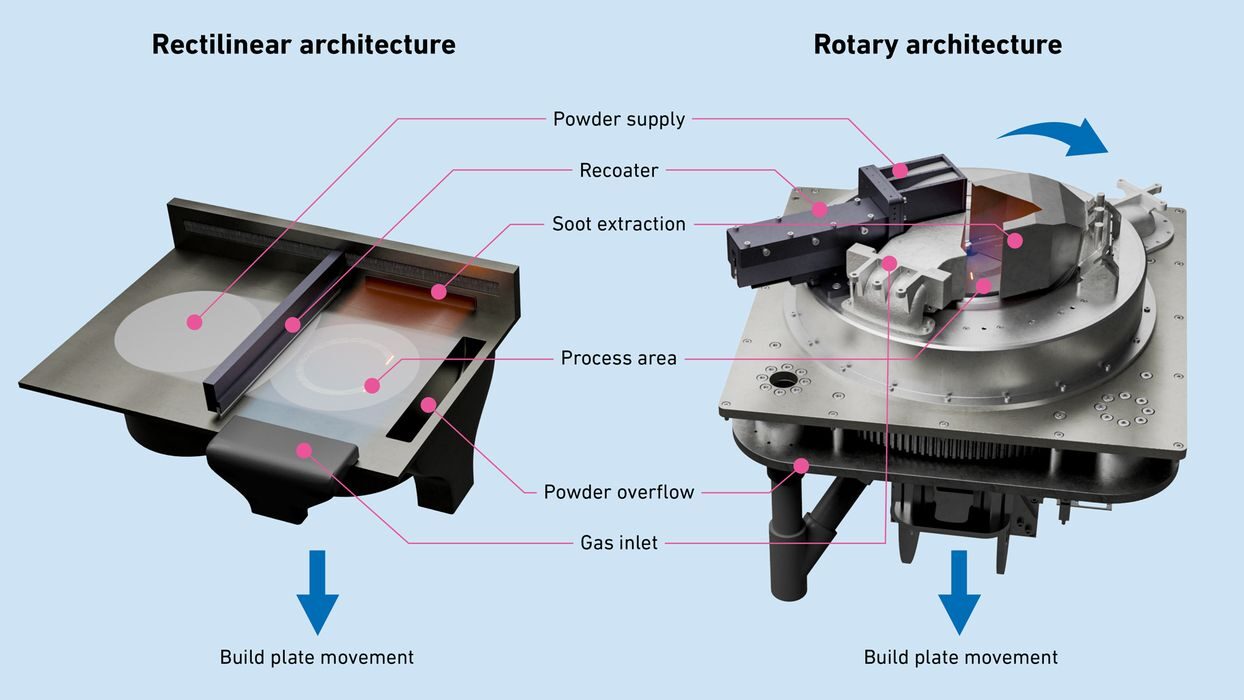
Because the powder is instantly fused, it is possible to activate a second dispenser with a different metal powder. This is possible because the arc of the rotating platform opens up room for more dispensers. I presume you could add as many types as would physically fit in the arc.
You might think that this setup could only print cylindrical objects. While it certainly can do that easily, the fact that the dispensers can be selectively activated means that any 2D geometry can be laid down on a given layer. There just has to be support material underneath — something that is already well understood.
The concept appears to be straightforward to implement, and could be incredibly useful, particularly in the aerospace market. It seems to me that someone will soon try to commercialize the concept, transforming this experimental prototype into a proper metal 3D printer.
Via ETH Zurich
