
I’ve just noticed a new patent awarded to Continuous Composites.
Continuous Composites is one of the few companies that produces equipment that can print with long strands of ultra-strong carbon fibre. These embedded strands can make parts extremely strong, sometimes as strong as metal parts.
The company is in competition with a few others, perhaps most notably Markforged, which is now part of Nano Dimension. A year ago, Continuous Composites won a US$25M infringement case against Markforged. Evidently, Markforged had used technology described in one of their earlier patents.
Now I see a new patent assignment from Continuous Composites, US 12403651 B2, “Method and Apparatus for Continuous Composite Three-dimensional Printing”.
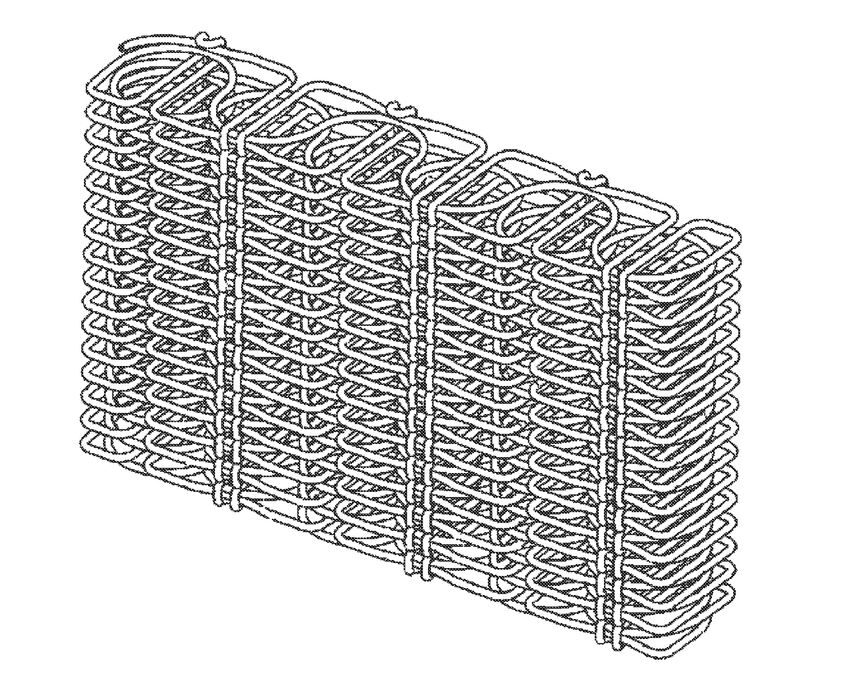
The patent defines a new additive manufacturing approach called Continuous Composite 3D Printing (CC3D). Instead of building parts layer-by-layer with slices (like SLA or SLS), this system builds continuous composite paths consisting of:
- Primary material (liquid, curable polymer) – e.g. UV-curable resin, thermosets, thermoplastics, epoxies, etc.
- Secondary material (continuous strand) – e.g. carbon fibre, fibre optics, metal wire, rubber tubing, or pre-pregged fibers.
The strand is encased in resin as it is extruded, then cured immediately (typically with UV). This yields lightweight, strong, multifunctional structures. The idea is to print continuous paths that provide the optimal strength. It may even be possible to print certain geometries without support structures, such as spirals.
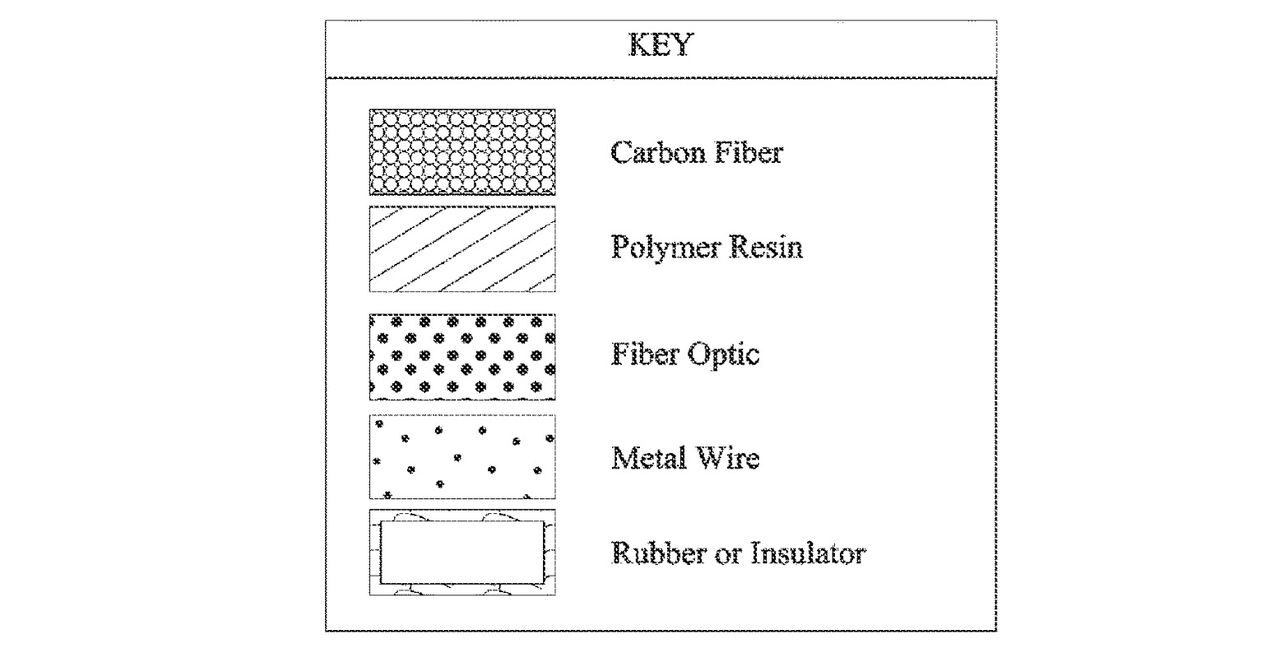
The patent allows for not only embedding continuous carbon fibre into extrusions, but also electrical wire, hollow tubes, fibre optics, or combinations of the above.
This seems to be quite a versatile design that could be used for all manner of applications, and even light up some that have not previously been possible. The patent’s description is quite wide, so many variations are possible.
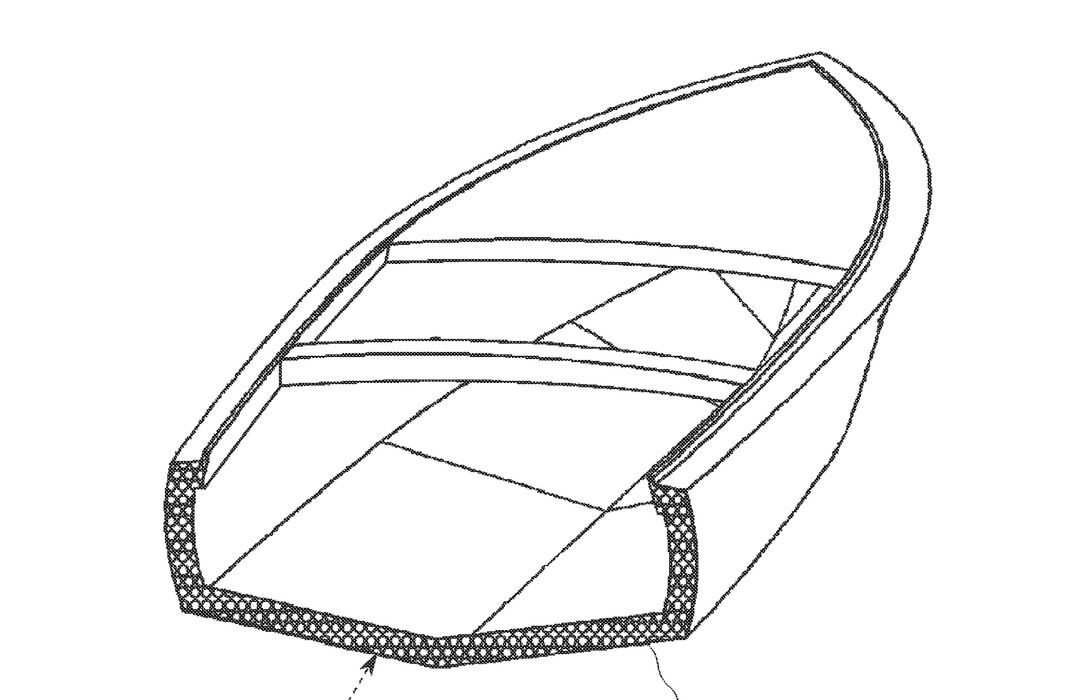
There are many fascinating examples of how this technology could be used, including a boat hull, which features composite paths of hollow rubber tubing within carbon fibre encased with resin.
The patent describes a full 3D printer design with these features. At this time, Continuous Composites does not have such a device, but it would seem they’ve spent considerable time figuring out how such a machine would work.
The CC3D technology appears to be much more powerful than the company’s existing CF3D technology, which allows for continuous carbon fibre to be laid down during 3D printing. It may be that the company could announce a machine using CC3D in the future.
Via USPTO
