Charles R. Goulding and Andressa Bonafe explain how Tinicum’s buyout of TriMas Aerospace signals a push toward smarter, more agile manufacturing where additive tech becomes a quiet force multiplier.
On November 4, 2025, TriMas Corporation announced that it had reached an agreement to sell its entire Aerospace segment to an affiliate of Tinicum L.P., in a cash transaction valued at approximately US$1.45 billion. The transaction will combine TriMas Aerospace with Tinicum portfolio company PennAero and is expected to close by the end of the first quarter of 2026, subject to customary approvals and conditions. The move aligns with a wider strategic shift at TriMas, which has faced investor pressure to simplify its structure and concentrate capital on its faster-growing packaging businesses.
The divested aerospace division comprises several well-known brands supplying fasteners, ducting, machined components, and complex assemblies to commercial and defense customers. Among the businesses included are Monogram Aerospace Fasteners, Allfast Fastening Systems, Mac Fasteners, TFI Aerospace, Martinic Engineering, RSA Engineered Products, and Weldmac Manufacturing Company.
Across both sides of the transaction, 3D printing is primarily being used to accelerate prototyping, support tooling development, and shorten design cycles. These applications reduce development time, improve iteration with customers, and provide more flexibility in early engineering stages. While adoption remains targeted, these uses already demonstrate how additive manufacturing can enhance responsiveness and efficiency in aerospace and industrial supply chains.
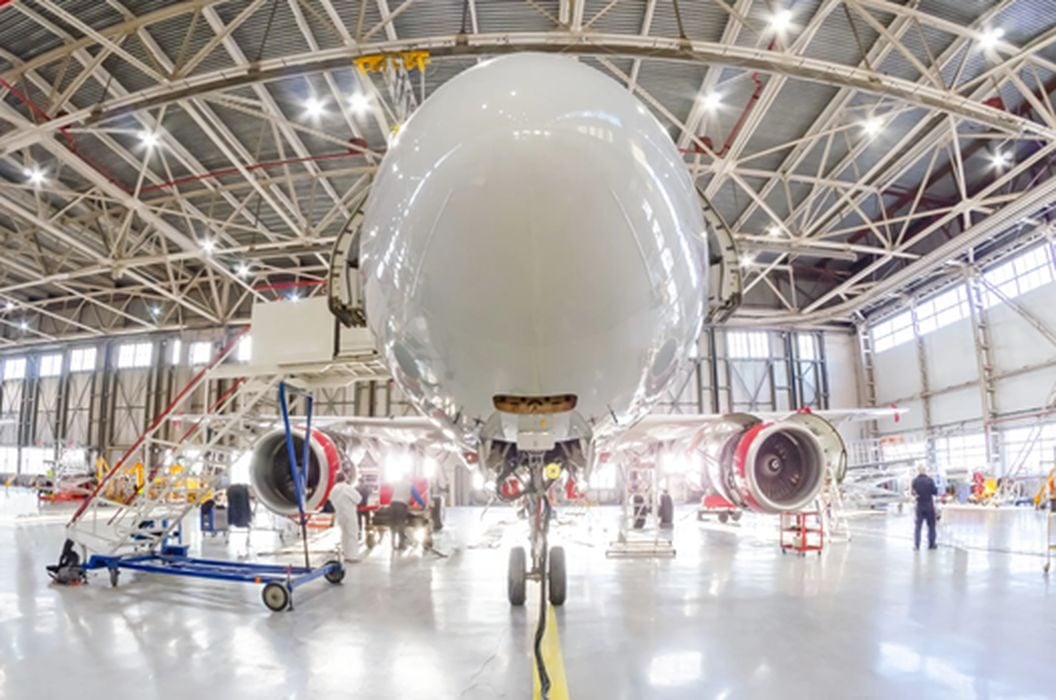
As TriMas’s aerospace assets join Tinicum alongside PennAero, it will be interesting to see how this realignment expands and systematizes the use of additive manufacturing technology across the combined platform.
How TriMas Integrates Additive Manufacturing Across Its Portfolio
TriMas is a U.S.-based diversified manufacturer headquartered in Bloomfield Hills, Michigan, with roughly 3,900 employees across 13 countries. The group operates through four main segments (Packaging, Life Sciences, Aerospace, and Specialty Products), serving consumer, industrial, and aerospace customers. Recent results show net sales of about US$925 million in 2024, with growth led by the Packaging and Aerospace businesses.
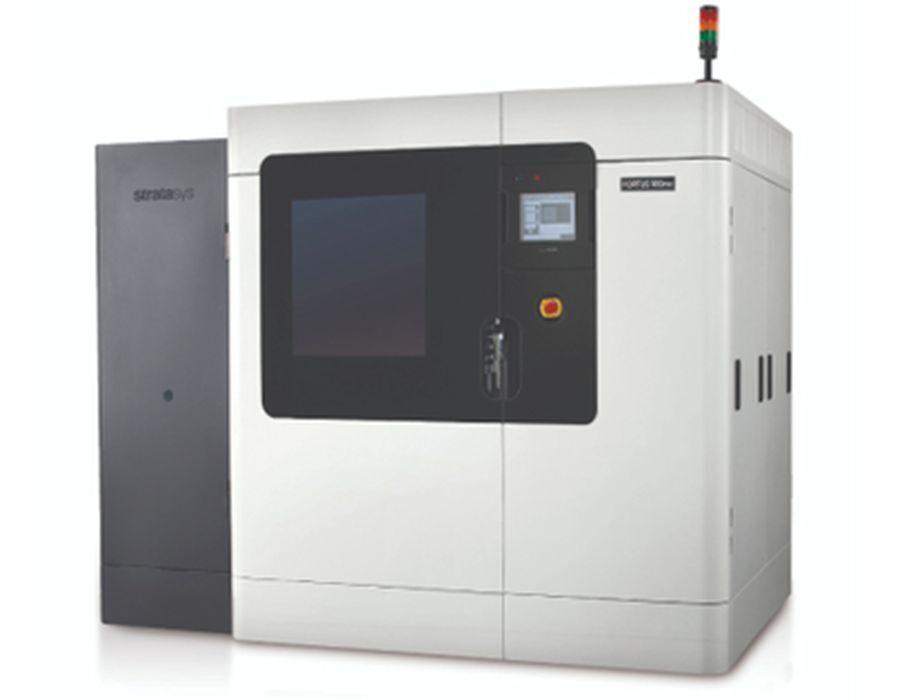
Within that portfolio, 3D printing already appears as a quiet enabler in several TriMas operations. On the aerospace side, Weldmac Manufacturing Company runs a Stratasys Fortus 900mc system to produce tooling, functional prototypes and some end-use parts, emphasizing overnight printing of complex form tooling that is then used with its Triform bladder press.
In packaging, the Rieke Packaging Systems brand highlights “state-of-the-art 3D printing capability” as part of its in-house R&D toolkit, allowing rapid prototyping and concept visualization for closures and dispensing systems. Similarly, Taplast and Aarts Packaging highlight the use of additive manufacturing for prototyping. Taken together, these examples position TriMas as a practical adopter of additive manufacturing, using 3D printing where it speeds design cycles, tooling and complex geometries.
How Tinicum Is Building Additive Capability Through Its Portfolio Companies
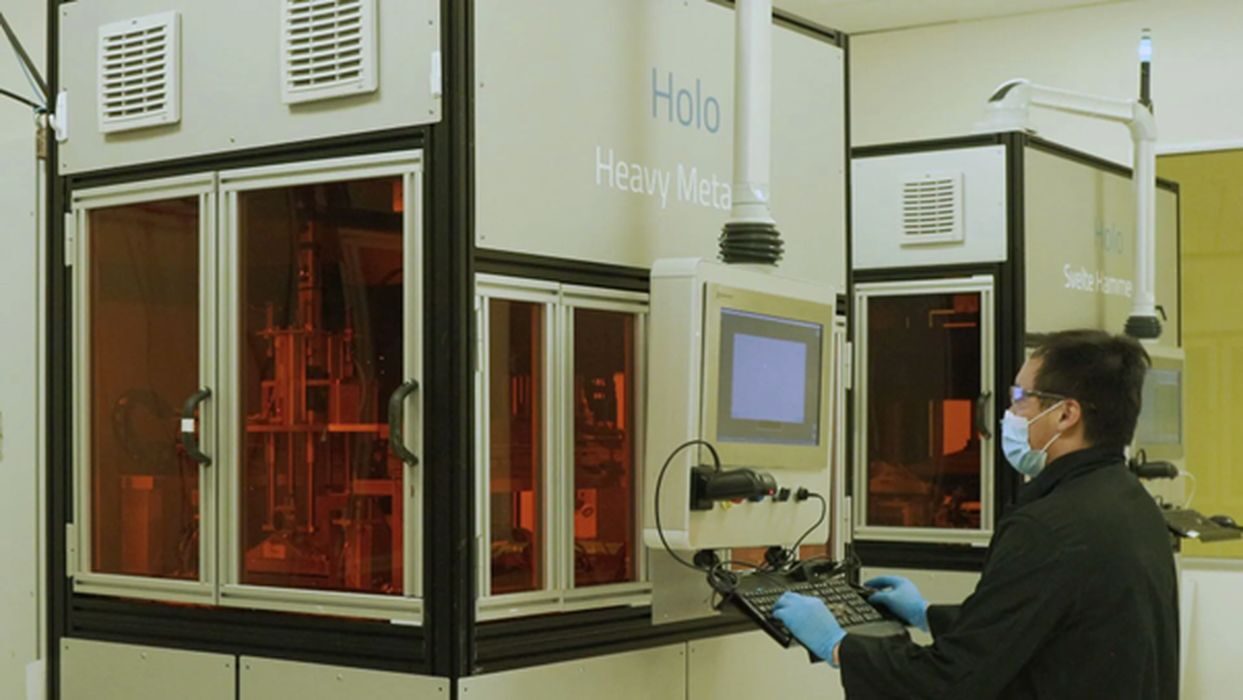
On the buyer side, Tinicum brings a diversified industrial portfolio with aggregate sales of about US$3.1 billion and roughly 13,500 employees. With a combined enterprise value of US$8.9 billion, its businesses and investment activities are organized around four sectors: engineered products, industrial distribution & services, industrial software & technology, and specialty infrastructure. Within that group, additive manufacturing is already embedded in several operations. Greene Group Industries is a Tinicum-owned precision-metal components manufacturer that serves a wide range of end-markets including medical/dental, electronics/communications, commercial/industrial and defense/aerospace. The company acquired the assets of metal 3D printing specialist Holo in 2024 and now offers PureForm metal additive manufacturing for rapid prototyping and scaled production of complex surgical and electronic components, positioning metal 3D printing alongside its existing metal injection molding, CNC machining, and stamping capabilities.
PennEngineering, another Tinicum portfolio company focused on fastening systems, has also introduced in-house 3D printing at its PEM Europe facility. Using an Ultimaker system capable of printing two materials simultaneously, PEM’s engineers convert 3D CAD data into physical concept prototypes of fasteners and installation tooling that help accelerate design iteration, improve visualization with customers, and shorten the development lead-time.
Taken together, these examples show that Tinicum is already using 3D printing pragmatically within its portfolio, which provides a relevant backdrop as it expands further into aerospace fasteners and components through the PennAero–TriMas Aerospace combination. As both TriMas and Tinicum continue integrating additive manufacturing into product development, prototyping, and production workflows, these activities also carry financial implications beyond operational efficiency. Many 3D printing-enabled projects qualify for U.S. federal and state Research & Development incentives, creating an additional return on innovation investment.
The Research & Development Tax Credit
The now permanent Research and Development (R&D) Tax Credit is available for companies developing new or improved products, processes and/or software.
3D printing can help boost a company’s R&D Tax Credits. Wages for technical employees creating, testing and revising 3D printed prototypes can be included as a percentage of eligible time spent for the R&D Tax Credit. Similarly, when used as a method of improving a process, time spent integrating 3D printing hardware and software counts as an eligible activity. Lastly, when used for modeling and preproduction, the costs of filaments consumed during the development process may also be recovered.
Whether it is used for creating and testing prototypes or for final production, 3D printing is a great indicator that R&D Credit eligible activities are taking place. Companies implementing this technology at any point should consider taking advantage of R&D Tax Credits.
Conclusion
The TriMas-Tinicum transaction reflects a broader reshaping of aerospace supply chains, where scale, specialization, and manufacturing agility are becoming decisive advantages. While additive manufacturing is not the headline driver of the deal, it is increasingly part of how both organizations design, prototype, and deliver complex components. That shared footing may make integration smoother while opening the door to more systematic adoption over time. As the aerospace assets are consolidated under Tinicum, the combined platform will have both the incentive and the technical foundations to expand its use of 3D printing for tooling, fasteners, ducts, and other high-mix components. Layered with the financial benefits of the R&D Tax Credit, this creates an environment where innovation and capital efficiency align, making the progress of this newly configured aerospace group one to watch.