Charles R. Goulding and Andressa Bonafe trace Petrobras’ evolution from early 3D printing trials to certified components, digital inventories, and faster equipment recovery.
In recent years, Brazil’s Petrobras has been building a consistent trajectory in the adoption of additive manufacturing, reflecting a structural shift in how the company approaches innovation, maintenance, and industrial production. In our 2021 article, we explored how the Brazilian state-owned multinational began using 3D printing for prototyping, tooling, and targeted operational solutions. A follow-up piece from 2025 examined the launch of LABi3D, a dedicated laboratory that marked a more institutionalized approach to the technology.
Since then, the global context has changed significantly. Ongoing geopolitical tensions, regional conflicts, and the reconfiguration of global supply chains have once again highlighted the central role of oil and natural gas as strategic assets, not only as energy resources, but as industrial and geopolitical assets. This environment has reinforced the importance of operational resilience, reduced dependence on external suppliers, and greater technological autonomy, particularly for large energy companies.
Against this backdrop, Petrobras’ additive manufacturing initiatives have continued to evolve. This article revisits those efforts, incorporating new information from recent projects and insights from 3DCRIAR, a Brazilian additive manufacturing company and key Petrobras partner, informed by a recent interview with Daniel Huamani, CTO of 3DCRIAR, on the growing use of 3D printing in Brazil.
From LABi3D to real-world deployment
When Petrobras inaugurated LABi3D at its CENPES research center in August 2024, the initiative represented more than the opening of another internal laboratory. LABi3D was conceived as a pilot to test a new organizational model: the complete outsourcing of an additive manufacturing laboratory operated by a third-party specialist within Petrobras’ research environment.
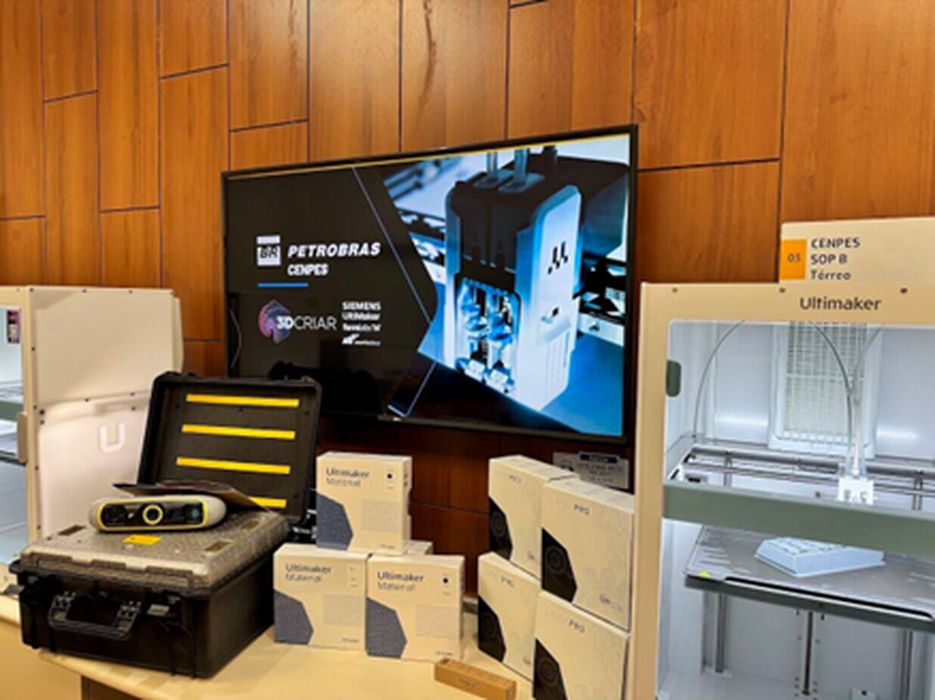
Unlike traditional R&D labs staffed by internal teams, LABi3D is fully operated by 3DCRIAR. Dedicated technicians manage incoming demands, conduct design and engineering work, operate the machines, and track performance metrics. According to Huamani, the lab’s focus is firmly on practical outcomes rather than experimentation for its own sake.
Importantly, LABi3D is dedicated exclusively to polymer-based additive manufacturing. The facility is equipped with industrial polymer systems from Ultimaker, Formlabs, and miniFactory, as well as scanning capabilities from Peel 3D and Siemens software for design, simulation, and analysis.
A central theme of the lab’s work is the development of digital inventories. Rather than simply producing isolated parts, LABi3D supports Petrobras’ broader goal of digitizing components so that validated designs can be stored, shared, and manufactured on demand across the organization. This emphasis on digital inventory reflects a shift from isolated prototyping toward systemic integration of additive manufacturing into maintenance and operations.
Outsourced Additive Manufacturing and Regional Deployment
Beyond the CENPES-based LABi3D, Petrobras has expanded its use of additive manufacturing through a broader corporate contract that covers Exploration and Production (E&P) units. Under this model, 3DCRIAR operates multiple onshore additive manufacturing labs distributed across key Petrobras regions, including Salvador, Rio de Janeiro, Macaé, Vitória, and Santos.
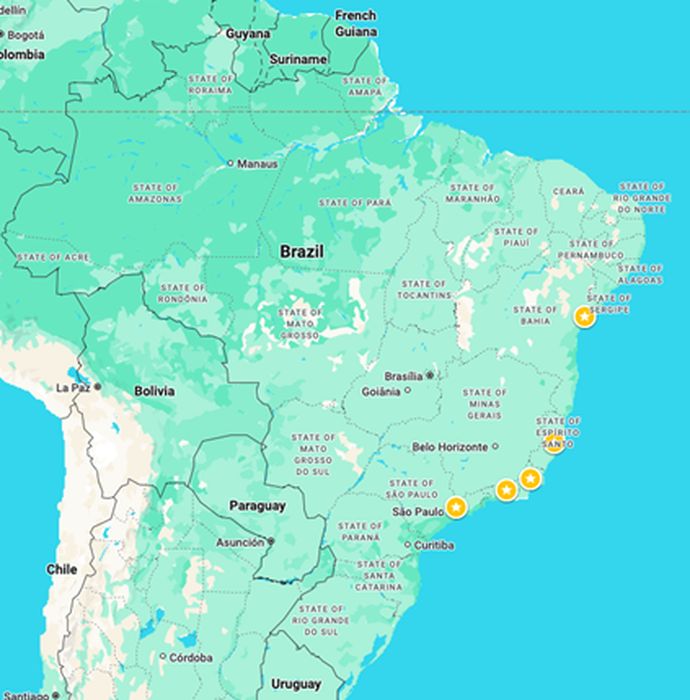
These five onshore facilities are staffed and managed by 3DCRIAR personnel and are closely linked to offshore operations, working in partnership with seasoned Petrobras’ technicians. In addition to producing parts locally, the onshore labs also manage and support 3D printers installed on offshore platforms. This distributed structure brings additive manufacturing closer to where operational problems occur, reducing response times and logistical complexity. The rationale behind this outsourcing model is straightforward. As Huamani explains, Petrobras’ core competence lies in oil and gas operations, not in maintaining fleets of 3D printers. In his own words, “Petrobras is very good at extracting oil from the ground. It doesn’t need to be good at operating 3D printers. Our model is designed exactly for that.”
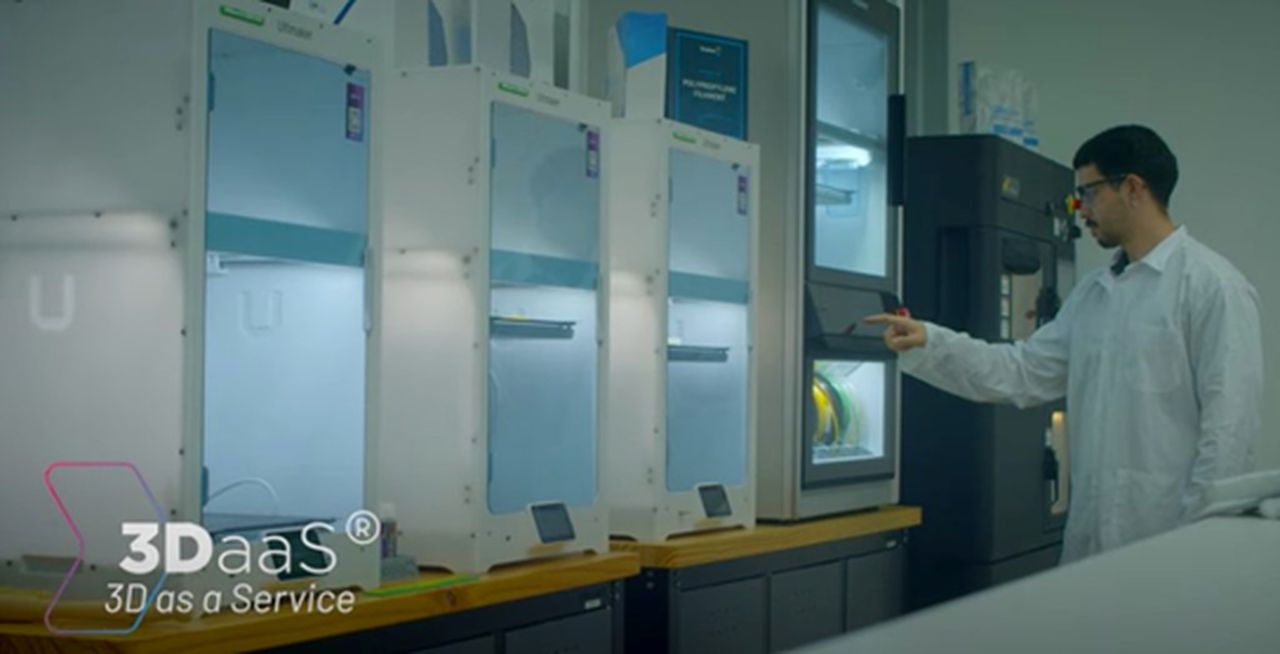
In practice, the parts produced through this network range from relatively simple items, such as manual interfaces and operator components, to more functionally critical polymer components, including rotors and flow-directing elements. One notable example is currently undergoing certification with DNV, a leading classification and certification body, and represents what Huamani describes as the first certified polymer part for Petrobras that meets critical operational requirements.
The key metric for Petrobras is not the unit cost of a printed component, but the impact on equipment availability and production continuity. Huamani points out that “What really matters is not whether a part costs one thousand Reais or one hundred. What matters is restoring equipment availability faster. A single day of lost production on a platform can cost millions of dollars.”
This perspective reframes additive manufacturing as a tool for operational resilience rather than cost optimization alone.
Digital Inventory and On-Demand Manufacturing in Practice
One of the most significant developments emerging from Petrobras’ additive manufacturing strategy is the active use of digital inventories combined with on-demand production. Rather than maintaining large physical stocks of low-turnover spare parts, Petrobras is increasingly validating designs that can be stored digitally and produced as needed.
Crucially, this model is not merely conceptual. According to Huamani, it is already functioning in day-to-day operations, “today, parts that are validated go into a digital inventory. Any platform can print those validated parts directly from that inventory.”
In this system, parts are first produced, tested, and approved through engineering and operational review. Once validated, their digital files become accessible across the Petrobras network, allowing different units and platforms to manufacture the same component without repeating the entire qualification process.
This approach reduces lead times, minimizes dependence on long international supply chains, and improves responsiveness in remote offshore environments. Even when printed parts are used initially for temporary solutions or functional testing, the ability to respond quickly to maintenance challenges creates tangible operational value.
Additive Manufacturing, Energy Security, and Geopolitical Risk
The growing importance of additive manufacturing within Petrobras cannot be separated from the broader geopolitical and economic context facing the energy sector. Oil and gas operations are particularly sensitive to disruptions in global supply chains, international trade, and geopolitical alignment.
Huamani points out that many critical components used in energy infrastructure are sourced from abroad, often from regions whose geopolitical alignment may not always be certain. He notes that “energy is far more sensitive to global instability than most industries. Reducing dependence on long international supply chains and external suppliers is becoming critical.”
In this context, additive manufacturing offers Petrobras a way to regain a degree of autonomy. By developing internal and near-site production capabilities, the company reduces exposure to external shocks, whether caused by geopolitical conflict, trade restrictions, or logistical disruptions.
While additive manufacturing is not a substitute for global supply chains, it increasingly serves as a strategic complement, enabling faster responses to unexpected events and supporting continuity of operations in high-risk environments.
Petrobras’ partnership with 3DCRIAR provides a useful reference point for U.S.-based companies exploring additive manufacturing. Similar approaches can improve supply-chain resilience and, at the same time, create R&D-eligible activities under the U.S. tax code.
The Research & Development Tax Credit
The now permanent Research and Development (R&D) Tax Credit is available for companies developing new or improved products, processes and/or software.
3D printing can help boost a company’s R&D Tax Credits. Wages for technical employees creating, testing and revising 3D printed prototypes can be included as a percentage of eligible time spent for the R&D Tax Credit. Similarly, when used as a method of improving a process, time spent integrating 3D printing hardware and software counts as an eligible activity. Lastly, when used for modeling and preproduction, the costs of filaments consumed during the development process may also be recovered.
Whether it is used for creating and testing prototypes or for final production, 3D printing is a great indicator that R&D Credit-eligible activities are taking place. Companies implementing this technology at any point should consider taking advantage of R&D Tax Credits.
Conclusion
Petrobras’ evolving use of additive manufacturing illustrates how 3D printing can move beyond experimentation to become a practical tool for operational resilience in asset-intensive industries. Through a combination of outsourced expertise, regional deployment, and digital inventories, the company is integrating additive manufacturing into maintenance and production workflows in ways that directly impact equipment availability and supply-chain flexibility. In a global environment marked by geopolitical uncertainty and fragile logistics networks, Petrobras’ partnership with 3DCRIAR offers a compelling example of how additive manufacturing can support autonomy, responsiveness, and continuity of operations.