
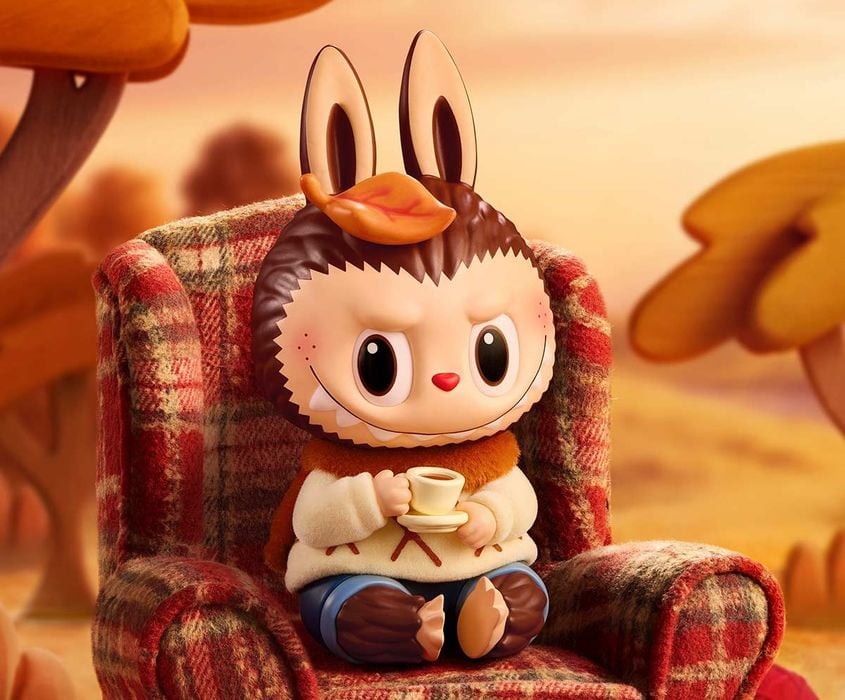
There’s been a settlement in the case of Bambu Lab versus Pop Mart, and there are implications.
I’ve been following this story for a few weeks now, waiting for the outcome, and now that appears to have happened. But first, let’s review the basics of the situation.
Readers will be quite familiar with Bambu Lab, and their associated 3D model repository, MakerWorld. Pop Mart is a rather large Chinese collectible/IP company worth tens of billions of dollars.
Pop Mart’s business is to sell physical versions of their many characters, which all have attractive designs. One of their most popular characters is the monster “Labubu”, which apparently generated something near US$700M for the company last year.
Pop Mart’s clever strategy is to market their characters in ways that make them more desirable. For example, a typical sale uses a “blind box” approach, where the buyer doesn’t really know what they’re getting until it is opened. If lucky, they might receive a Labubu.
Pop Mart Lawsuit
The basis of the lawsuit was that Pop Mart was displeased with the amount of Labubu models found on Bambu Lab’s MakerWorld site. These could be downloaded and quickly made physical by anyone with a 3D printer, Bambu Lab or not.
Why hadn’t Bambu Lab cleaned out these 3D models from MakerWorld? It’s likely because there is a kind of unwritten rule where commercial designs are ignored as it’s assumed any prints are of low quality and generally for personal use. A casual search of any 3D model site would easily show all kinds of copyrighted characters from a wide range of franchises.
These stay on the sites until a character owner officially complains. For example, Disney might ask for the Mickey Mouse 3D models to be taken down.
Here it was a bit different. Instead of just asking for Bambu Lab to do a general takedown, they launched a lawsuit, underlining their seriousness for the matter.
Why would Pop Mart be so upset? I suspect it’s because of the nature of their business model. It’s all about scarcity: that blind box you bought may or may not have a Labubu in it. If you really want one, you have to buy more boxes until you find it.
That’s quite different from, say, a Disney character that you can readily buy from a number of licensed sources. Pop Mart relies on scarcity, and that scarcity was destroyed by the ability to instantly 3D print as many Labubu models as desired. Evidently, the Labubu models on MakerWorld were heavily downloaded, confirming Pop Mart’s suspicions.
Bambu Lab Settlement with Pop Mart
The settlement, according to 36kr, is that Bambu Lab has removed all the Pop Mart content from the site, and the matter appears to be concluded. A statement from Bambu Lab says (translated):
“Recently, issues related to intellectual property rights between MakerWorld, a platform under Tuozhu Technology (Bambu Lab’s company name), and Pop Mart have attracted widespread public attention and discussion, causing impact and inconvenience to Pop Mart and to a large number of users. We hereby express our most sincere apology to everyone.
At present, we have conducted friendly consultations with Pop Mart and have reached a settlement. All related content in question has already been fully removed. Tuozhu Technology will continue working to maintain a healthy creative ecosystem and provide users with a better creation and printing experience.”
According to 36kr, the matter has been in process between the companies since last May, and the case was to go to court in early April. Fortunately, everything was concluded, and that’s not happening. We don’t know whether Bambu Lab paid Pop Mart a fee to close the case, but certainly Pop Mart IP will no longer appear on MakerWorld.
3D Model Site Implications
While this case is apparently concluded, there are multiple significant implications for the future of 3D model repositories.
The situation provides a very strong signal that 3D model sites should not be hosting copyrighted content. However, since the case was a settlement, and not a court decision, it doesn’t quite carry as much legal weight.
Nevertheless, other 3D model sites will certainly take note that “they might be next”. Even though the MakerWorld case didn’t get all the way to court, it seems quite likely that they were indeed hosting the offending content. Other sites are now in the same position.
We may see other rights holders presenting similar demands to not only MakerWorld, but also Printables and other major 3D model sites. If more than a couple of these incidents occur, sites will no doubt reorganize their content into categories of risk, and possibly preemptively remove potentially offending content.
This will inevitably result in false positives: doing takedowns of hundreds, thousands, or even millions of questionable 3D models must be done in an automated manner. That automation won’t be perfect, and there will be innocent 3D models taken down by accident. This apparently already occurred in MakerWorld as a result of the cleanup.
Sites will likely implement more severe constraints on models uploaded to ensure they don’t cross the IP line. This will add some friction to site growth and frustrate designers. We’ll probably also see more formalized processes for takedowns, causing more of this to happen in the future.
Commercial content might migrate, at least temporarily, to smaller and more obscure 3D model sites, but these will eventually have to follow the new rules.
This is a case of an industry self-regulating, which is always a bit easier than letting courts or legislators set up rules that could be even worse.
I believe we’ve just hit a major turning point in shared 3D models.
Via 36kr
