
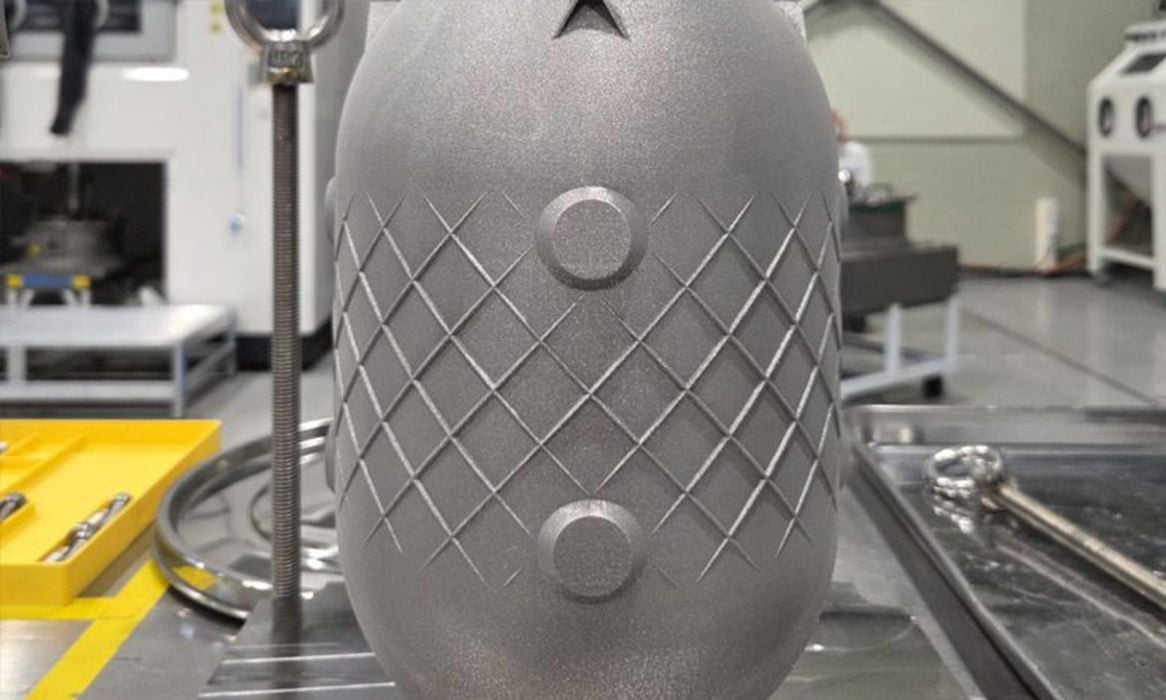
A Korean company announced a 3D print process for titanium that apparently requires no support structures.
The company is INNOSPACE, a well-known aerospace company based in Sejong. They produce rockets: smaller sounding rockets, as well as their orbital HANBIT series, which can handle a range of different payloads.
An aerospace company producing rocket engines these days has to make extensive use of additive manufacturing technology. This is due to the extraordinary complexity of modern rocket engine geometry. INNOSPACE must have considerable experience in this area.
That experience seems to have led to a new development in LPBF 3D print technology. They explain:
“INNOSPACE has successfully secured product quality and structural stability without support structures by applying advanced process control technologies, even within standard laser powder bed fusion (LPBF) environments. The company also addressed key technical challenges associated with titanium materials, which are prone to thermal distortion and require highly sophisticated process control.”
This sounds quite reminiscent of Velo3D’s approach to reducing the need for support structures in their equipment: precise tuning. It appears that INNOSPACE has achieved something similar.
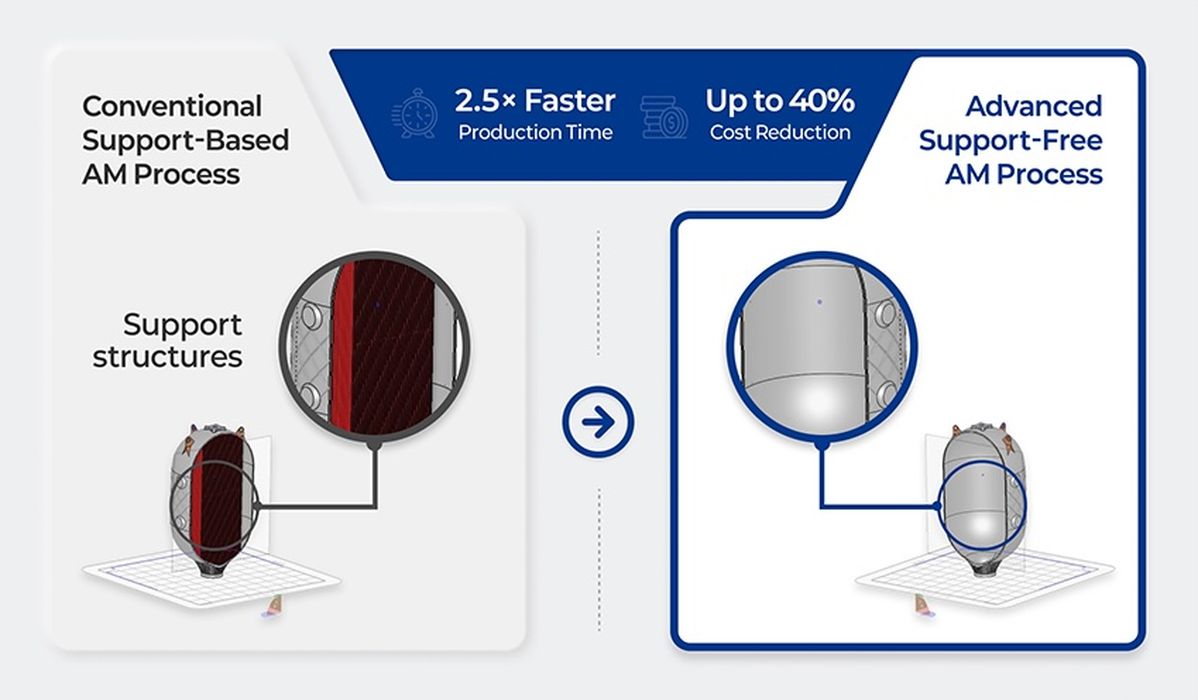
INNOSPACE said the new titanium method has reduced manufacturing durations by 2.5X, with a corresponding reduction in cost of 40%, at least on one customer project.
INNOSPACE does not sell 3D printers; they are in the aerospace business. It is not clear on which LPBF metal 3D printer they achieved these results, but we know that the company has previously installed several large systems from Eplus3D, a well-known maker of metal LPBF systems.
So it appears that INNOSPACE’s engineers have found a way to tune Eplus3D equipment to print titanium without the need for support structures. That’s an impressive achievement that will certainly give them an advantage over competitors that suffer with older methods that cost more and take longer to complete.
But there’s another thing to consider here: if an Eplus3D customer can tweak the machine to print with no support structures, could other customers do the same? Could this be done on other types of metal LPBF gear?
Perhaps INNOSPACE’s achievement here will inspire other metal LPBF operators to do their own tuning, and eventually we may see this approach being a standard practice in LPBF shops.
Via INNOSPACE
