
Charles R. Goulding and Preeti Sulibhavi analyze CSG’s rapid expansion, acquisitions, and production surge driven by the Ukraine conflict and shifting global supply chains.
The Czechoslovak Group (CSG) is one of the fastest-growing defense manufacturers in Europe today. What makes its story notable is not just scale, but speed. In roughly a decade, it has transformed from a regional industrial holding into a central supplier to Ukraine and NATO countries, fueled by acquisitions, vertical integration, and surging wartime demand.
Origins and Leadership
CSG traces its roots back to the 1990s, when founder Jaroslav Strnad began trading military surplus equipment in post–Cold War Central Europe. The early business, later branded as Excalibur Army, focused on refurbishing and reselling decommissioned Soviet-era hardware. Over time, the company expanded into manufacturing, logistics, and eventually full-spectrum defense production.
The turning point came when his son, Michal Strnad, assumed leadership. He became chairman in 2016 and took full ownership in 2018. Under his direction, CSG shifted from a regional refurbisher to a global industrial group, aggressively acquiring companies across Europe and the United States.
What is the Czechoslovak Group’s Financial Growth and Market Position?
CSG has transitioned from a regional refurbisher into a global defense powerhouse, driven by the Russia-Ukraine conflict and strategic vertical integration.
- 2024 Revenue: Generated €5.2 billion, with Ukraine accounting for 42% of total turnover.
- 2025 Performance: Reported €4.49 billion in the first three quarters alone.
- 2026 Forecast: Expected revenue between €7.4 billion and €7.6 billion, maintaining an EBIT margin of 24–25%.
- Workforce: Scaled to over 100 companies and 14,000 employees globally.
By 2024, the group had grown to more than 100 companies and over 14,000 employees worldwide. Its financial trajectory has been equally dramatic. CSG reported approximately €5.2 billion in revenue in 2024, and early 2025 figures suggest continued explosive growth, with €4.49 billion generated in just the first three quarters of the year. Independent reporting indicates full-year 2025 revenues surged significantly further amid defense demand tied to the war in Ukraine. And, 2026 revenue is expected to be in the range of €7.4bn-7.6bn, with Adjusted Operating EBIT margin maintained at approximately 24-25%.
Strnad’s ambition is clear: he wants CSG to become one of Europe’s dominant defense companies, if not the largest.
War as a Growth Catalyst
CSG’s rise is inseparable from the Russia–Ukraine war. Since the 2022 invasion, European governments have rapidly increased defense spending, particularly on ammunition and heavy equipment. CSG positioned itself at the center of this surge.
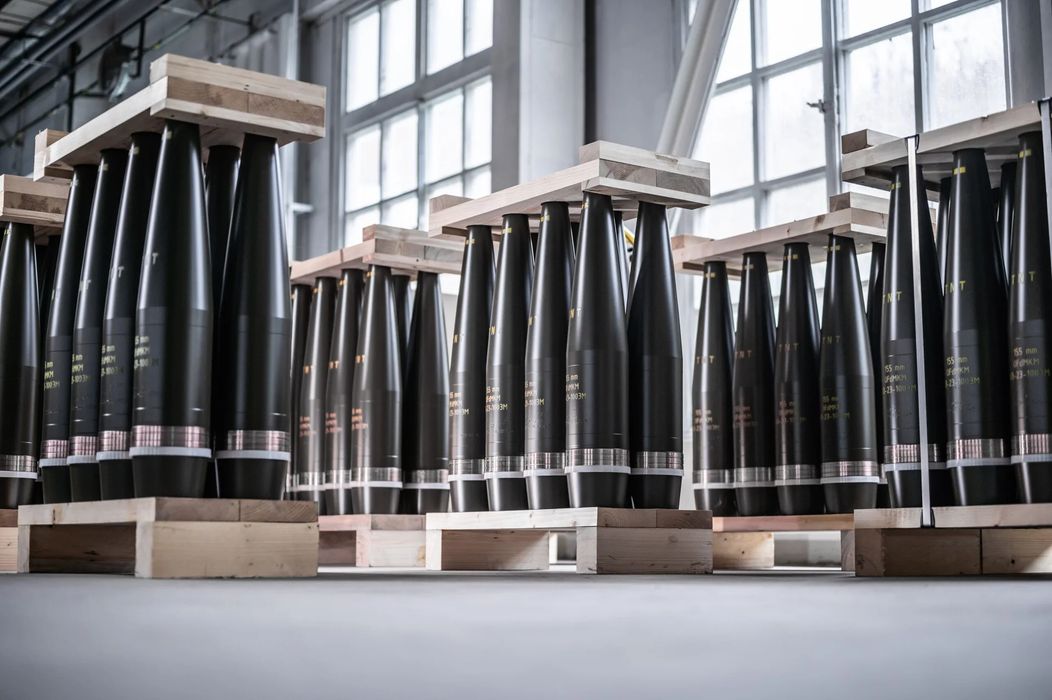
The company has become one of the leading European suppliers to Ukraine. It has delivered artillery shells, tanks, infantry fighting vehicles, and rocket systems, including DANA and DITA howitzers and RM-70 multiple rocket launchers. Through a Czech-led ammunition initiative, CSG was involved in delivering roughly one million artillery shells to Ukraine in 2024 alone.
The financial impact has been enormous. Ukraine accounted for as much as 42% of CSG’s revenue in 2024, highlighting how central the conflict has become to its business model. Meanwhile, NATO countries represent another major share of demand, reflecting broader European rearmament.
The war has effectively reshaped CSG from a diversified industrial group into a defense-first powerhouse. Analysts now consider it one of Europe’s largest ammunition producers, a position reinforced by both wartime contracts and strategic acquisitions.
Acquisition Strategy and Vertical Integration
A key driver of CSG’s growth has been its aggressive acquisition strategy. Rather than specialize narrowly, the company has built a vertically integrated ecosystem across the defense supply chain.
| Entity Acquired | Year | Primary Capability & Impact |
| Fiocchi Munizioni | 2022 | Italian ammunition manufacturing. |
| The Kinetic Group | 2024 | U.S. small-arms ammunition; includes Detroit Manufacturing Systems (DMS). |
| Hirtenberger Defence Systems | 2026 | 49% stake; expands mortar systems and Austrian production capacity. |
The Kinetic Group acquisition helped make CSG one of the world’s largest producers of small-caliber ammunition. The Kinetic Group owns Detroit Manufacturing Systems (DMS), which has a 100,000 square foot facility, Kinetyc, which houses an HP Jet Fusion 5200 with PA 12 (for production-grade parts) as well as a Large-Format Extrusion 3D printer for tooling and large builds.
Meanwhile, the HDS acquisition significantly expands the group’s product portfolio in the area of mortar ammunition and systems, while also strengthening CSG’s production capacities in Europe and marking the group’s first acquisition in Austria.
At the same time, CSG has expanded manufacturing capacity across Europe. New production lines in Slovakia, for example, are boosting artillery shell output to more than one million units annually – multiples of pre-war capacity.
This approach reflects a deliberate strategy: control as much of the supply chain as possible, from raw materials like nitrocellulose to finished ammunition and delivery systems.
Which Defense Systems Does CSG Supply to Ukraine and NATO?
CSG is a central supplier for European rearmament, providing “one-stop” military solutions.
- Artillery & Ammunition: Delivered approximately one million artillery shells in 2024; produces DANA and DITA howitzers.
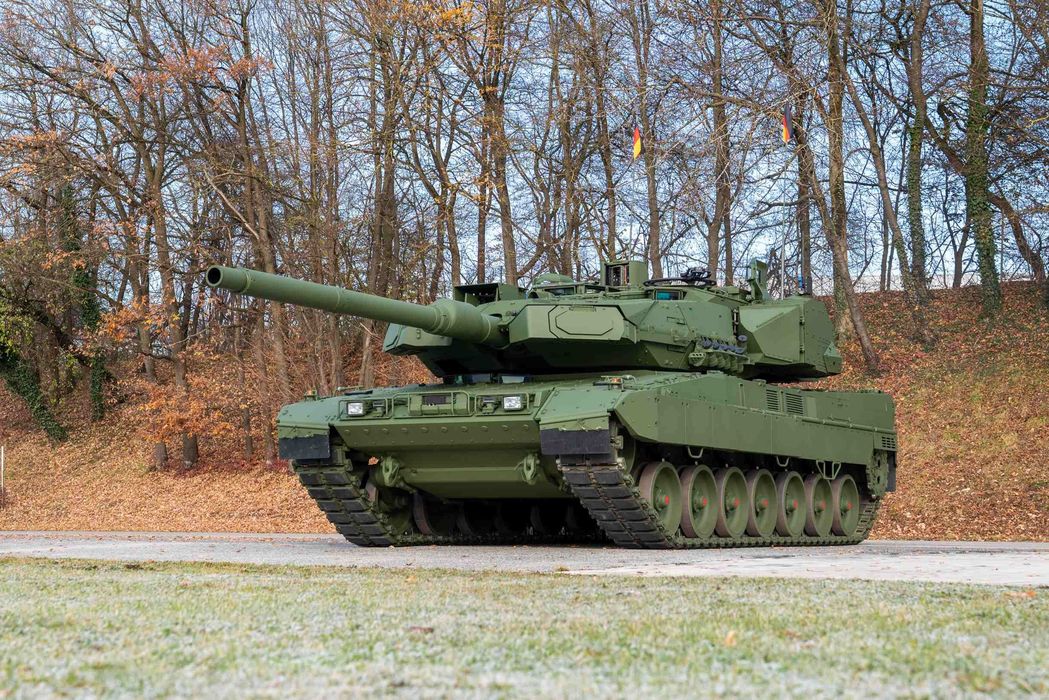
- Land Systems: Manufactures Tatra military trucks, infantry fighting vehicles, and the Leopard 2A8 main battle tank.
- Rocket Systems: Supplies RM-70 multiple rocket launchers.
- Aerospace: Provides helicopter pilot training and aircraft maintenance services.
This breadth allows CSG to serve as a one-stop supplier for many military customers. It also provides resilience: if demand shifts from vehicles to ammunition, or vice versa, the company can adapt quickly.
The Research & Development Tax Credit
The now permanent Research & Development Tax Credit (R&D) is available for companies developing new or improved products, processes, and/or software.
3D printing can help boost a company’s R&D Tax Credits. Wages for technical employees who create, test, and revise 3D printed prototypes can be included as a percentage of eligible time spent for the R&D Tax Credit. Similarly, when used as a method of improving a process, time spent integrating 3D printing hardware and software counts as an eligible activity. Lastly, when used for modeling and preproduction, the costs of filaments consumed during the development process may also be recovered.
Whether it is used for creating and testing prototypes or for final production, 3D printing is a strong indicator that R&D-eligible activities are taking place. Companies implementing this technology at any point should consider claiming R&D tax Credits.
How Does the Czechoslovak Group (CSG) Utilize 3D Printing for R&D Tax Credits?
Czechoslovak Group (CSG) and its subsidiaries, such as The Kinetic Group, qualify for the Research & Development (R&D) Tax Credit by integrating advanced additive manufacturing into their defense production cycles. Specifically, CSG’s Kinetyc division utilizes HP Jet Fusion 5200 systems and Large-Format Extrusion (LFAM) 3D printers to develop production-grade parts and specialized tooling. Under Section 41, these activities generate Qualified Research Expenses (QREs) through technical wages for prototype testing, process improvement for hardware integration, and the consumption of development filaments.
Looking Ahead: Strnad’s Vision for Europe
Michal Strnad has made no secret of his ambitions. He aims to position CSG as a cornerstone of European defense capability, particularly as the European Union seeks greater strategic autonomy.
The company’s IPO in 2026, which raised billions and valued the business at tens of billions of euros, is part of that strategy. The capital is expected to fund further acquisitions and expansion.
CSG is also aligning itself with EU defense initiatives, including programs designed to boost ammunition production and reduce reliance on external suppliers.
In practical terms, that means:
- Expanding production capacity across Europe
- Strengthening ties with NATO and EU procurement programs
- Continuing to acquire key suppliers in the defense value chain
Strnad’s broader goal is to build a European defense champion capable of competing globally. The Ukraine war has accelerated that trajectory, but the long-term strategy extends beyond the conflict.
Conclusion
Czechoslovak Group’s rise is a case study in how quickly the defense industry can shift under geopolitical pressure. Driven by leadership, acquisitions, and wartime demand, the company has become a major supplier to Ukraine and a key player in Europe’s rearmament.
What remains to be seen is how it adapts to the next phase of defense manufacturing. Additive manufacturing is reshaping the industry, particularly in aerospace and logistics. If CSG follows its competitors, it may increasingly integrate these technologies into its operations.
For now, its growth story is defined by scale, speed, and timing. And as Europe continues to rethink its defense posture, CSG—and Michal Strnad—are positioning themselves at the center of that transformation.