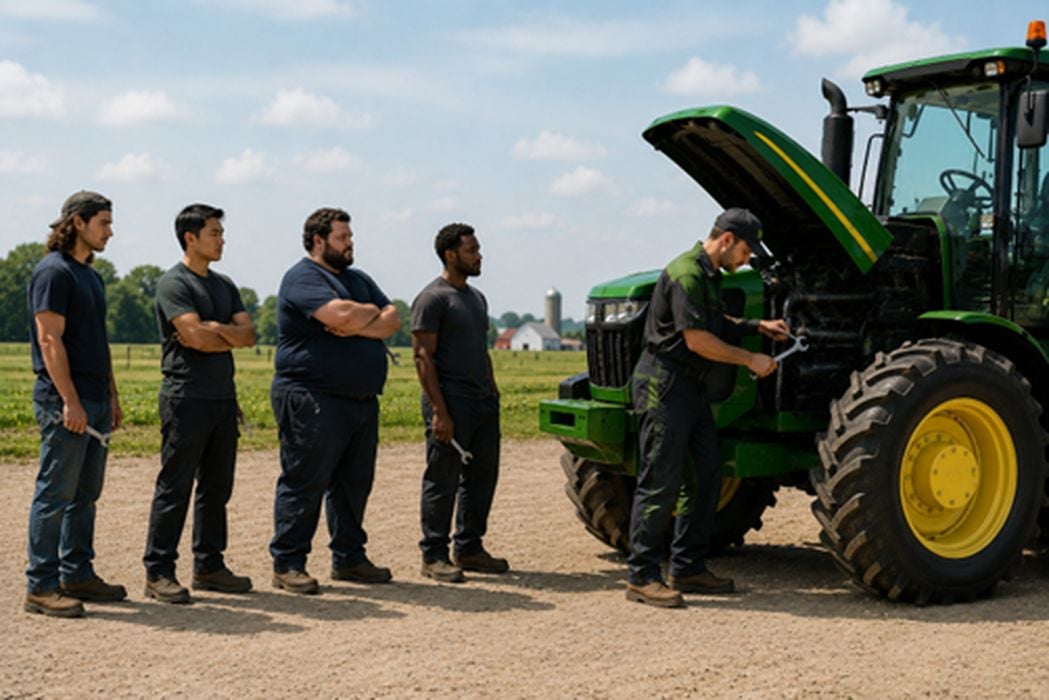
Charles G. Goulding drills into the impact that right-to-repair laws have on routine maintenance of modern machinery and how 3D printing can be one of the solutions.
Increasingly, manufacturers have taken control of the maintenance of their products.
If a tractor breaks down, manufacturers may now control diagnostics. If a smartphone fails, manufacturers can manage repair-tool access. If an industrial machine needs a replacement part, manufacturers typically oversee any initial software locks.
As a result, the repair economy is now essentially captive to large manufacturers. It’s a model that’s given large firms unprecedented control over the lifecycles of their products. Now, in courts of law and public opinion, that model faces scrutiny.
How Repair Lockouts Work
Most modern machinery runs on computer chips. Chips can be found in everything from a cars to toothbrushes to tumble dryers. But the same computers that operate today’s machines also give manufacturers unprecedented control repairs. A tractor, for instance, may need proprietary diagnostic software and digital authorization to begin a repair.
In some cases, replacement components are digitally paired to the machine itself. Absent the correct pairing, onboard systems may keep generating fault codes even if a physical repair is done properly.
Now more than ever, machine repairs need the correct authorizations and software pairing, on top of the correct tooling and know-how.

The New Right-to-Repair
When large manufacturers monopolize the repair economy, consumers risk paying monopoly prices. The labor force suffers as well when independents get locked out of repair work they are able to perform.
The right-to-repair movement is a populist response to these developments. It aims to give back product control to machine buyers over the lifecycle of their purchases. It also protects skilled labor at a time when mass layoffs and gig work have left many laborers vulnerable. On a community level, the right-to-repair can reduce dependency on giant companies that control who gets to fix what, and when.
The movement includes consumer-rights groups, independent repair advocates, state lawmakers, farmers’ organizations, and technologists pushing for broader repair access. One of the most visible advocates has been Kyle Wiens, whose repair-focused company iFixit has become closely associated with the movement. Wiens has argued that:
“If you can’t fix it, you don’t own it.”
That phrase has become something of a slogan for the broader debate. It captures the growing tension between manufacturer-controlled products and longstanding assumptions about consumer ownership post-purchase.
Manufacturers, for their part, have claimed that unrestricted repairs create problems of their own, especially when software is involved. Such issues include cybersecurity, liability exposure, and firmware modifications that can compromise safety systems or emissions controls.5
Deere in the Headlights
Currently, the right-to-repair legal battle involves John Deere, maker of tractors and other agricultural equipment.
Recently the FTC and several states alleged Deere unlawfully monopolized the repair market by restricting access to its “Service ADVISOR” software, forcing farmers to use authorized dealers for critical repairs.
In April 2026, Deere agreed to a proposed US$99 million settlement in litigation over these practices. As part of the agreement, Deere committed to expanding access to certain diagnostic and repair tools for farmers and independent repair shops over the coming decade, while admitting no wrongdoing.
Across the country, similar debates have gained steam as legislatures, regulators, and private plaintiffs are all challenging manufacturer-led control over product repair. The fight touches everything from smartphones and medical devices to automobiles and heavy construction equipment, with courts and regulators treating repair access as a competition and ownership issue rather than just a warranty dispute.
As a result, the Deere settlement could be the lynchpin for widespread opening of repair ecosystems, minimization of software lockouts, and a potential reshaping of the economics of dealer-controlled service networks.
3D Printing and the Repair Economy
3D printing is a key way independent repair workers compete. Parts are printable that would otherwise be obsolete or impossible to source. Further, the cost-effectiveness of 3D printing benefits both repair shops trying to compete, and consumers trying to keep lifecycle costs low.8
Additive manufacturing’s impact in the repair economy is already observable. For instance, local repair businesses with industrial 3D printing ability now already make hard-to-source plastic housings, mounting brackets, and obsolete components — and often faster than centralized fulfillment networks.
Consider a precision farming machine with a damaged sensor enclosure. The failed part itself may be small and inexpensive, yet difficult to source quickly through authorized channels. Additive manufacturing gives local repairers the chance to assist.
The same enhancements by additive manufacturing can be observed throughout warehouse robotics, HVAC systems, and industrial automation.
Veterans and a New Repair Workforce
The U.S. military has become one of the world’s largest adopters of additive-manufacturing technology. The military now uses 3D printing systems for field repairs and distributed production in difficult operating environments.11 Likewise, the military is a leader in distributed manufacturing and field repair because their supply chains are so vulnerable to disruption. Waiting weeks for replacement components is rarely realistic in military environments. This pressure naturally pushes armed personnel toward fabrication tools, localized repair workflows, and adaptive manufacturing techniques that translate well into civilian repair industries.
Indeed, civilian repair work resembles the kind of practical problem-solving that many service members already do exceptionally well.
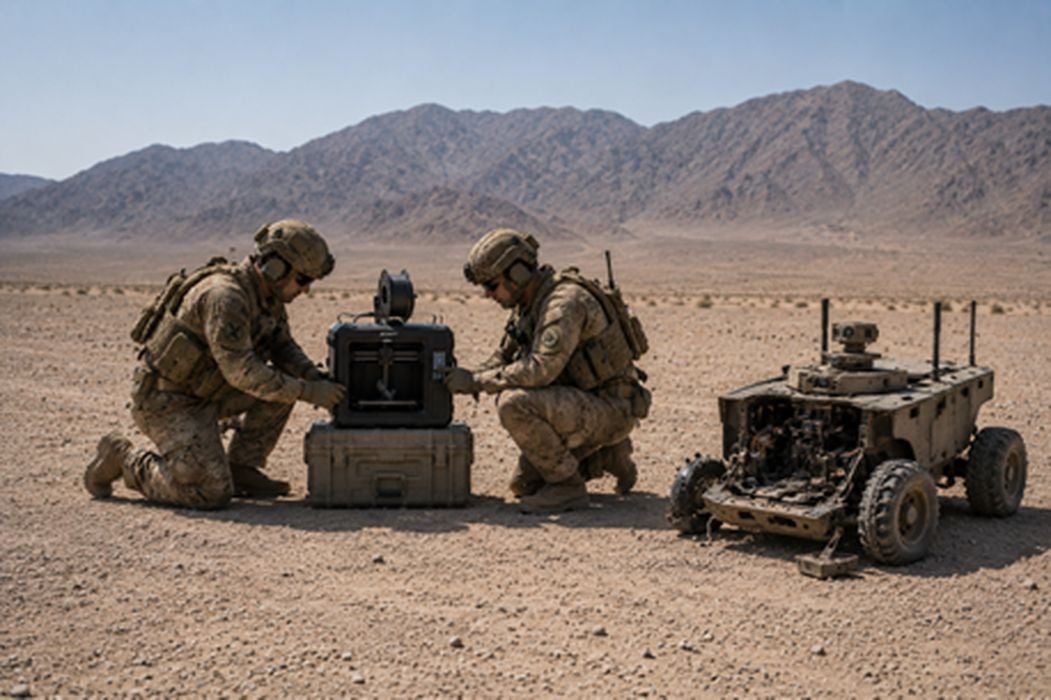
For instance, veterans are well prepared to service agricultural machinery or warehouse robotics using many of the same underlying skills obtained during military deployments.
Repair work may suit some veterans better than other career pathways. Many veterans leave the military with highly technical experience, then enter a civilian labor market that pushes them toward generic management tracks or credential-heavy hiring systems that do not map cleanly onto their experience and expertise.
Likewise, a growing number of veterans do not want to relocate into major urban office markets after service. Independent repair businesses can operate closer to smaller towns, industrial corridors, agricultural regions, and logistics hubs.
In this sense, the right to repair is a labor movement with national workforce implications.
The Research & Development Tax Credit
Enacted in 1981, the now permanent Federal Research and Development (R&D) Tax Credit allows a credit that typically ranges from 4%-7% of eligible spending for new and improved products and processes.
Qualified research must meet the following four criteria:
- Must be technological in nature
- Must be a component of the taxpayer’s business
- Must represent R&D in the experimental sense and generally includes all such costs related to the development or improvement of a product or process
- Must eliminate uncertainty through a process of experimentation that considers one or more alternatives
Eligible costs include U.S. employee wages, cost of supplies consumed in the R&D process, cost of pre-production testing, U.S. contract research expenses, and certain costs associated with developing a patent.
On December 18, 2015, President Obama signed the PATH Act, making the R&D Tax Credit permanent. Beginning in 2016, the R&D credit can be used to offset Alternative Minimum Tax for companies with revenue below $50 million. For the first time, pre-profitable and pre-revenue startup businesses can also obtain up to $500,000 per year in payroll tax offsets and cash rebates.
Toward a Decentralized World
The right to repair debate is ultimately part of a larger economic shift.
AI infrastructure, localized manufacturing, decentralized energy systems, and even microreactors, all push economic activity outward, toward small dispersed hubs. Indeed as physical infrastructure spreads outward, the ability to repair and manufacture equipment locally becomes increasingly valuable alongside it.
The stakes for the labor force are high. The buildout by tech hyperscalers is potentially a renaissance for skilled labor. NVIDIA CEO Jensen Huang has repeatedly argued that the world needs more electricians, technicians, and similarly skilled workers. Should the right-to-repair movement prevail, many more skilled workers will be available to help with the new industrial revolution.
Charles G. Goulding is a practicing attorney.