
Charles R. Goulding and Leah Nabangi trace how prolonged conflicts are accelerating 3D printing breakthroughs, setting the stage for a powerful postwar “peace dividend.”
The Middle East
We wrote our first Fabbaloo article on the rebuilding of Gaza over two years ago in March of 2024. In that article, we covered 3D Printing (3DP) solutions for reconstructing buildings and for health care including prostheses and orthotics for amputees. However, the war continued, and anticipating resolution we wrote our second Gaza article almost 2 years later in December of 2025. In that article we updated both 3DP building reconstruction and health care, including prostheses and orthotics for amputees. Once again, that resolution did not come, as conflicts in the Middle East have continued and actually escalated.
Ukraine
Unbelievably, the war in Ukraine has entered its 5th year. This war has essentially been a drone war, and we have written multiple Fabbaloo articles on the evolution of drone technology which is rooted in 3DP technology.
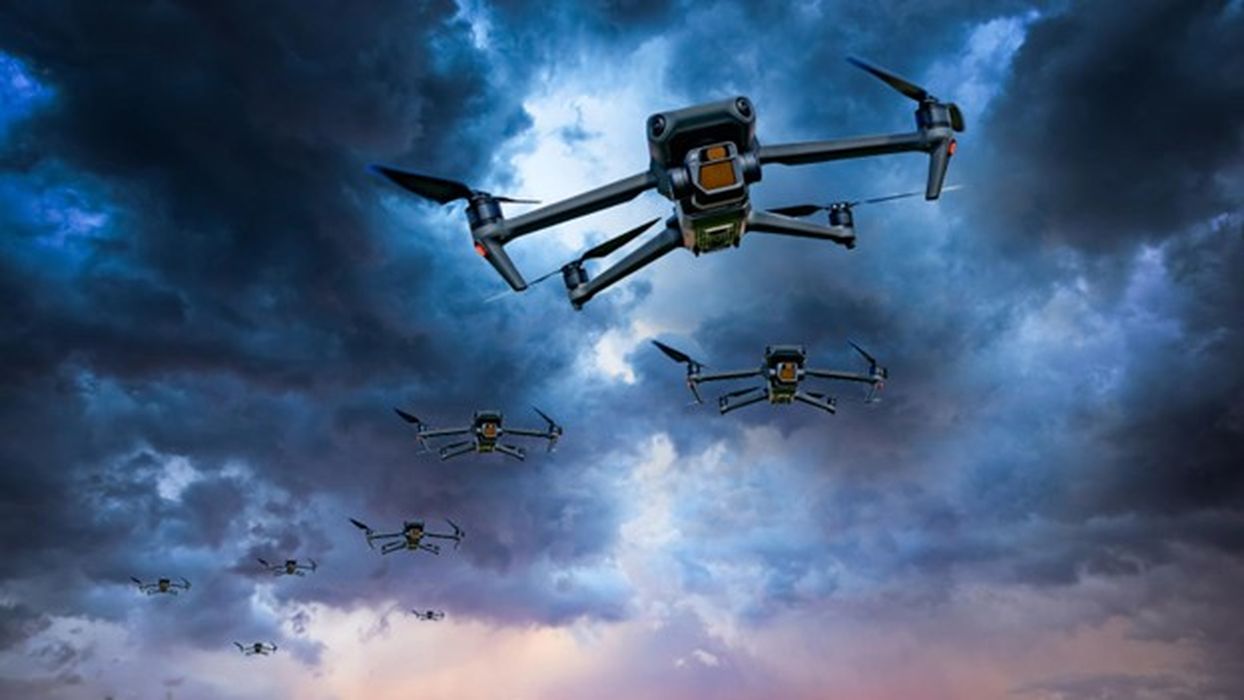
The extended Ukraine conflict has caused NATO members to greatly increase defense budgets, resulting in investments in a wide variety of defense and aerospace technologies often utilizing 3D printing technology. The Ukraine war has benefited the European defense and aerospace companies, with Rheinmetall of Germany becoming a giant global defense contractor almost overnight.
3D Printing Impact
The protracted wars have benefitted defense and aerospace 3DP technology developments. Hopefully, when the larger wars end, that progress will yield a 3D printing peace dividend, meaning new 3D printing innovations will be utilized to benefit society.
Prosthetics and orthotics are a particularly fitting beneficiary, given the growing demand for 3D printed devices for war-wounded individuals. In the prosthetics and orthotics industry, 3D printing offers a faster, less costly, and highly personalized alternative to traditional manufacturing. The technology utilizes advanced Additive Manufacturing (AM) methods such as Selective Laser Sintering (SLS), which uses a high-power laser to fuse small polymer powder particles (typically nylon) layer by layer into a solid structure based on a 3D digital design, and Fused Deposition Modeling (FDM), which builds objects layer by layer by extruding heated thermoplastic material through a nozzle according to a digital design. The 3D printing process for prosthetics and orthotics involves scanning the patient’s specific anatomy, creating a digitally optimized model using CAD or CAM software, 3D printing the device, and performing post-processing or finishing.
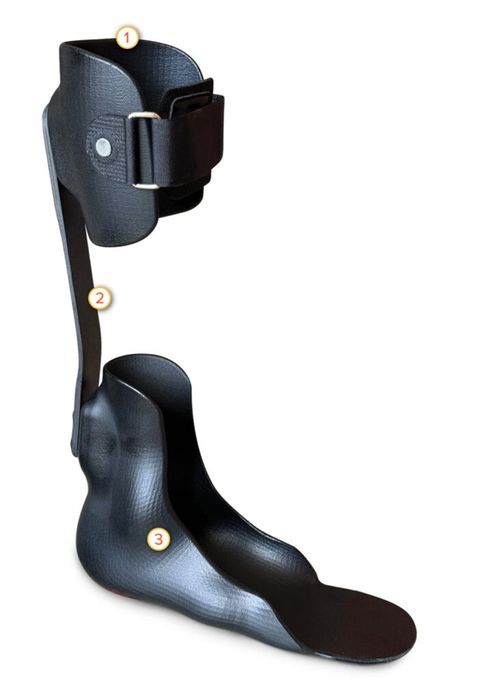
Major players in the Orthotics and Prosthetics (O&P) industry, Ottobock and Hanger, Inc, are increasingly utilizing 3D printing to advance orthotic and prosthetic care. Hanger, Inc has used 3D printing to create customized, high-precision orthotic and prosthetic devices. This includes Cranial Remolding Orthoses (CROs) for infants, Ankle-Foot Orthoses (AFOs) produced through Hanger Fabrication’s dedicated 3D-printed AFO line, the Open Bionics Hero Arm, and specialized prosthetic fingers through its acquisition of Point Designs. These 3D printed solutions improve patient outcomes by enabling personalized, lightweight, and durable designs precisely tailored to each patient’s anatomy.
Ottobock, a global leader in prosthetics and orthotics, has significantly integrated 3D printing into its manufacturing workflow, using digital scanning, CAD modeling, and additive manufacturing to produce customized devices. Central to this is its Individual Fabrication (iFab) program, a digital fabrication workflow that enables O&P professionals to rapidly produce custom devices by capturing a 3D scan, processing and simulating the data on the computer, and transferring the finalized design directly to the 3D printer for fabrication.
The Research & Development Tax Credit
The now permanent Research & Development Tax Credit (R&D) is available for companies developing new or improved products, processes, and/or software.
3D printing can help boost a company’s R&D Tax Credits. Wages for technical employees who create, test, and revise 3D printed prototypes can be included as a percentage of eligible time spent for the R&D Tax Credit. Similarly, when used as a method of improving a process, time spent integrating 3D printing hardware and software counts as an eligible activity. Lastly, when used for modeling and preproduction, the costs of filaments consumed during the development process may also be recovered.
Whether it is used for creating and testing prototypes or for final production, 3D printing is a strong indicator that R&D-eligible activities are taking place. Companies implementing this technology at any point should consider claiming R&D tax Credits.
Conclusion
While the wars have continued, new 3D printed building materials and new prostheses and orthotics applications have developed. The reconstruction of injured humans and buildings would be a welcomed 3D printing peace dividend.