
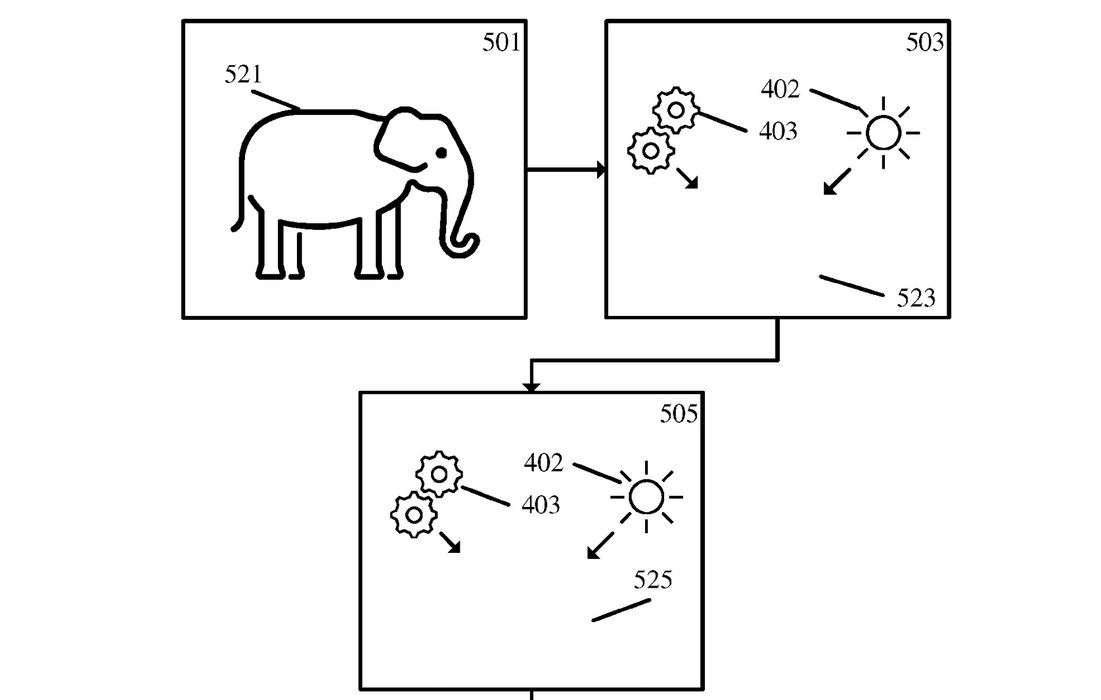
IBM has published a patent application describing an AI decision engine for managing 3D printers.
That is a pretty wide concept, and it is easy to dismiss it as another “AI for everything” concept. But this one is targeting a real additive manufacturing problem: prints often fail or drift because the printer is not operating in a perfectly controlled environment.
US patent application US 2026/0177993 A1, published on June 25, 2026 and assigned to IBM,, describes “managing three-dimensional printers using an artificial intelligence enabled decision engine.” It was filed almost two years ago on December 23, 2024.
The basic concept is to collect data from sensors around and inside a 3D printer, train an AI system on that data, and then generate commands that compensate for changing conditions during a build.
In other words, IBM is describing a kind of adaptive control layer for 3D printing.
The patent separates the problem into external and internal factors.
External factors include conditions such as airflow, humidity and temperature. These are especially relevant for large format 3D printing, construction printing, or any open environment where the printer is not sealed in a climate controlled box.
Internal factors include printer parameters such as nozzle height, nozzle movement, material temperature, print speed, deposition rate and layer height. These are the variables 3D printer operators already know can make the difference between a successful part and a pile of defective material.
The interesting part is that the AI decision engine does not merely record these values. The patent describes predicting the magnitude, direction and duration of external factors, simulating how they may affect the target 3D object, and then issuing “optimal commands” to the printer.
Those commands could include changing nozzle speed, deposition rate, layer height, material temperature, or even pausing or terminating a print. The system can also generate GCODE or other control instructions through an execution module.
One particularly curious feature is the use of a secondary printing layer. IBM describes printing a protective layer around the target object, using a different material, to reduce the effect of external conditions. If airflow is coming from one side, for example, the system could decide to print a temporary barrier on that side.
That is a very unique idea. Large scale extrusion systems already struggle with environmental variability, especially when working with cement, thermoplastics or other materials that respond badly to uneven cooling, drying or airflow. It’s been done before, of course, but not decided on dynamically by the machine itself.
The patent mentions possible machine learning methods such as neural networks, random forests, long short term memory models and reinforcement learning. That gives the filing a wide scope, but it also suggests how much development would be required to turn the idea into a reliable tool.
There is also the question of machine access. Many commercial 3D printers are not designed for deep external control during printing. To work well, this type of system would need access to live sensor data, motion parameters, extrusion control, material temperature and printer state. That could be difficult on closed machines. That is, unless the 3D printer manufacturer licensed this technology from IBM. That’s probably the plan here.
There is also an implication for the growing number of desktop and professional machines already advertising onboard AI. Many of those systems use cameras or sensors to detect spaghetti failures, first layer problems, material runout, lidar based calibration errors, or obvious print defects. That is useful, but it is mostly reactive quality monitoring.
IBM’s patent points at something more ambitious: AI as an active process controller. Instead of simply warning that a print is going wrong, the system would try to understand why conditions are changing and alter the print strategy while the job is underway.
Existing onboard AI systems from companies such as Bambu Lab, Creality, Anycubic and others tend to make printers easier to operate and less prone to obvious failures. IBM’s concept suggests a path toward machines that adapt their actual process parameters based on live environmental and material conditions.
That could eventually put pressure on printer manufacturers to open more of their control stack, or to build deeper AI control directly into firmware and slicers. It also raises a competitive question: will AI in 3D printers remain a convenience feature, or become part of the core process control system?
3D printing has often relied on preplanned toolpaths and operator experience. A system that can observe conditions, predict print effects, and adjust during the job could reduce failures, particularly in large format additive manufacturing and construction printing.
Via Espacenet
