
Charles R. Goulding and Preeti Sulibhavi reveal how extreme heat is accelerating air conditioner replacement cycles, driving investor interest in HVAC companies, and positioning 3D printing as a key manufacturing solution.
The world’s rising temperatures are no longer a distant prediction. They are becoming an annual reality, reshaping everything from public health to financial markets and manufacturing. The latest global heat wave sweeping Europe and North America has once again demonstrated how extreme temperatures ripple through society, increasing demand for cooling systems while accelerating investment in heating, ventilation, and air conditioning (HVAC) companies.
For the 3D printing industry, this is more than another industrial trend. Additive manufacturing is increasingly becoming part of the solution, helping HVAC manufacturers develop products faster, reduce spare-part lead times, and improve maintenance of equipment that millions of people now depend upon.
Europe’s current heat wave illustrates how dangerous these conditions have become. Temperatures exceeding 40°C (104°F) have spread across France, Spain, Italy, Portugal, and neighboring countries. Tragically, French authorities reported that more than forty people have already died while attempting to cool off by jumping into rivers, lakes, and other bodies of water during the extreme heat. Emergency responders have repeatedly warned that cold-water shock, strong currents, and hazardous swimming conditions can quickly turn a desperate attempt to escape the heat into a fatal accident.
The economic effects of these heat waves are becoming equally significant.
A June 26, 2026, Financial Times article by Ramsay Hodgson describes how investors are increasingly viewing air conditioning manufacturers as long-term growth opportunities rather than simply cyclical industrial companies. As Europe experiences hotter summers and historically low air-conditioning adoption begins to change, companies including Carrier Global and Daikin Industries have attracted renewed investor attention. Commercial cooling demand is also expanding alongside the rapid construction of AI data centers, creating another structural growth driver for HVAC manufacturers. Financial analysts increasingly see climate adaptation, energy efficiency regulations, and data-center expansion combining to produce sustained demand for cooling equipment.
This investment story reflects a broader reality inside the HVAC industry.
Historically, many building owners postponed replacing aging air-conditioning systems until catastrophic failure occurred. Today, prolonged periods of extreme heat are placing much greater stress on compressors, condenser fans, heat exchangers, electronic controls, and airflow systems. Equipment that might have remained operational for fifteen to twenty years may now require major repairs or replacement earlier because of heavier seasonal usage.
That shift places enormous pressure on manufacturers and service organizations to produce replacement parts quickly while minimizing inventory costs.
This is precisely where additive manufacturing excels.
Unlike traditional injection molding or casting, 3D printing allows manufacturers to produce low-volume replacement components without expensive tooling. HVAC systems often contain customized plastic brackets, airflow guides, sensor housings, electrical covers, mounting fixtures, fan shrouds, wire retainers, and maintenance tools that may only be required in relatively small quantities. Rather than waiting weeks or months for conventional manufacturing, these parts can often be printed within hours or days.
Rapid prototyping also enables HVAC engineers to redesign airflow channels, optimize duct geometries, improve condensate management, and validate new component designs before committing to production tooling. For manufacturers facing surging demand during heat waves, shortening development cycles can become a competitive advantage.
Several of the industry’s largest companies are already making substantial use of additive manufacturing.
Trane Technologies
Trane has received federal funding from the US government for innovating heat pump technology. In 2024, Trane received a grant from an initiative spearheaded by Oak Ridge National Laboratory, Purdue University and Texas A&M. The company’s latest heat pump technology for commercial buildings combines heating and cooling systems into one, high-efficiency electric solution. Its residential cold-climate heat pump surpassed the DOE requirements for high-efficiency heating in freezing temperatures.
As AI and digital demand continues to rise, data centers are at the center of this development. Higher-density computing environments, evolving thermal requirements and growing pressure to improve energy efficiency are reshaping how digital infrastructure is designed, built and operated. That is one reason Trane Technologies is a bronze member of the Open Compute Project (OCP), a collaborative community focused on advancing the technologies and approaches shaping the future of compute infrastructure. Through engagement with the OCP Community, Trane Technologies can contribute its expertise in data center cooling while helping shape the next generation of digital infrastructure architecture. We have been keeping a close eye on how 3D printing is re-shaping cooling technology that will enable AI data centers to operate.
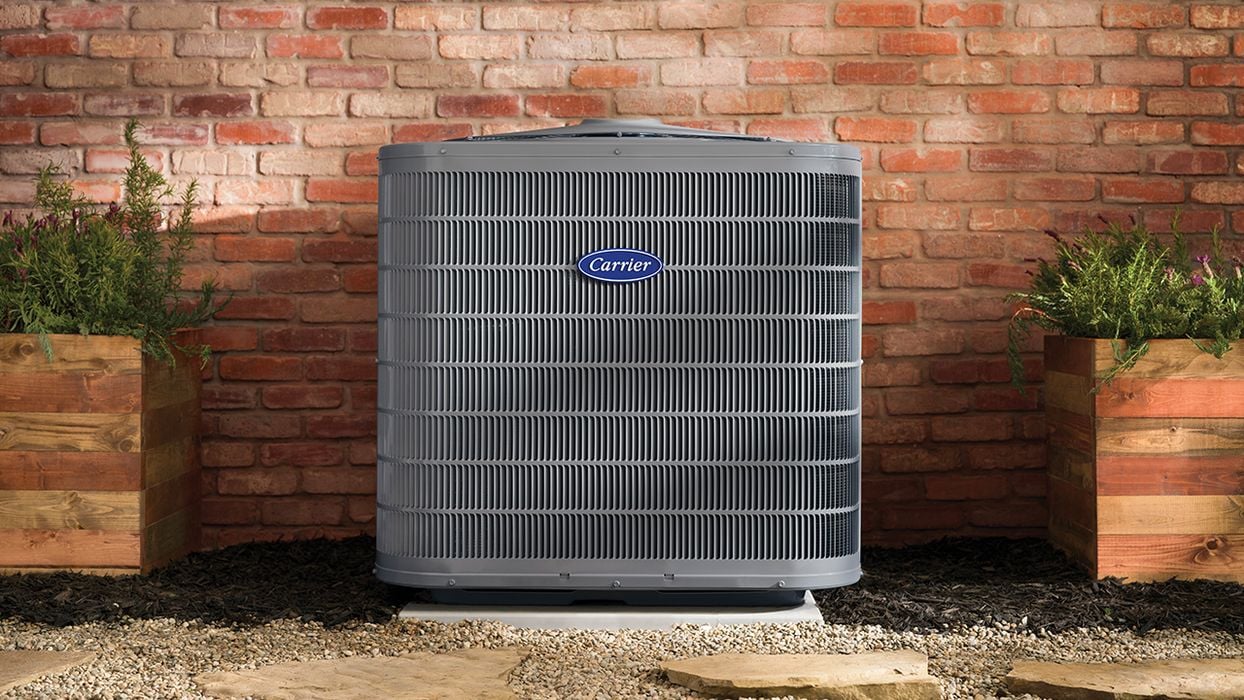
Carrier Global
Carrier Global has similarly expanded its use of additive manufacturing across product development and manufacturing operations. The company employs industrial 3D printing to accelerate prototype development for residential and commercial HVAC systems, allowing engineers to iterate fan housings, airflow components, mounting hardware, and enclosure designs before production. Carrier has also adopted printed manufacturing aids, assembly fixtures, and ergonomic production tools that reduce assembly time while improving consistency on production lines. In service operations, additive manufacturing increasingly supports low-volume replacement parts where conventional tooling would be economically impractical, helping shorten maintenance lead times for legacy equipment.
Johnson Controls
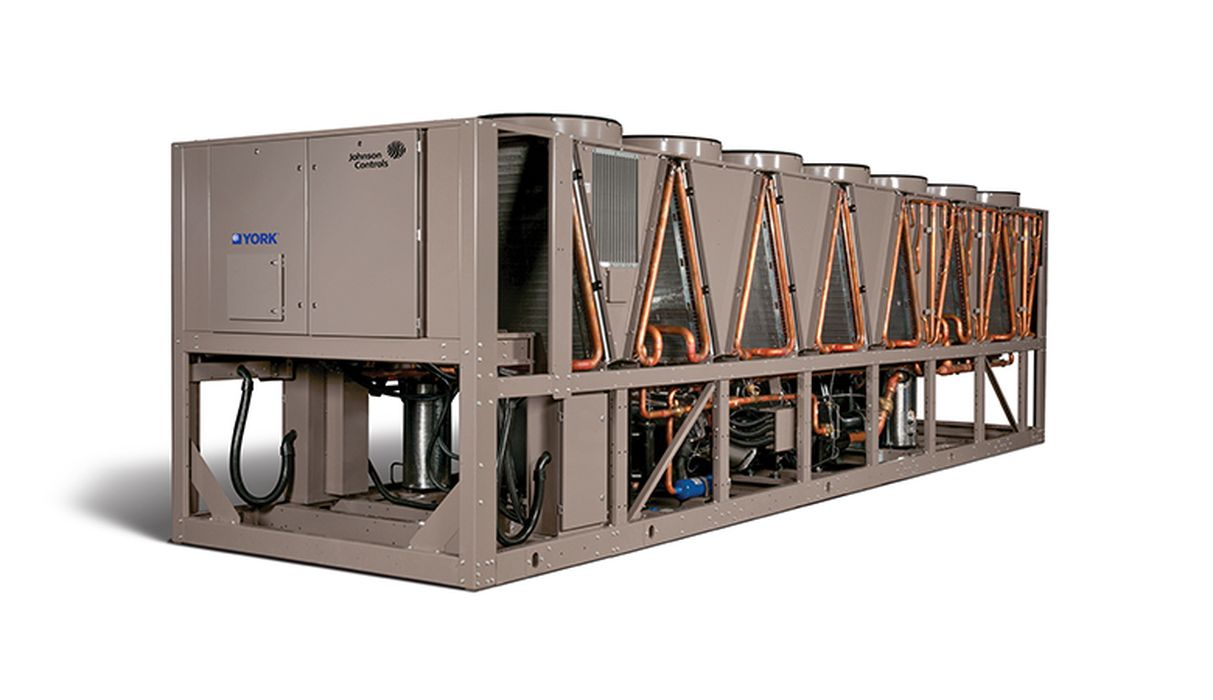
Johnson Controls has also incorporated additive manufacturing throughout its engineering and manufacturing organizations. Engineers regularly use 3D printing to produce functional prototypes for YORK commercial HVAC equipment, enabling faster validation of mechanical designs before tooling investments. The company also manufactures custom assembly fixtures and inspection gauges that improve production efficiency while reducing manufacturing costs. Additionally, additive manufacturing supports replacement components for building automation systems and specialized mechanical assemblies where small production volumes favor digital manufacturing over conventional methods.
Madison Air
Providing both commercial and residential air quality solutions, Madison Air promotes a “Return on Air” concept, reframing HVAC not as a cost center but as an economic driver. The idea is simple: better air systems reduce energy consumption, improve productivity, and extend equipment life. We covered how Madison Air recently went public previously on Fabbaloo.
This framing is more than marketing. It aligns with a broader shift in how capital is allocated. Energy efficiency is now measurable, financeable, and increasingly regulated. That makes HVAC innovation investable in a way it wasn’t a decade ago.
While Madison Air itself has not publicly detailed specific 3D printing deployments, its brand portfolio operates in segments where these applications are becoming standard practice. For example, data center cooling systems, once again, and advanced ventilation products are prime candidates for additive-enabled design optimization.
3D printing is being researched as a tool to develop high-performance, energy-efficient, sustainable solutions for high-efficiency air cooling solutions for AI data centers. These 3D printing solutions offer non-water-based cooling alternatives. HVAC companies are paying attention.
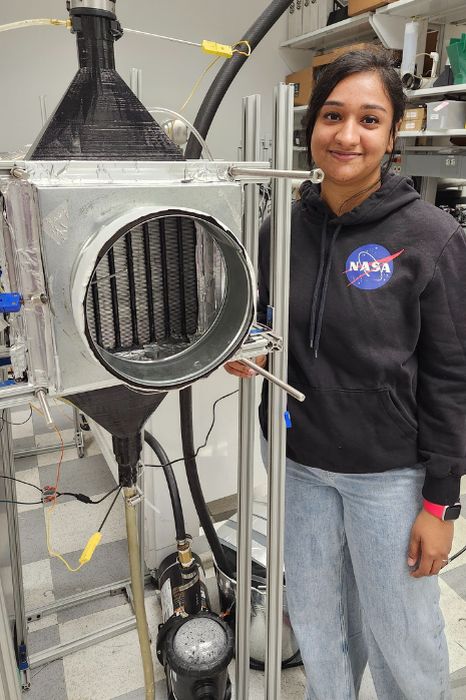
Using an additive manufacturing technique called Embedded Fiber Composite Additive Manufacturing, which utilizes a modified Fused Filament Fabrication (FFF) process, the printer operates with two print heads. One head deposits the polymer to form the channel walls, while the other embeds metallic wires into the polymer structure as it is being built. The final result is a heat exchanger with metallic fins that has microchannels made out of polymer materials. The arrangement, referred to as a cross-media heat exchanger, provides direct heat exchange between the hot and cold fluids with the help of protruding fins and without any leakage – an effect that would be nearly impossible to achieve without a 3D printer. Below is an example from the Center for Environmental Energy Engineering (CEEE).
Comfort Systems USA
Increasingly, communities are turning to firms with integrated planning, engineering and implementation services to provide customized approaches to all complex building HVAC needs. Comfort Systems USA provides expertise in mechanical and electrical services, process piping, modular construction, controls, energy efficiency and countless other nonresidential building renovation and service needs. Their national presence allows them to meet these objectives and maintain safe and efficient facilities across the country.
Daikin Global
Daikin Industries has become one of the most active HVAC manufacturers embracing industrial 3D printing. Its Daikin Applied division has publicly documented the use of Stratasys F770 systems to manufacture custom panel spacers for commercial HVAC equipment. Previously, these spacers required approximately six weeks using injection molding. By switching to in-house additive manufacturing, production time fell to only one or two days while improving dimensional consistency and reducing labor requirements.
Daikin has also partnered with the University of Maryland’s Center for Environmental Energy Engineering through the Daikin Energy Innovation Laboratory, where researchers are using additive manufacturing to investigate advanced HVAC heat exchangers, thermal energy storage systems, and novel cooling structures that would be difficult or impossible to manufacture conventionally. These projects explore complex internal geometries designed to improve heat transfer efficiency while reducing material usage.
In addition, Daikin engineers continue using additive manufacturing extensively for prototype development, manufacturing fixtures, and customized production tooling throughout product development, allowing engineering teams to validate new commercial HVAC designs much more rapidly than traditional fabrication methods.

The Research and Development Tax Credit
The growing use of 3D printing in HVAC may also create a federal tax opportunity for companies that are using additive manufacturing as part of genuine product or process development. Under IRC § 41, eligibility for the federal research and development tax credit depends on whether the work satisfies the qualified research requirements; in general, the activities must involve domestic research or experimental expenditures under § 174A, be technological in nature, seek to resolve uncertainty in developing or improving a business component, and include a process of experimentation. For HVAC manufacturers, that framework can align well with additive manufacturing projects where engineers are testing new or improved heat exchangers, duct components, compressor or fan housings, thermal-management parts, airflow components, lightweight brackets, specialized materials, tooling, prototypes, or production methods.
A qualifying “business component” can include not only a product held for sale, but also a process, technique, formula, software, or invention used in the taxpayer’s business, and production processes generally must be evaluated separately from the products they help manufacture. In practical terms, 3D printing can help companies iterate faster, test multiple design alternatives, model airflow or heat-transfer performance, validate material choices, and refine manufacturing approaches before committing to expensive tooling. Those activities may support the “process of experimentation” requirement when they are designed to evaluate alternatives and resolve technical uncertainty through engineering, modeling, simulation, or systematic testing, with substantially all the relevant research activities meeting that experimental standard.
Companies should be careful, however, not to assume that every 3D printed part or prototype automatically qualifies. Routine quality control, reverse engineering or duplication, customer-specific adaptation, foreign research, funded research, and certain activities after commercial production begins may be excluded. Proper documentation of technical uncertainty, alternatives evaluated, testing performed, personnel involved, and costs incurred is therefore essential.
Below is a table that presents recent investments that three of the global HVAC companies described above have made in research and development and their human capital resources.
| LEADING HVAC COMPANIES | ||||
| Book per Capita R&D Expenses | ||||
| Company | Year | R&D Expenses | Number of Employees | R&D Expenses per Employee |
| Daikin Industries | 2025 | $ 835,407,000 | 104,095 | $ 8,025 |
| 2024 | $ 754,118,000 | 103,544 | $ 7,283 | |
| 2023 | $ 629,200,000 | 98,162 | $ 6,410 | |
| 2022 | $ 501,935,000 | 96,337 | $ 5,210 | |
| Carrier Global | 2025 | $ 625,000,000 | 47,000 | $ 13,298 |
| 2024 | $ 686,000,000 | 48,000 | $ 14,292 | |
| 2023 | $ 493,000,000 | 53,000 | $ 9,302 | |
| 2022 | $ 539,000,000 | 52,000 | $ 10,365 | |
| Johnson Controls Inc | 2025 | $ 273,000,000 | 87,000 | $ 3,138 |
| 2024 | $ 267,000,000 | 94,000 | $ 2,840 | |
| 2023 | $ 251,000,000 | 100,000 | $ 2,510 | |
| 2022 | $ 295,000,000 | 102,000 | $ 2,892 | |
These examples illustrate an important evolution.
For years, much of additive manufacturing’s value proposition focused on rapid prototyping. Today, the technology increasingly supports production tooling, aftermarket spare parts, digital inventories, and on-demand manufacturing. As HVAC replacement cycles accelerate under growing climate pressures, these applications become increasingly valuable.
Instead of maintaining warehouses filled with thousands of rarely ordered metal and plastic components, manufacturers can increasingly store qualified digital part files and produce components when demand arises. This reduces inventory costs while improving customer service during periods of exceptionally high repair activity, precisely the scenario created by prolonged heat waves.
Riding the Wave…
Extreme weather has become one of the defining industrial challenges of this decade. Investors are recognizing the opportunity in companies that help societies adapt to hotter climates. HVAC manufacturers are expanding production, accelerating innovation, and modernizing supply chains to meet growing demand.
For the additive manufacturing industry, this presents an equally important opportunity. 3D printing is helping HVAC companies develop products faster, manufacture replacement parts more efficiently, and respond more quickly when cooling systems fail during the hottest days of the year.
Climate change affects all of us. As we prepare for a warmer future, let’s not forget one of the simplest ways to stay comfortable this summer: repair and maintain our air conditioners before they fail. Increasingly, 3D printing will be one of the technologies helping keep those systems running when we need them most.