Charles R. Goulding and Kate Esposito reveal how 3D printing transformed an abstract mathematical mystery into a tangible breakthrough, completing one of Schrödinger’s unfinished scientific puzzles.
Introduction: Additive Manufacturing Solves a Century-Old Problem
In the 1920s, theoretical physicist Erwin Schrödinger wished to understand how humans perceive color. He theorized that the full color spectrum existed not on a flat grid, but instead in a curved Riemannian space. Working off of this theory, Schrödinger defined hue, saturation, and lightness as three factors that alter how colors are viewed. He then created a distance metric to measure how far each of these attributes are from a neutral axis, or the gradient of grays from black to white. Despite these advancements, Schrödinger left a missing piece in his theory because he was unable to mathematically define the neutral axis. For over 100 years, this gap went unaddressed until researchers at the Los Alamos National Laboratory (LANL) defined the neutral axis with the help of additive manufacturing. By 3D-printing models to help visualize the complicated geometry behind the theory, researchers at the LANL were able to finally complete Schrödinger’s theory.
The Math Behind the Mystery
The team at the LANL, led by scientist Roxana Bujack, used geometry to explain mathematically how humans perceive hue, saturation, and lightness. They used a color metric, which is a computative way of measuring the distance between two colors based on how similar they look. Following Schrödinger’s idea, the scientists modeled the metric as a curved three-dimensional space as opposed to a flat plane. However, the scientists strayed from Schrödinger’s theory after finding that the Riemannian framework could not define the neutral axis or explain known visual effects. Instead, they extended the theory to a non-Riemannian geometric framework, thus allowing them more flexibility to derive the neutral axis from the color metric.
With the neutral axis successfully derived, the scientists at the LANL were able to use it to correctly predict several real-world phenomena surrounding perception. For instance, they explained the Bezold-Brücke Effect, which is when a color’s perceived hue changes as its luminance increases or decreases even if its spectral composition remains exactly the same. Additionally, they used the axis to understand why very large color differences become more difficult for people to distinguish. These successful predictions provide substantial evidence that the mathematical definition created by the scientists matches how humans perceive color.
This breakthrough was also shaped by knowledge of the physical way human eyes perceive colors. The eye consists of three cones with specific sensitivities for red, blue, and green respectively. The existence of these three cones make the eye trichromatic, allowing color to be perceived in three-dimensional color spaces. Thanks to the work done by Roxana Bujack and her team, scientists now understand how photoreceptors interpret color in the eye, vital information that can be used to learn more about the entire human nervous system.
How 3D Printing Offered a Perfect Assist
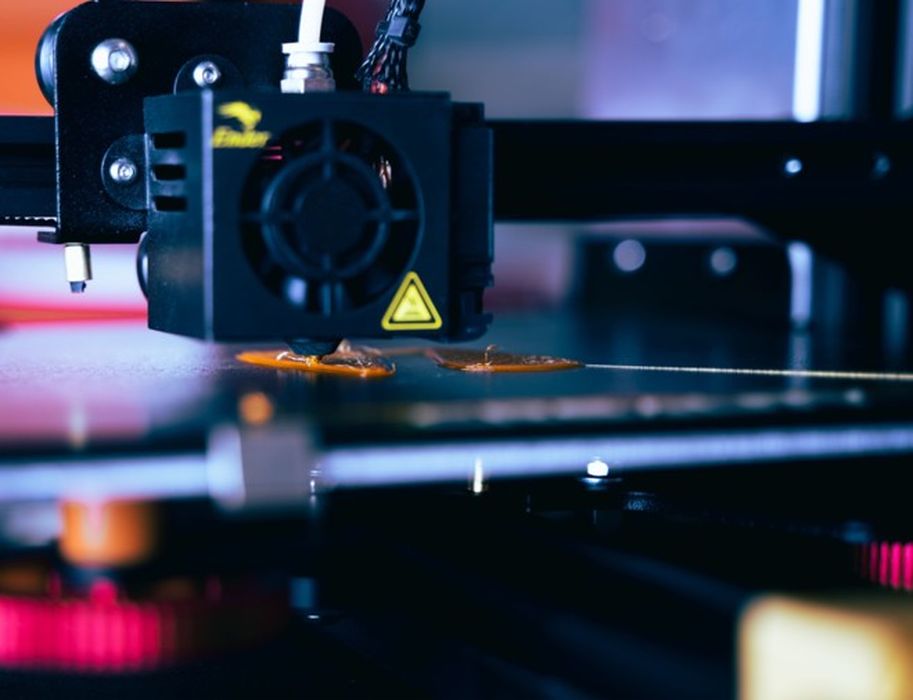
After the researchers derived the neutral axis, they wished to visualize the curved color space that formed the backbone of their findings. Using computer software, they converted the mathematical surface into a digital three-dimensional model. However, the color space is a complex, curved shape that is very difficult to understand simply by looking at a computer screen. Because of this, the team at LANL turned to additive manufacturing to print a highly accurate physical model of the space.
By creating a 3D model, the researchers were able to better understand the overall curvature of the space and see how different regions connect and interact. Furthermore, the model was specifically designed with an interior space for the neutral axis. Having the axis physically embedded in the color space allowed the scientists to ensure that the axis passed through the expected sequence of neutral colors from black to gray to white, remained centered relative to the surrounding geometry, and had a path consistent with the mathematical predictions.
While computer calculations confirmed the mathematics were correct, the 3D printed physical model made the relationship between the neutral axis and the color space much easier to visually inspect. Researchers were able to mark important parts on the model representing different colors and examine how distances and directions changed throughout the space. This helped them understand why the geometric calculations predicted unanticipated visual effects such as changes in perceived hue with brightness. Without the use of additive manufacturing to create a tangible model, the scientists would likely still have questions regarding the instances in which the expected behavior of light does not match the perceived visual phenomena.
R&D Tax Credit Analysis Using LANL Schrödinger Color 3D Printing
The fact pattern – Los Alamos National Laboratory (LANL) using additive manufacturing/3D printing to help solve a long-standing gap in Schrödinger’s color theory by deriving and validating the “neutral axis” in color space – illustrates how advanced modeling, prototyping, and validation work can map to the federal R&D credit under IRC § 41. Qualified research generally must be technological in nature, intended to develop a new or improved business component, and involve a process of experimentation to resolve uncertainty (capability, method, or appropriate design), with the work directed toward improvements in function, performance, reliability, or quality. In the article, researchers converted the mathematical surface into a digital three-dimensional model and then used additive manufacturing to print a highly accurate physical model of the curved color space. The printed model enabled closer inspection of the space’s overall curvature and how regions connect and interact, and it was designed with an interior space for the neutral axis so scientists could verify that it passed through the expected neutral sequence from black to gray to white, stayed centered, and matched mathematical predictions. Those steps – modeling/simulation, physical prototyping, and validation against predicted outcomes – are the types of iterative evaluation that can demonstrate a “process of experimentation” and a credit-eligible narrative when performed to eliminate technical uncertainty.
Companies can apply this same framework when 3D printing is used as an enabling tool within a broader technical development effort (rather than as routine production). For example, a taxpayer developing improved AI image-processing methods, display color reproduction, or medical/color-vision solutions—application areas the article links to the underlying breakthrough – should define the relevant “business component” at the product/process/software level and document the uncertainties addressed, alternatives evaluated, and tests performed. If the 3D printed models/prototypes are used to evaluate design or algorithmic hypotheses (e.g., to verify predicted behavior in a complex geometry, as LANL did when checking whether the neutral axis behaved as expected), associated qualified research expenses may include technical wages for employees creating/testing/revising prototypes, prototype/material (e.g., filament) costs consumed during development, and time integrating 3D printing hardware/software for process improvement – provided the costs have a documented nexus to qualified research activities.
Looking to the Future
Completing Schrödinger’s color theory gives scientists a much more accurate mathematical description of how humans perceive color. This breakthrough may have several practical applications for the future in a wide range of fields, including the artificial intelligence and medical sectors. For instance, a more accurate color space could help AI systems improve color correction, photo enhancement, object recognition, and image compression. Similarly, cell phones, televisions, and computer monitors could use improved color models to reproduce colors that better match what the human eye sees. Furthermore, better understanding color perception may help researchers study color vision deficiencies and develop improved diagnostic tests or visual aids to more easily diagnose vision-related ailments.
Conclusion
By developing a solution to Schrödinger’s century-old color theory, scientists at the Los Alamos National Laboratory have made an important advancement in both mathematics and vision science. The creation of a mathematical definition of the neutral axis has led to a much better understanding of how humans perceive color. Additive manufacturing and 3D printed models played a crucial role by allowing scientists to visualize the complex geometry, examine relationships within the color space, and understand previously inexplicable phenomena. This breakthrough has the potential to improve technologies across a wide range of fields while also opening new possibilities for future research. The future is bright, and not just because scientists now know how we perceive it.