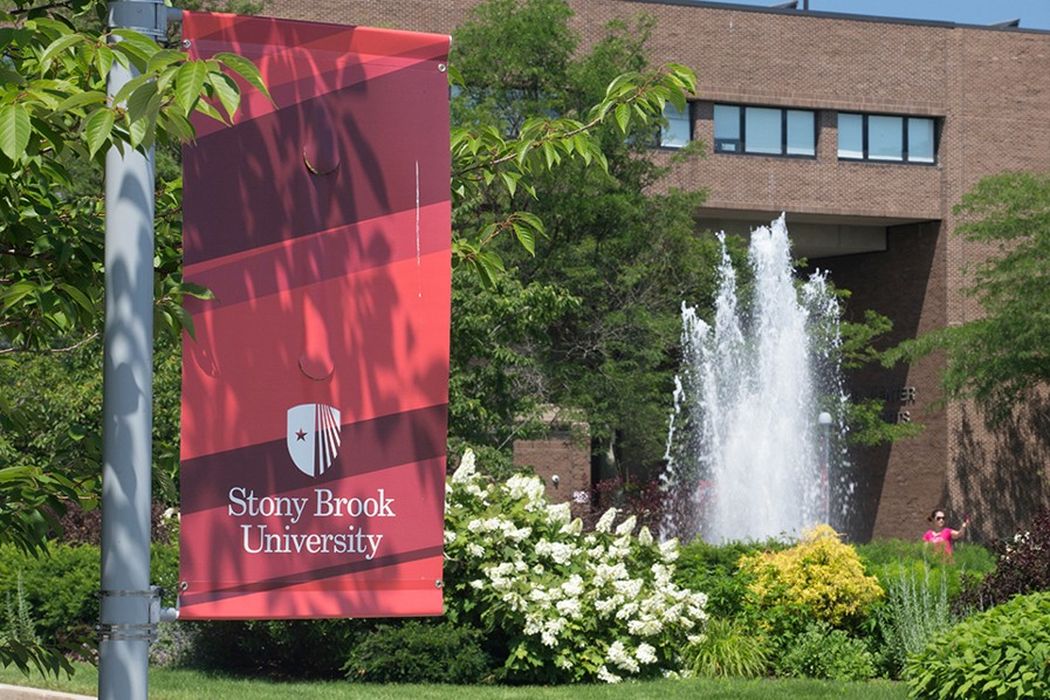
Charles Goulding and Ari Willick discuss how Stony Brook’s $300 million quantum investment could accelerate the growth of quantum computing and advanced manufacturing in the Northeast.
Quantum computing is no longer as small as it sounds. New York State has announced a US$300 million investment to establish the Quantum Research and Innovation Hub at Stony Brook University, creating what the university describes as a premier center for quantum science with a particular emphasis on developing a quantum internet.
Our team at R&D Tax Savers includes five Stony Brook University graduates, including Charles Goulding. Our firm is also the New York Stony Brook MEP R&D Tax Credit resource.
What is a “quantum internet”?
To understand what a quantum internet is, it helps to start with the fundamental unit of quantum information: the qubit. In today’s internet, information is encoded in classical bits, which can only exist in one of two states, either 0 or 1. A qubit, however, follows the laws of quantum mechanics and can exist in a combination of both states at the same time, a property known as superposition. Qubits can also become entangled, meaning their quantum states remain correlated even when separated by large distances. These unique properties enable entirely new ways of processing and transmitting information that are impossible with classical networks. You can read our recent article [insert link] to learn more.
A quantum internet is a communications network designed to transmit and distribute qubits rather than classical bits while preserving their fragile quantum properties. Instead of simply exchanging data, it enables distant quantum devices to share entanglement and quantum information. In practice, a quantum internet could allow multiple quantum computers to work together as a single, more powerful system while maintaining the delicate quantum states needed for complex computations.

Implications in Industry
New York’s US$300 million investment demonstrates that quantum technologies are becoming a strategic priority with the potential to influence multiple industries. Investments of this scale reflect confidence that quantum computing and quantum networking will play an increasingly important role in scientific research, economic development, and future industrial innovation. Rather than supporting a single research project, the funding establishes infrastructure that can accelerate collaboration between universities, national laboratories, and industry as quantum technologies continue to mature.
This investment could increase the use of additive manufacturing in producing components needed for quantum research infrastructure. As we previously explored in our coverage of the University of Chicago’s quantum initiatives, additive manufacturing can be used to produce specialized components that have historically been an obstacle in quantum research. As investment in quantum research grows, demand for these highly customized, precision-manufactured parts could increase, creating new opportunities for additive manufacturing companies that support research and advanced technology development.
While widespread commercial applications of quantum computing are still years away, continued investment in quantum infrastructure could strengthen the relationship between the two fields. As quantum research expands, additive manufacturing is likely to remain an important enabling technology, providing the rapid prototyping and specialized manufacturing capabilities needed to develop increasingly sophisticated quantum devices and experimental systems.
Brookhaven Gives Stony Brook a Head Start
Stony Brook enters this initiative with an important advantage through its close relationship with Brookhaven National Laboratory. Brookhaven is managed by Brookhaven Science Associates, a partnership between Stony Brook University and Battelle. This relationship provides researchers with access to one of the Department of Energy’s leading laboratories for quantum information science, quantum materials, advanced computing, and related research. Brookhaven researchers have already demonstrated a three-node quantum network spanning 140 kilometers, the largest network in the United States, and continue to expand.

The partnership illustrates how universities and national laboratories can accelerate emerging technologies. Stony Brook contributes faculty expertise and academic research, while Brookhaven provides specialized facilities and scientific resources that support long-term innovation. Together, they are building the scientific foundation needed to make quantum networking a reality.
This collaboration also helps explain why New York selected Stony Brook for such a significant investment. Developing a quantum internet requires expertise in physics, engineering, computing, and communications, along with access to advanced research infrastructure. Few institutions bring those capabilities together as effectively as Stony Brook and Brookhaven.
For manufacturers, including companies using industrial 3D printing, this growing ecosystem could eventually support more secure digital collaboration, distributed computational resources, and increasingly sophisticated engineering tools.
Building a Regional Quantum Corridor
The Quantum Research and Innovation Hub at Stony Brook is also part of a broader regional effort to develop quantum technologies through collaboration among universities, national laboratories, and industry. Through the National Science Foundation-supported SCY-QNet project, Stony Brook University is working with Yale University, Columbia University, and Brookhaven National Laboratory to develop a metropolitan-scale quantum network connecting research institutions.
The Stony Brook-Yale relationship is becoming increasingly important as academic quantum research moves closer to commercial deployment. Discoveries emerging from Yale’s laboratories have helped create new quantum companies and industry partnerships.
This connection was recently highlighted through D-Wave Quantum’s participation in an NSF-funded quantum research initiative. D-Wave was selected to receive a grant through the NSF National Quantum Virtual Laboratory program to support the ERASE project, a Yale-led effort focused on advancing technologies needed for fault-tolerant quantum computing. The project brings together university researchers and industry partners to develop next-generation quantum hardware, software, and error-correction approaches.
While Stony Brook’s focus is on building quantum networking capabilities through initiatives such as SCY-QNet, partnerships involving Yale, Brookhaven, and companies such as D-Wave show how regional research clusters can accelerate progress across the broader quantum technology landscape.
IRC § 41 R&D Credit Considerations for Quantum Internet Development
New York State’s US$300 million investment to establish a Quantum Research and Innovation Hub at Stony Brook University provides useful factual context for companies evaluating claims for the IRC § 41 Research and Development tax credit. The hub’s focus on developing a quantum internet highlights a field with significant technical uncertainty and experimentation potential. As a caveat, state universities are public institutions and generally are not for-profit entities, so the federal R&D credit may not be available at the institution level. However, companies developing quantum internet technology -including businesses working on secure communications, quantum networking hardware, computing systems, additive manufacturing, or precision-manufactured components—may qualify if their own activities satisfy IRC § 41.
To qualify, research generally must involve domestic research or experimental expenditures under §174A, seek information that is technological in nature, be intended to develop a new or improved business component, and involve substantially all activities as elements of a process of experimentation. Potential qualified research expenses include employee wages for qualified services, supplies, computer-use costs, and certain contract research expenses.
For early-stage quantum companies, the qualified small business payroll tax election may also be valuable. If eligible—generally, under US$5 million in current-year gross receipts and no gross receipts before the five-tax-year period ending with the current year—a company may elect to apply up to US$500,000 of R&D credits against payroll taxes for tax years after 2022, with the election made on Form 6765 and claimed on Form 8974 with the applicable employment tax return.
Conclusion
Stony Brook University’s new Quantum Research and Innovation Hub represents more than a major academic investment; it reflects the growing recognition that quantum technologies are moving from theoretical research toward practical implementation. By combining state funding with Brookhaven National Laboratory’s research capabilities and collaborations such as SCY-QNet, New York is positioning itself as a leading center for quantum networking innovation.
For the additive manufacturing industry, the implications extend beyond supplying specialized hardware for research laboratories. As quantum computing systems become more sophisticated and interconnected, demand for highly customized components, rapid prototyping, advanced materials, and precision manufacturing is likely to grow. While a commercially viable quantum internet remains years away, today’s investments are laying the foundation for advances in manufacturing, secure communications, and computing that could reshape multiple industries.