
A new research study explores binocular vision for measuring weld features during 316L wire arc additive manufacturing.
Weld control is one of the main problems in wire arc additive manufacturing, or WAAM. The process can deposit metal far faster and at far larger scales than many powder bed fusion systems, yet its bead geometry can vary with heat input, wire feed, travel speed, arc behavior, shielding, and the changing thermal condition of the part.
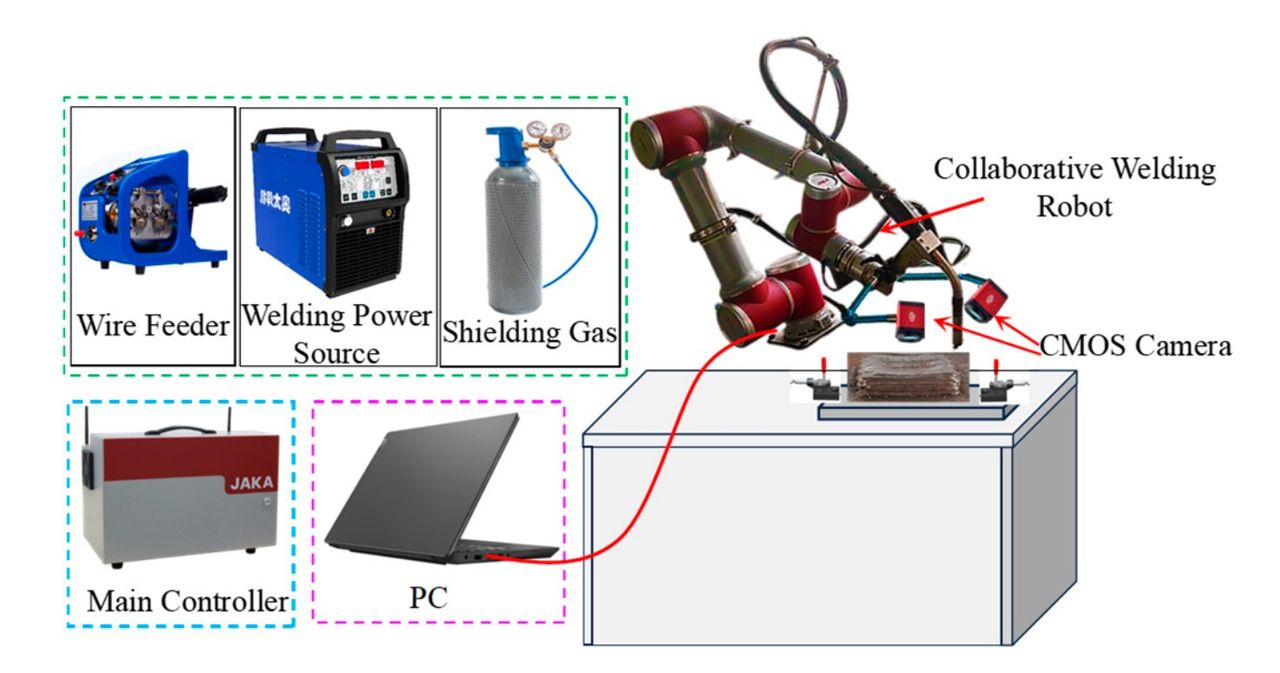
The paper, titled Binocular Vision-Based Image Extraction and Feature Analysis of Weld Beads in 316L Wire Arc Additive Manufacturing, focuses on using two cameras to extract images and analyze features of deposited 316L stainless steel beads. Stereo imaging can provide depth information that a conventional single camera may struggle to infer reliably.
Why The Bead Matters
WAAM does not simply need to put down metal. It needs to place a bead with sufficiently consistent width, height, profile, and overlap that the next pass and next layer can be planned correctly. A small geometric deviation can accumulate across a tall deposition, producing an oversized wall, an uneven surface, poor interlayer bonding conditions, or a part that requires far more machining than expected.
That is especially relevant for 316L, a popular corrosion resistant stainless steel variant. It is a pretty familiar alloy for AM operators, but a familiar material does not eliminate process control challenges. The thermal history of a WAAM build can still influence bead shape, distortion, microstructure, and ultimately the amount of downstream inspection and finishing required.
Binocular vision is potentially useful because it creates a method to observe a three dimensional weld feature without physically contacting a hot, moving deposition. A likely goal is to turn captured bead geometry into usable measurements, rather than relying only on operator observation or occasional post build scanning.
From Images To Process Feedback
The important question is what happens after data collection. If the system only records images for later analysis, it could still support process development and quality documentation. However, the bigger opportunity is closed loop control: detect a bead departing from its expected geometry, then adjust travel speed, wire feed, arc parameters, torch position, or layer planning before the error becomes expensive.
That could be a great idea for WAAM, where the value often depends on reducing waste and shortening lead times for large metal components. The process can be attractive for near net shape aerospace, maritime, energy, and industrial tooling work, but those users also expect traceability. Automated geometric evidence generated during a build could become as valuable as the deposition itself.
But there are issues, of course. Vision systems in arc welding face a hostile environment. Arc brightness, spatter, fumes, changing surface reflectivity, heat shimmer, camera contamination, and occlusion by the torch can all mess with the images. A measurement approach that works on carefully prepared test beads must also prove that it remains stable on long, complex, multi axis production builds.
The Path To Industrial Use
There is also a software challenge. Detecting a bead is only the first step; manufacturers need robust calibration, reliable coordinate registration, acceptable compute latency, and clear rules for deciding when a deviation warrants intervention. Otherwise, the system risks becoming another monitoring dashboard that operators must interpret manually.
This research hints at an interesting future for large format metal additive: better sensing around the deposition event itself. WAAM will not become widely used merely because it is fast. It will become a lot more compelling when it can demonstrate that each deposited layer was measured, understood, and, where necessary, corrected.
Via Micromachines
