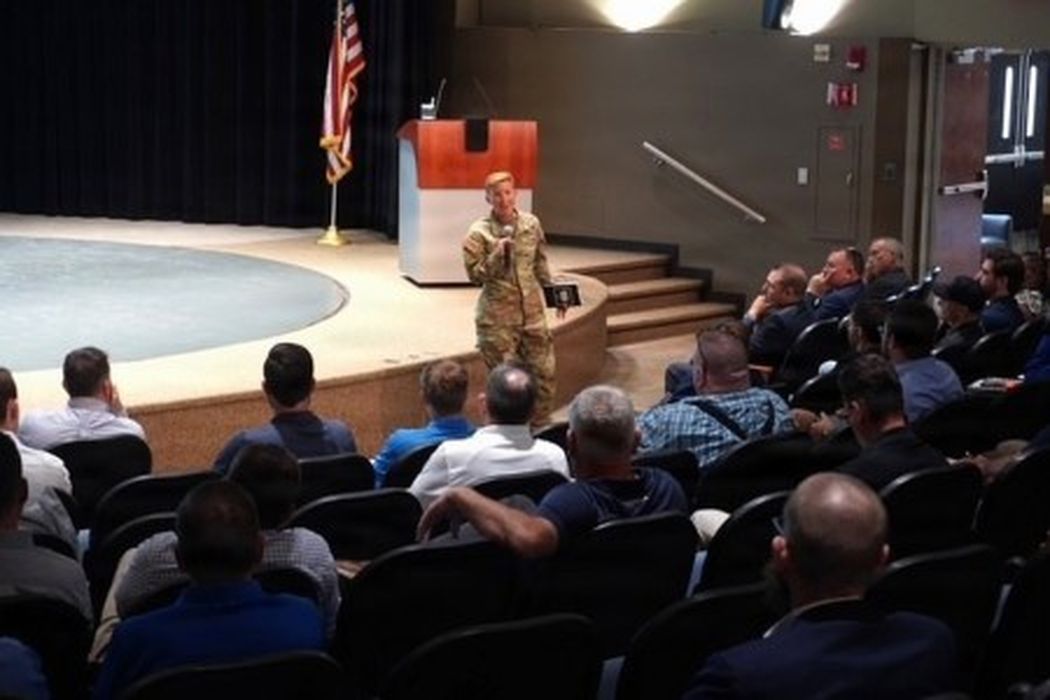
and Armaments Command, Army Materiel Command [Source: TIGER Hackathon Drives Innovation for Abrams AGT1500 Engine Supply Chain]
Charles R. Goulding and Preeti Sulibhavi discuss how recent innovations from Honeywell, Pratt & Whitney, and the Army are creating new pathways to overcome legacy engine part shortages through advanced manufacturing.
The U.S. Army’s newly announced initiative to qualify alternative suppliers for 166 hard-to-source Abrams’ tank components represents far more than a traditional supply chain exercise. It signals the beginning of a broader transformation in how military systems can be sustained through digital engineering, additive manufacturing, and generative design.
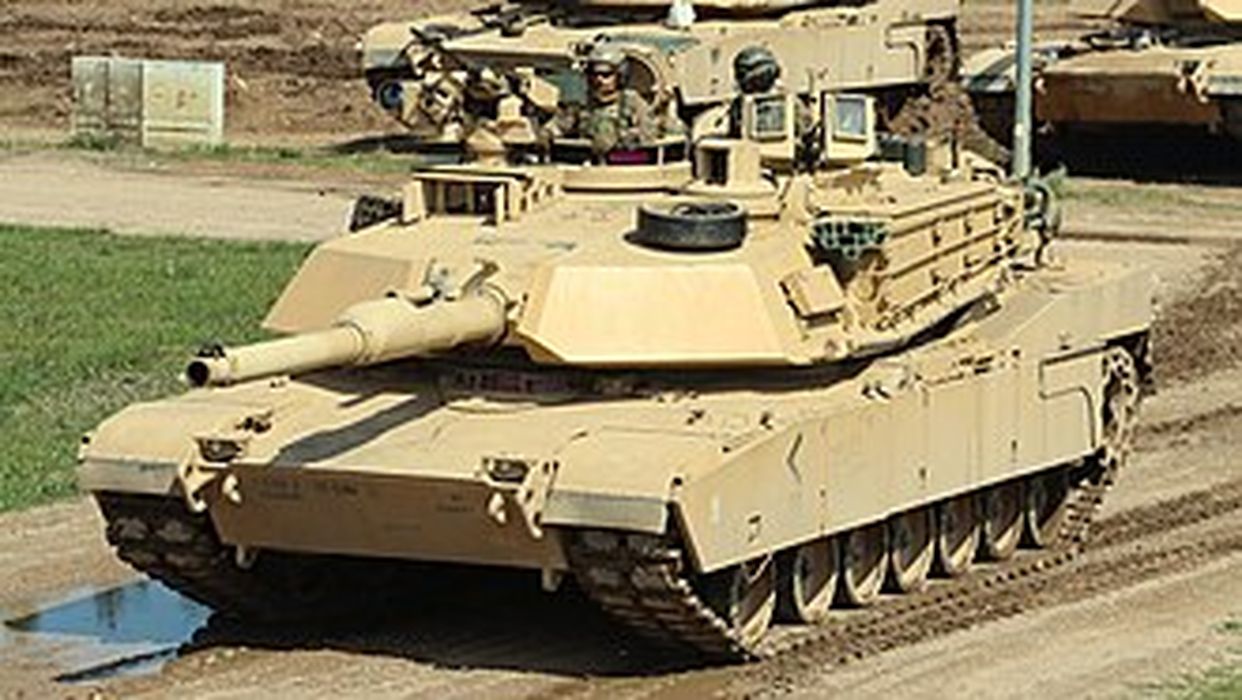
For decades, sustainment of the M1 Abrams has depended on a relatively small number of highly specialized suppliers. As those suppliers disappear, retire legacy manufacturing processes, or struggle with obsolete tooling, the Army increasingly faces shortages of critical replacement parts. Honeywell, manufacturer of the AGT1500 gas turbine engine that powers the Abrams, has acknowledged the challenges associated with supporting an engine designed more than 40 years ago. Like many legacy military programs, some suppliers no longer exist, while others cannot economically produce low-volume replacement components.
Fortunately, the Army is in a much stronger position than many commercial manufacturers because it owns much of the technical data package and design intellectual property for the Abrams platform. That ownership opens the door to creating accurate digital twins of components and making them available to qualified manufacturers through competitive solicitations rather than relying on sole-source production.
Digital Twins Can Expand the Industrial Base
Digital twins have become one of the most important technologies in modern manufacturing. Instead of relying solely on decades-old engineering drawings, manufacturers receive complete three-dimensional digital models that precisely define geometry, tolerances, materials, and manufacturing requirements.
For the Abrams program, digital twins could dramatically reduce the time required to qualify new suppliers. Rather than reverse engineering worn parts or recreating missing tooling, vendors could manufacture directly from validated digital models.
This is particularly important because many of the 166 shortage items are relatively low-volume components. The Army has intellectual property (IP) ownership of 122 of the 166 components. Traditional casting, forging, and machining often become prohibitively expensive when only dozens or hundreds of parts are needed annually. Digital manufacturing allows multiple suppliers to compete for these limited production runs while maintaining configuration control.
The Department of Defense has long encouraged this type of competitive sourcing through its Spare Parts Breakout Program, which promotes full and open competition whenever the government possesses the necessary technical data rights.
Beyond Replacement Parts: Generative Design
Simply reproducing existing parts may not be the greatest opportunity.
Modern generative design software uses artificial intelligence and topology optimization to redesign components based on performance requirements rather than historical manufacturing constraints. Engineers specify loads, temperatures, vibration, fatigue life, and available manufacturing methods. The software then creates optimized geometries that often cannot be produced using conventional manufacturing but are ideal for additive manufacturing.
One of the biggest advantages is part consolidation.
Instead of assembling numerous brackets, ducts, manifolds, and fasteners into a larger subsystem, additive manufacturing can produce a single integrated component.
Fewer parts mean:
- fewer suppliers
- fewer quality inspections
- fewer inventory items
- reduced assembly labor
- lower maintenance requirements
- fewer failure points
For an aging platform like the Abrams, consolidating even a small percentage of engine and auxiliary components could significantly improve long-term sustainment while reducing logistics complexity.
Pratt & Whitney Demonstrates What Is Possible
Perhaps the best example comes from Pratt & Whitney’s recent military engine work.
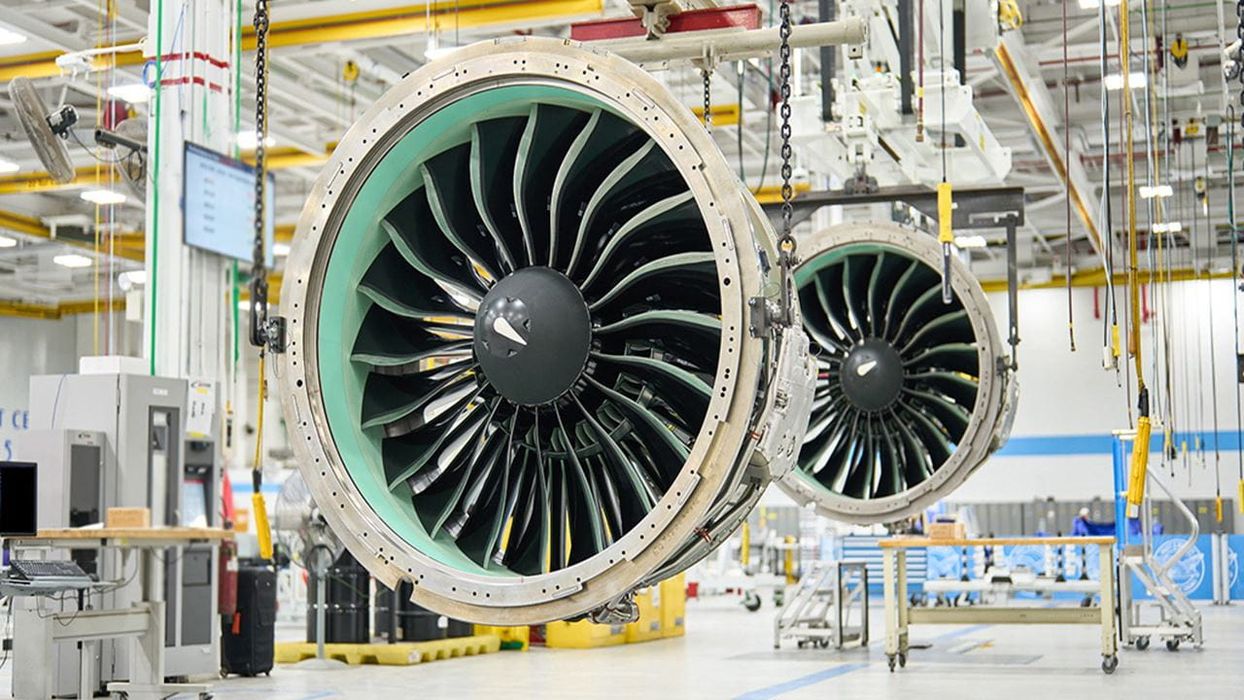
In 2024 the company described how additive manufacturing enabled engineers to redesign the TJ150 engine using a technique called unitization. More than 50 individual parts were consolidated into only a handful of printed components while maintaining required performance. Pratt & Whitney reported substantial reductions in manufacturing time, production cost, and supply chain complexity.
The same approach has also been applied to the F135 engine that powers the F-35. Engineers redesigned the turbine exhaust case trailing edge box using additive manufacturing to reduce part count, simplify manufacturing, and shorten lead times. According to Pratt & Whitney, simplifying assemblies directly improves supply chain resilience because fewer individual suppliers are required.
The company has also used additive manufacturing to recreate obsolete TF33 engine components whose original suppliers and tooling disappeared decades ago. One redesigned gearbox bracket progressed from concept to a flightworthy component in less than nine months, demonstrating how digital engineering can rapidly restore sustainment capability for aging military engines.
More recently, Pratt & Whitney introduced additive repair techniques for commercial geared turbofan engines that reduce repair turnaround time by more than 60 percent while recovering expensive components that otherwise would have been scrapped.
These examples closely parallel the sustainment challenges now facing the Abrams fleet.
Honeywell’s Additive Manufacturing Experience
Honeywell has likewise invested heavily in additive manufacturing across its aerospace business. The company routinely uses metal additive manufacturing for aerospace components, rapid prototyping, and production tooling. Honeywell Aerospace has integrated additive manufacturing into engine development, environmental control systems, and aircraft components, enabling lighter designs and shorter production cycles.
For the AGT1500 Abrams engine specifically, Honeywell has also expanded its sustainment infrastructure. In 2026, the company partnered with Poland’s Military Aviation Works to establish Europe’s first authorized Abrams engine service center, strengthening global maintenance capacity and spare parts support for the growing international Abrams fleet.
Although Honeywell has not publicly announced wholesale redesign of AGT1500 engine modules using additive manufacturing, its broader aerospace manufacturing expertise provides a strong foundation should the Army pursue digitally redesigned replacement components.
The Army Already Uses 3D Printing
The Army is not starting from scratch.
Across its Organic Industrial Base, Army depots have increasingly adopted additive manufacturing for producing obsolete components, manufacturing tooling, fixtures, protective covers, and selected vehicle replacement parts.
The Department of Defense’s Additive Manufacturing Strategy specifically encourages digital engineering, distributed manufacturing, and qualified additive production to reduce dependence on fragile supply chains during both peacetime and wartime operations. Recent military demonstrations have shown deployable metal printers capable of producing replacement parts much closer to operational units, reducing logistics delays while improving readiness.
Army depots supporting combat vehicles have already demonstrated the ability to reverse engineer unavailable components, digitally validate replacement parts, and qualify additive manufacturing processes for selected applications. Those experiences provide valuable building blocks for expanding the Abrams initiative.
The Research & Development Tax Credit
Enacted in 1981, the now permanent Federal Research and Development (R&D) Tax Credit allows a credit that typically ranges from 4%-7% of eligible spending for new and improved products and processes.
Qualified research must meet the following four criteria:
- Must be technological in nature
- Must be a component of the taxpayer’s business
- Must represent R&D in the experimental sense and generally includes all such costs related to the development or improvement of a product or process
- Must eliminate uncertainty through a process of experimentation that considers one or more alternatives
Eligible costs include U.S. employee wages, cost of supplies consumed in the R&D process, cost of pre-production testing, U.S. contract research expenses, and certain costs associated with developing a patent.
On December 18, 2015, President Obama signed the PATH Act, making the R&D Tax Credit permanent. Since 2016, the R&D credit has been used to offset Alternative Minimum Tax (AMT) for companies with revenue below US$50 million. And, now, pre-profitable and pre-revenue startup businesses can also obtain up to US$500,000 per year in payroll tax offsets and cash rebates for up to five years.
Looking Beyond Traditional Manufacturing
The Army’s effort to qualify new suppliers for 166 Abrams components should be viewed as more than an acquisition program. It represents an opportunity to modernize sustainment using technologies that did not exist when the Abrams entered service.
Instead of reproducing every obsolete component exactly as originally designed, digital twins could enable qualified manufacturers to compete using modern manufacturing methods. Generative design could simplify complex assemblies into fewer integrated parts. Additive manufacturing could eliminate obsolete tooling, shorten lead times, and reduce dependence on single-source suppliers.
The aerospace industry has already demonstrated that these technologies work. Pratt & Whitney has shown that dozens of engine components can become only a handful of printed parts while improving manufacturability and lowering costs. Honeywell has extensive additive manufacturing capabilities that could support similar modernization efforts. The Army has already invested in digital engineering and additive manufacturing across its depot network.
Together, these technologies offer a practical roadmap for strengthening the Abrams supply chain. Rather than simply solving today’s shortage of 166 components, the Army has an opportunity to build a more resilient, competitive, and digitally enabled industrial base capable of sustaining one of the world’s premier main battle tanks for decades to come.