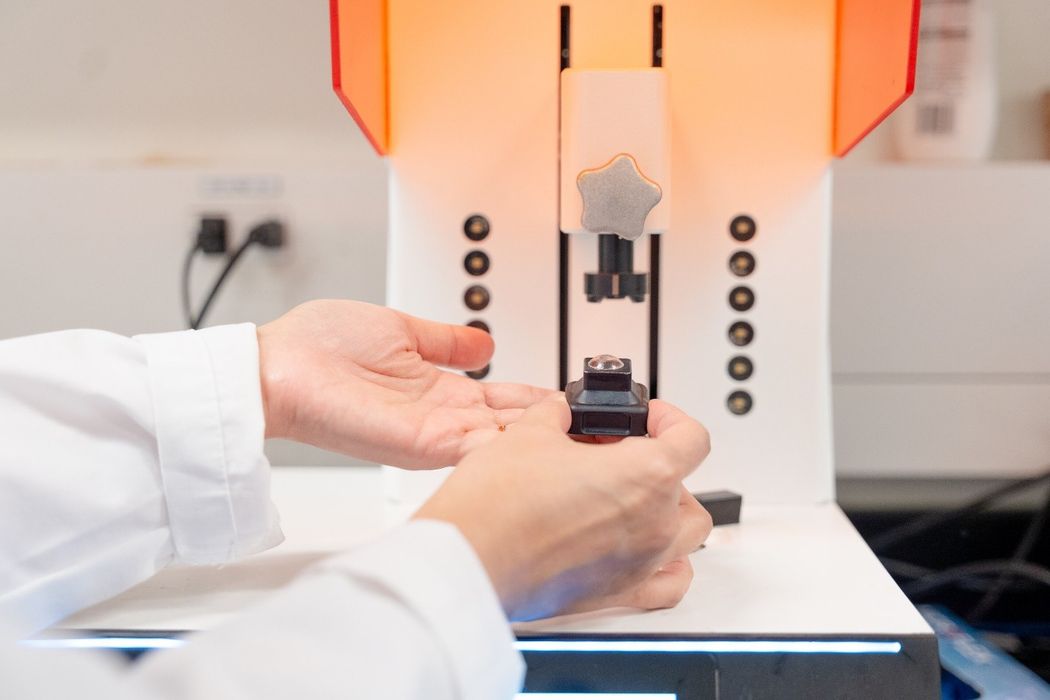
Charles R. Goulding and Kate Esposito examine how additive manufacturing is making custom hard contact lenses faster, more affordable, and accessible for millions of patients.
Introduction
First developed in 1887, contact lenses have long been used to improve vision and ameliorate the effects of various eyesight issues. Over time, lens technology has evolved, with soft contact lenses emerging as the most popular alternative to other vision improvement technologies.
However, soft contact lenses are not suitable for all lens wearers. In many cases, patients with irregularly shaped corneas, complex prescriptions, and refractive errors are unable to tolerate soft lenses. Instead, they use hard lenses, which are personalized for patients’ unique corneas and offer better optical precision. Unfortunately, hard lenses present many difficulties of their own, including high prices and lengthy fitting processes.
To overcome the drawbacks of hard lenses, researchers at the University of Waterloo have paired silicon materials and custom lens design software with additive manufacturing to create 3D printed contact lenses.
With this technology, the researchers are able to decrease the customization time and steep costs associated with hard lenses, offering a much-needed solution for millions of people around the world. Through the use of additive manufacturing, great steps have been taken to advance the future of optical technology.
The Hard Truth Behind Hard Lenses
Hard contact lenses are commonly used among patients with visual impairments such as myopia, hyperopia, and high astigmatism. This is in large part because hard lenses do not directly suction to the corneas but rather sit over them, creating a new, perfectly smooth optical surface that allows for crisper vision.
Hard lenses are made from a firm polymer that does not contain water, which helps them resist a buildup of deposits from the proteins and lipids found in tears. This keeps vision consistently clear and makes the lenses cleaner. Additionally, hard lenses are very durable and can last for a year or longer, in stark contrast with the frequent replacement schedule of soft lenses.
Unfortunately, despite the advantages hard lenses offer, there are also downsides that draw customers away from this technology.
The main issues associated with hard contact lenses are the result of manufacturing. These lenses are typically made using subtractive machining and lathe-cutting processes, which allow for the production of the detailed components necessary to fully customize each lens. However, this method limits geometric complexity and makes it difficult to control variations in lens thickness and curvature.
As a result, patient-specific lenses cannot be directly manufactured and instead must be clinically adjusted. This increases the time required for patients to receive their correct prescriptions and is why hard contacts are much more expensive than soft contacts.
While monthly soft contacts cost around US$250 a year, one pair of hard contacts can cost anywhere from US$500 to US$1,500. Because of the steep costs and long wait times, many patients cannot access hard contacts, leaving them unable to see properly.
Fortunately, researchers at the University of Waterloo believe that additive manufacturing can solve these problems and make hard contacts available to anyone in need.
Additive Manufacturing Leads to Major Advancements
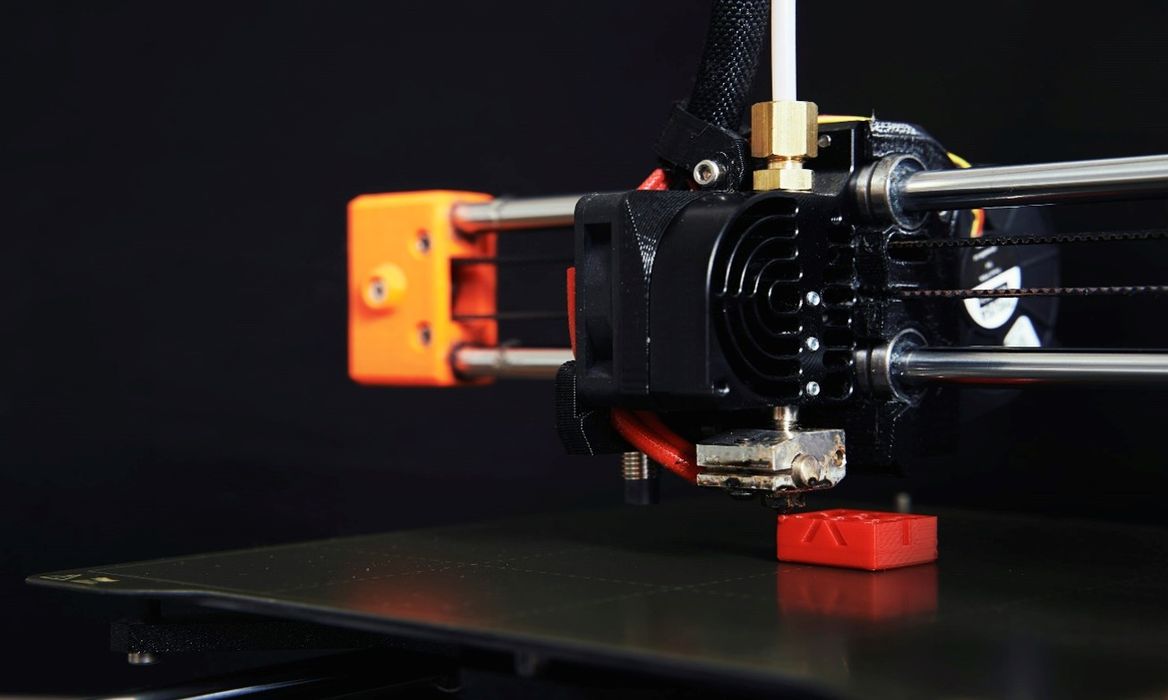
By combining new silicone materials and additive manufacturing, University of Waterloo researchers have discovered how to 3D print patient-specific hard contact lenses in only 20 minutes, eliminating the lengthy production times. Currently, finding contacts with the correct fit and prescription requires several appointments over weeks or months.
With this new technology, patients will have access to specialized lenses after a single visit to the optometrist. Additionally, the researchers are hopeful that this process will decrease manufacturing costs to 1/10th of the existing rate, erasing the price constraints that prevent countless patients from purchasing hard lenses.
While most contacts are made out of silicone hydrogels, this specific form of silicone is not compatible with additive manufacturing. To solve this issue, the team at Waterloo created a hydrophilic silicone formula designed for 3D printing that maintains the optical clarity and mechanical performance expected of traditional lenses. Once this formula was crafted, the researchers developed a process to make the lenses specific to each patient.
First, they take a detailed scan of the patient’s cornea and create a digital map of the unique eye shape. That information is then sent to a computer program that designs the shape of the lens, which is printed using the researchers’ specialized silicone material.
Because printing layer-by-layer creates tiny ridges that could cause irritation or blur vision, the team developed an ultra-thin, non-contact coating process to smooth the surface without altering the lens shape or compromising performance. The coating is then cured and hardened using UV light, which also enhances the durability of the lens.
Laboratory testing confirmed the lenses are biocompatible and react well with human epithelial cells, allowing the researchers to move forward with in-vivo studies. The team’s next steps include refining the technology, securing patents, and conducting trials with human eyes to ensure long-term comfort and safety.
The researchers are also collaborating with the Center for Eye and Vision Research, a joint institute run by Waterloo and the Hong Kong Polytechnic University, to push the technology toward market. Though there is no clear timeline confirming when the lenses will be available to the public, the team’s success thus far creates hope for the future of the project.
The Research and Development Tax Credit
IRC § 41 generally requires qualified research to satisfy a four-part framework: qualifying domestic research expenditures, technological research, development or improvement of a business component, and substantially all activities being part of a process of experimentation for a qualified purpose. Research may qualify even if it fails, but it must address uncertainty about capability, method, or design. The relevant work must be performed in the United States and the company has to bear economic risk for the research.
The strongest R&D credit support would come from documented uncertainty and experimentation. For example, engineers may need to determine whether a hydrophilic silicone can be printed while preserving clarity and strength, whether digital mapping can produce a comfortable custom fit, whether coating can smooth printed layers without changing lens geometry, or whether UV curing improves durability without harming performance. Prototype builds, failed iterations, test results, biocompatibility data, and trial records can help show a systematic evaluation of alternatives.
Companies should also connect costs to qualified activities. Potential qualified research expenses may include wages for technical employees creating, testing, and revising prototypes, time spent integrating 3D printing hardware and software, and certain materials used for modeling or preproduction.
These developments can support IRC § 41 claims when companies can show they used technical experimentation to resolve uncertainty in lens design, materials, software, printing, coating, curing, safety, or performance. Companies should not assume eligibility from innovation alone. They should retain project records, test plans, design iterations, technical cost tracking, and exclusion analyses before claiming the credit. The R&D tax credit is available for all for-profit companies to claim for designing or developing new and/or improved products or processes. R&D Tax Savers has helped hundreds of companies claim these credits since the credit’s inception in 1981.
Conclusion: Looking to the Future
Additive manufacturing is emerging as a means of device fabrication, enabling the direct translation of digital models into physical structures while supporting rapid design iteration based on patient-specific data.
As a result, this technology has revolutionized many aspects of the biomedical field, including the contact lens industry. By facilitating the creation of fully customizable lenses in as little as 20 minutes and greatly reducing prices, 3D printing will make hard contact lenses much more accessible for patients, aiding countless people around the world.
Additionally, there are myriad possible applications of 3D printed contacts, including dye-incorporated lenses to improve the light spectrum for those with color deficiency and customized medicine-eluting lens systems to increase ocular drug bioavailability.
Future implementations of this technology have the potential to ameliorate many vision-related issues, from color blindness to glaucoma. Through the use of additive manufacturing to produce contact lenses, researchers at the University of Waterloo have revolutionized the field of personal vision correction. The future is bright, and now millions more people will be able to see it.